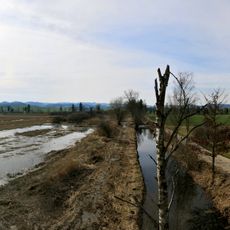
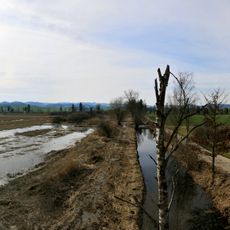
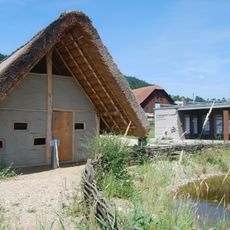
Wauwilermoos pile dwelling settlement, Archaeological settlement from UNESCO World Heritage Site in Egolzwil, Switzerland.
The Wauwilermoos settlement is an archaeological site containing remains of wooden houses built thousands of years ago on wet marshy ground. The structures reveal how people used pile-building techniques to create stable living spaces in waterlogged areas.
The Egolzwil culture site was occupied shortly after 4300 BC, and the village lasted only about six years. Its houses stood directly on the ground in the lake's sedimentation zone, built of ash, oak and alder, with a central hearth. The site was drained around 1859, and systematic excavations by Emil Vogt ran from 1950 to 1966.
The site gave its name to the Egolzwil culture, dated shortly after 4300 BC. Its potters shaped bowls and pots with two round-bowed handles holding 1.8 to 2.8 litres, plus larger liquid containers of 6 to 8 litres and the so-called Wauwilerbecher cups. Flint sickles with straight wooden handles, knives set in birch tar and a container holding Mediterranean shells were also found.
The area lies within a protected zone accessible from multiple entry points across three municipalities in Canton Lucerne. Visitors should wear sturdy footwear since the ground in this region is often wet and soft.
The ground remained permanently waterlogged during excavations, preserving organic materials like wood and fabrics for thousands of years. This makes the site a rare window into everyday ancient life.
The community of curious travelers
AroundUs brings together thousands of curated places, local tips, and hidden gems, enriched daily by 92,719 contributors worldwide.