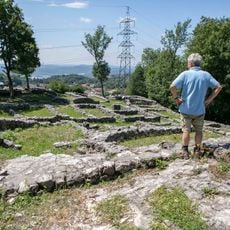
Monte San Giorgio site fossils, Paleontological site in Ticino, Switzerland and Province of Varese, Italy
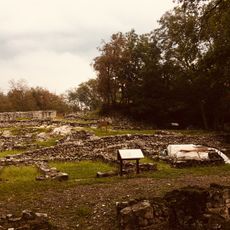
Monte San Giorgio is a mountain straddling the border between Switzerland and Italy that holds layers of fossilized remains from ancient seas and shores. The peak displays limestone formations packed with preserved specimens from over 240 million years ago.
The first scientific publication on the site's fossils appeared in 1854, written by Emilio Cornalia, and Antonio Stoppani began the first excavations at Vallone in Besano in 1863. From 1924 the University of Zurich's paleontological institute ran about fifty systematic campaigns until 1975, and in 2003 the Swiss Triassic outcrops were inscribed as UNESCO World Heritage, with the Italian side added in 2010.
The mountain draws researchers and visitors who come to see how ancient marine life evolved over time through the preserved remains visible here. These discoveries help people worldwide understand how life in the oceans changed millions of years ago.
A museum in Meride at the base of the mountain displays fossils and offers guided tours explaining the layers and discoveries. Visitors can also walk trails on the mountain itself to see where specimens were found and observe the exposed rock layers.
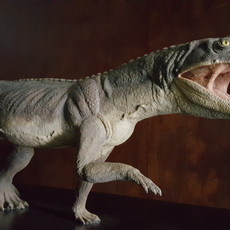
Among the thousands of fossils are species named after local places and the people who worked here, such as Serpianosaurus mirigiolensis, Ticinosuchus ferox and Cyamodus hildegardis, the last named after a researcher's wife. The site's collections, including many type specimens, are held in Meride, Zurich, Milan, Clivio and Besano.
The community of curious travelers
AroundUs brings together thousands of curated places, local tips, and hidden gems, enriched daily by 92,772 contributors worldwide.