Sainte-Marie-Madeleine reformed church and priory, Reformed church and priory in Saint-Sulpice, Switzerland.
Sainte-Marie-Madeleine is a reformed church and priory in Saint-Sulpice near Lake Geneva, with parts dating from the 11th and 12th centuries. The building shows the architecture of two different construction periods from its original foundation to later modifications.
The church existed by the late 11th century, when the brothers Louis and Turumbert de Bex gave their share to the abbey of Molesme; the priory's first known prior was Hugues (1097–1113). Built in two stages between the 11th and 12th centuries, it was first dedicated to Saint Sulpice, then to Saint Mary Magdalene in the 12th century. In 1456 Georges de Saluces, Bishop of Lausanne, obtained the priory from Pope Callixtus III.
After the Bernese conquest of 1536 imposed the Reformation, the church passed to Reformed worship and the former monastic domain was confiscated by the City of Lausanne. The nave, too large for the small congregation, was turned into a barn. The 16th-century choir frescoes were whitewashed in the Bernese period and only uncovered in the restoration of 1898–1903.
The church is located in Saint-Sulpice near Lake Geneva and is protected as Swiss cultural property of national importance. Visitors should note the simple structure of the place when exploring and allow time to observe the architectural details.
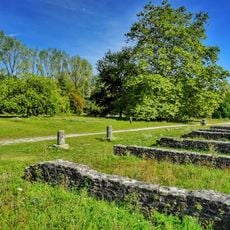
The nave, too large for the small local congregation after the 1536 Bernese conquest imposed the Reformation, was turned into a barn and demolished in 1748. The Romanesque transept with its three apses and the bell tower at the crossing survive. A restoration by archaeologist Albert Naef from 1898 to 1903 uncovered 16th-century frescoes in the choir that had been whitewashed in the Bernese period.
The community of curious travelers
AroundUs brings together thousands of curated places, local tips, and hidden gems, enriched daily by 92,852 contributors worldwide.