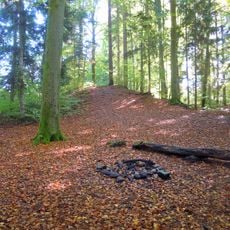
Wetzikon-Robenhausen, Archaeological excavation site in Wetzikon, Switzerland
Wetzikon-Robenhausen is a prehistoric pile-dwelling settlement on the southern shore of Pfäffikersee in the Robenhausen wetland, covering about 10 hectares with a 20-hectare buffer zone. Excavations found rectangular huts of roughly 6–7 m by 40 m², raised on oak and softwood piles 12–18 cm thick, with clay-and-straw walls and moss-lined sleeping areas.
Excavations began in the mid-1800s and revealed Neolithic artifacts including tools and household items. These discoveries represent some of the earliest known settlements in the region and provide evidence of how people lived in prehistoric times.
Jakob Messikommer, who found the site in 1856–1858, uncovered woven fabrics, braids, a raffia mat and parts of a Neolithic loom, evidence of textile work at Robenhausen. He also identified 58 animal species among the organic finds and reported signs of butter production. A memorial stone and the Messikomer Eich oak in the Robenhausen reed commemorate him.
Because this site is protected, you need special authorization before entering the archaeological areas. It is important to check ahead of time which sections are accessible and how to visit the location respectfully.
Among the finds were woven fabrics, braids, a raffia mat and evidence of butter production, preserved in the waterlogged peat. Jakob Messikommer, who dug here from 1856, identified remains of 58 animal species. A memorial stone and an oak, the Messikomer Eich, honour him in the Robenhausen reed.
The community of curious travelers
AroundUs brings together thousands of curated places, local tips, and hidden gems, enriched daily by 93,029 contributors worldwide.