Beiting, Archaeological site and UNESCO World Heritage Site in Beiting Town, China
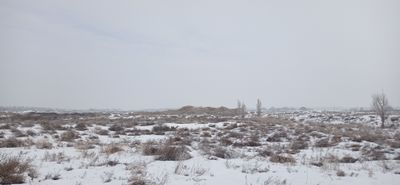
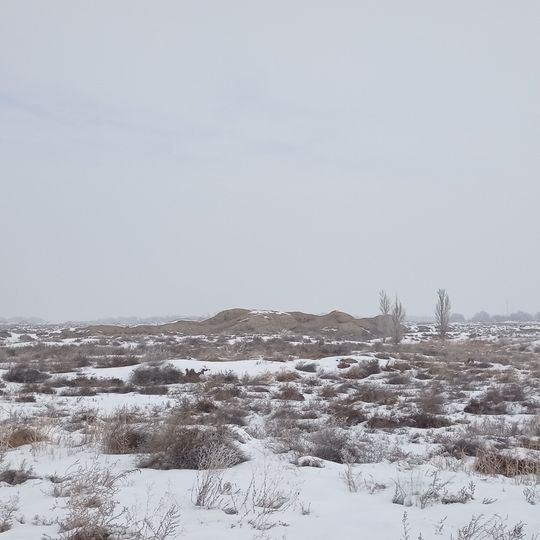
Beiting is an archaeological site in Xinjiang containing remains of ancient city walls, residential quarters, and religious buildings spanning multiple periods. The ruins show layers of different settlements stacked upon each other, documenting thousands of years of human activity.
Ting Prefecture was established in 640, after the Tang conquest of Gaochang, on the site of the Turkic town of Beshbalik, whose name means "five cities". In 702 the Beiting Protectorate was set up there, and the Tibetan army took the city in 790. After 840 Uyghur refugees made it one of the capitals of the Kingdom of Qocho, and it was abandoned in the late 13th century.
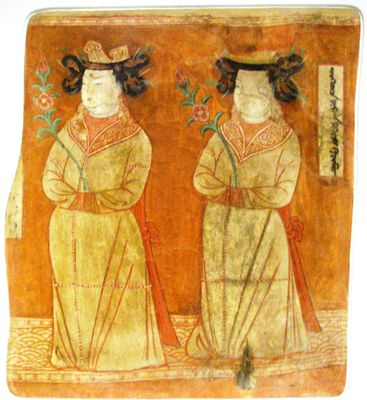
The name Beiting comes from ting, 'court', because it was the royal residence of the Further Jushi. Its Turkic name Beshbalik means 'five cities', after the five towns that made up the site. A painting found here shows two figures in pale yellow robes holding pink flowers against an orange background.
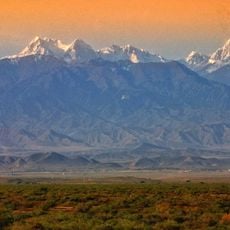
The ruins lie on the northern edge of the Tianshan range in Jimsar County, about 1.5 km across, with an inner citadel at the centre and moats around both wall rings. The ground is uneven rammed earth, so sturdy shoes help; the site is open ground with little shade, and the walls are best read from the corner towers and gate foundations.
Excavations since 2018, led by Guo Wu of the Chinese Academy of Social Sciences, have uncovered yellow-green glazed dragon-body architectural fittings, roof tiles with lotus-petal patterns, Kaiyuan Tongbao coins and the silver seal of Pulei Prefecture, inscribed "蒲类州之印".
The community of curious travelers
AroundUs brings together thousands of curated places, local tips, and hidden gems, enriched daily by 94,300 contributors worldwide.