Gulangyu, Car-free island near Xiamen, China
Gulangyu is a 1.88 km² island off Xiamen, administratively part of Siming District. Its dense settlement of two- to four-storey houses with pale walls and red or terracotta pitched roofs rises from the waterfront, with some flat and blue roofs and small courtyards or roof terraces. A bronze statue of a girl with pigtails, holding her hair beside her head, stands against greenery.
Gulangyu became an international settlement after the 1842 Treaty of Nanking opened Xiamen as a treaty port. Its Land Regulations were approved by the Qing government in May 1902, and 13 countries, including Britain, France, the Netherlands and Japan, held extraterritorial privileges and sat on the Kulangsu Municipal Council. Japan occupied the island from 1942 until the end of World War II.
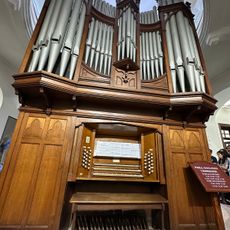
Christianity arrived in the 1900s and brought Western music with it; churches and music halls followed, and the island's scene mixed with foreign music and art. Pianist Yin Chengzong, violist Jing Yang and pianist Xu Feiping were born here. The 580-seat Gulangyu Concert Hall is one of Fujian's noted acoustic venues for classical music.
Ferries reach the island from Xiamen's Dongdu cruise terminal and Songyu dock; the Lun Du terminal serves residents and runs night crossings. Cars and bicycles are banned, so visitors walk or take electric buggies, and freight moves on wheeled wooden carts pushed up the lanes.
The island's name comes from the Hokkien Kó͘-lōng-sū: 鼓浪 means "drum waves", for the sound of the sea striking the reefs, and 嶼 means "islet". The Chinese name thus records the noise of the water rather than any feature on land.
The community of curious travelers
AroundUs brings together thousands of curated places, local tips, and hidden gems, enriched daily by 92,762 contributors worldwide.