Leshan Giant Buddha, Seated Maitreya Buddha statue carved into a cliff in Leshan, Sichuan, China
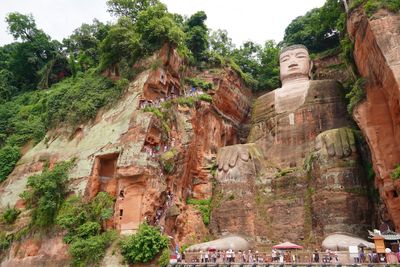
The Leshan Giant Buddha is a 71-meter seated Maitreya carved into the reddish-brown sandstone cliff of Qifeng Peak at Lingyun Mountain, where the Min, Qingyi and Dadu rivers meet. Its head measures 14.7 meters high and 10 meters wide, with 1,021 spiraled curls; the ears are 7 meters long and the shoulders 24 meters wide. The hands rest on the knees, and the legs end at the cliff base, where a ledge carries small figures.
Buddhist monk Hai Tong initiated the construction project in 713 to calm the dangerous currents at the river junction. The work continued for nine decades until completion in 803 under several generations of stonecutters and craftsmen. Later dynasties added protective structures and a temple system around the figure, which underwent extensive restoration efforts during the 20th century.
The sculpture represents Maitreya Buddha and developed into an important pilgrimage destination for Buddhist believers in Sichuan. The chosen depiction of the future Buddha was meant to protect travelers on the dangerous river waters. The monument embodies the technical and artistic skills of the Tang Dynasty and now attracts millions of visitors annually who seek to explore China's religious heritage.
The entrance fee costs 80 yuan with discounts available for senior visitors and students. Visitors can choose between walking paths along the cliff or boat rides on the river to gain different perspectives. The peak season from May through October brings large crowds, so early morning hours offer shorter waiting times. The nearest city of Leshan sits five miles (eight kilometers) away and provides hotel accommodations.
An elaborate drainage system channels rainwater through hidden passages behind the ears, through the chest and along the clothing folds. This engineering achievement prevented erosion damage to the porous sandstone across twelve centuries. Modern investigations revealed that workers during the Tang Dynasty considered the natural rock layering to optimize water discharge and ensure the longevity of the sculpture.
The community of curious travelers
AroundUs brings together thousands of curated places, local tips, and hidden gems, enriched daily by 92,372 contributors worldwide.