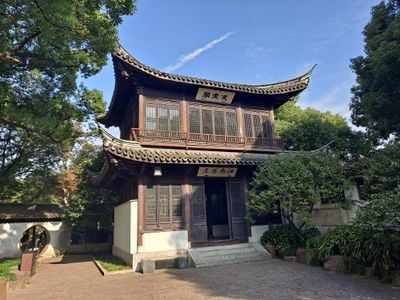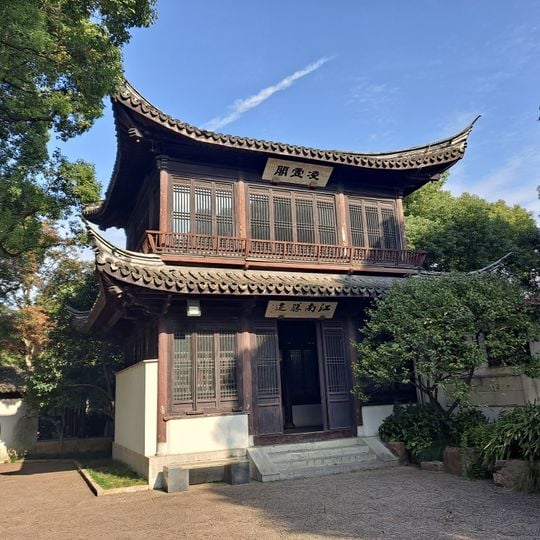
Jichang Garden, Protected Chinese garden in Xihui Park, Wuxi, China.
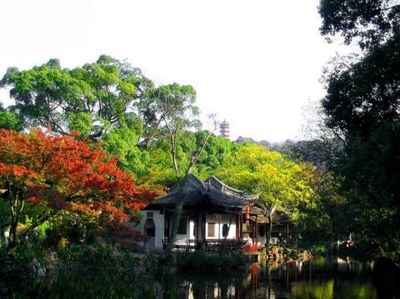
Jichang Garden covers 14.85 mu (about 1 hectare) at the eastern foot of Huishan, just beside Huishan Temple. Its long north-south axis is narrow east-west: a pond called Jinhui Yi fills the east, with the Hexing Beach and the Zhiyu Pavilion jutting into the water, while the west and north hold rockeries joined to the mountain's foothills. The stream channeled from the Second Spring drops through the rockery as the Eight-Tone Ravine.
Qin Jin, a 1493 metropolitan graduate and former Nanjing military director, bought the Ou Yu monastery during the Zhengde era (1506–1521) and turned it into a garden named Fenggu Xingwo. His descendant Qin Yao, dismissed in 1591, renamed it Jichang Yuan after a verse by Wang Xizhi. In 1952 the Qin family donated it to the state.
The garden is divided into two main areas: the western section displays yellowish-brown rock formations, while the eastern part centers on the Jinhui Rippling Pool. This layout reflects traditional design principles that visitors experience while walking through.
The garden lies inside Xihui Park on the east side of Huishan, next to Huishan Temple; enter from the temple side and the first building reached is Fenggu Xingwo. The site is long north to south and narrow east to west, with the pond and pavilions in the east and the rockery and Eight-Tone Ravine in the west.
Emperors Kangxi and Qianlong visited the garden multiple times and left poems that are still preserved in architectural elements today. These imperial verses testify to the site's historical importance across several centuries.
The community of curious travelers
AroundUs brings together thousands of curated places, local tips, and hidden gems, enriched daily by 94,307 contributors worldwide.