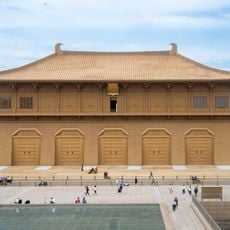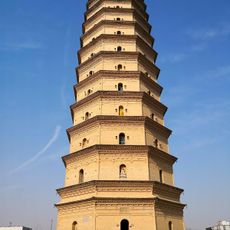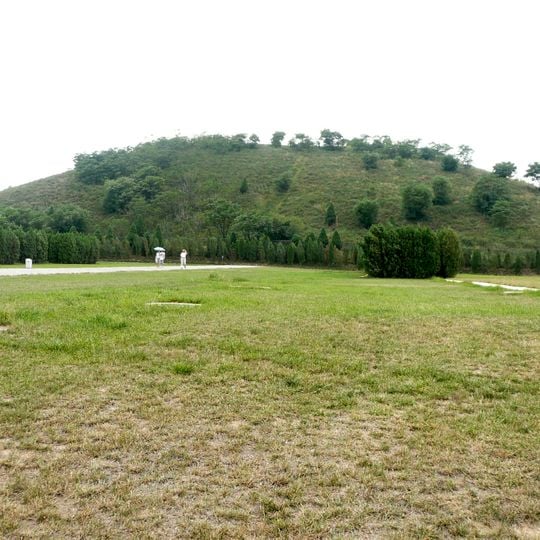
Han Yang Ling, Archaeological mausoleum in Shaanxi, China.
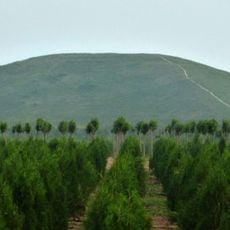
Han Yang Ling is the mausoleum of Emperor Jing of the Western Han and his Empress Wang, on the Xianyang plateau in Shaanxi. The emperor's grass-covered mound rises about 31 metres, with the empress's slightly smaller mound 450 metres to its east. Around the emperor's mound lie 81 outer burial pits, and a paved path runs along the foot of the mound.
Emperor Jing began building Yangling in 153 BCE, the same year he resettled people to the associated town of Yanglingyi. He died in 141 BCE and was buried ten days later; Empress Wang died in 126 BCE and was interred in a separate pit within the same cemetery. Construction lasted 28 years. After the fall of the Xin dynasty, the Red Eyebrows sacked Chang'an and destroyed the ancestral temples and tomb parks except Baling and Duling.
The terracotta figures show soldiers, farmers, and entertainers, revealing how society was organized during the Han Dynasty. These statues display the roles and professions that mattered in the imperial world of that time.
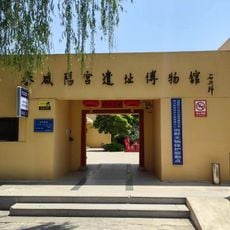
The mausoleum lies about 20 kilometers from Xi'an and offers parking facilities and an underground museum. Visitors should allow time to explore the different sections and guided tours help explain what you are seeing.
The pits yielded more than 50,000 miniature terracotta figures, about 50 cm tall, depicting eunuchs, servants, tools and domesticated animals rather than an army. The figures were modelled naked, with painted skin tones, and originally wore silk or cloth garments and armour with movable wooden arms; the fabric and wood rotted away over two millennia, leaving bare torsos. In 2016, the earliest known tea residues, dated to the 2nd century BCE, were identified among the finds.
The community of curious travelers
AroundUs brings together thousands of curated places, local tips, and hidden gems, enriched daily by 94,475 contributors worldwide.