Kandze Monastery, Tibetan Buddhist monastery in Ganzi Town, China.
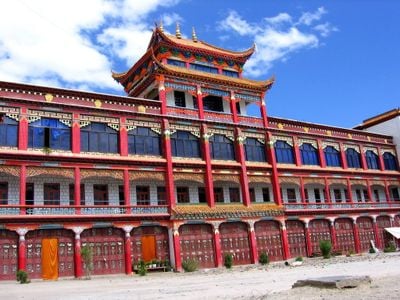
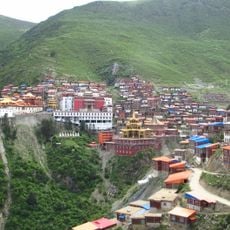
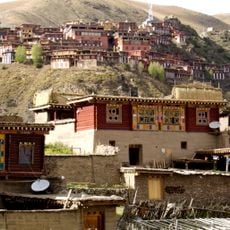
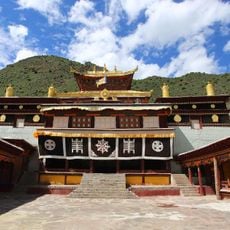
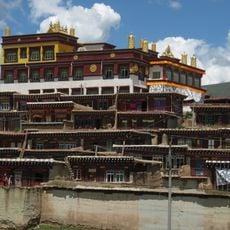
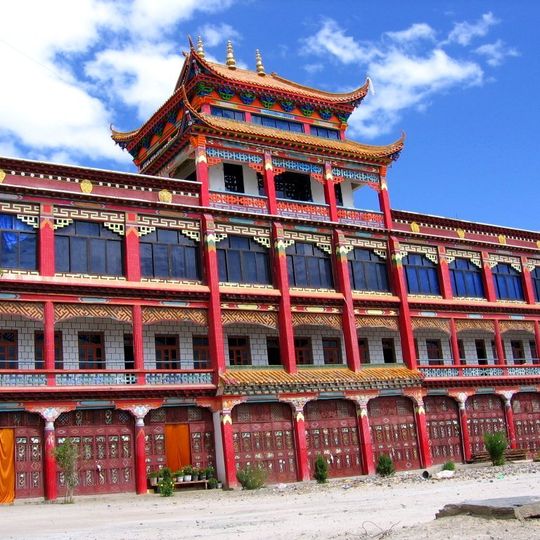
Kandze Monastery sits on elevated terrain north of Ganzi Town with multiple halls connected by passageways supported by red wooden columns. The layout guides visitors through designated pathways toward the inner sanctum where the main buildings are situated.
Kandze Monastery was built around 1642 by the Khoshut Mongols, overlooking their castles of Mazur and Khangsar. It once housed some 1,500 monks, making it with Chamdo one of the largest monasteries in Kham, and its pilgrimage circuit ran almost eight kilometres. Chinese troops occupied the castles during the 1909–1918 war, leaving them in ruins. Renovated since 1981, it now houses about 700 monks, including three tulkus.
The monastery displays traditional paintings throughout its halls that show the founders of Nyingmapa, Kadampa, and Gelugpa schools and remain visible across its walls and interior spaces. These artworks form part of the daily religious and visual experience here.
The site is arranged so visitors can navigate clearly marked pathways, with red wooden columns serving as visual landmarks throughout the grounds. The inner sanctuary area requires careful movement since sacred spaces demand respectful behavior from all who enter.
A dedicated Gonkhang room honors guardian deities through a black and gold door adorned with painted images of protective beings. This interior chamber reveals layers of spiritual practice within Tibetan Buddhist tradition.
The community of curious travelers
AroundUs brings together thousands of curated places, local tips, and hidden gems, enriched daily by 94,523 contributors worldwide.