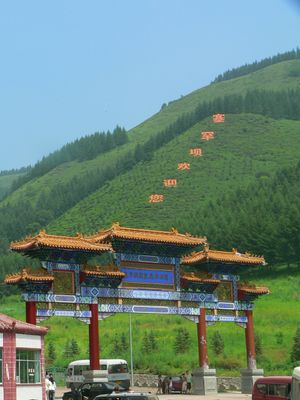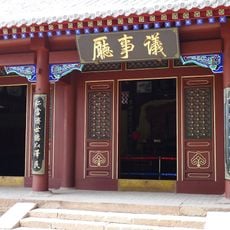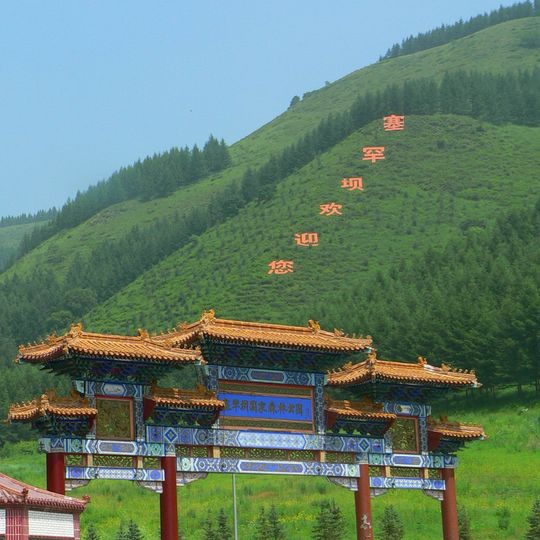
Saihanba National Forest Park, National forest park in Weichang Manchu and Mongol Autonomous County, Chengde, Hebei, China
Saihanba National Forest Park is a large nature reserve covered with forest on a high plateau near Inner Mongolia. The park features dense woodland areas, meadows, and varied terrain across its expansive grounds.
The land served as a hunting ground during the Qing Dynasty but gradually became barren over the following centuries. Reforestation efforts started in 1962 and steadily transformed the depleted landscape into the forest visible today.
The name Saihanba combines Mongolian and Chinese, meaning "beautiful high ridge". The forest farm's first Party secretary, Wang Shanghai, is buried in Shanghai Memorial Forest at Matikeng, the 1964 planting site where survival rates exceeded 90 percent and which is regarded as the birthplace of the Saihanba spirit.
The park offers hiking trails and viewing spots for exploring the landscape, along with areas for nature observation and overnight stays. Sturdy footwear and weather-appropriate clothing are essential since conditions can change quickly and temperatures are cool year-round.
Only about 1.35% of the forest farm, some 1.89万亩, is open for study visits and eco-tourism; the rest stays closed to visitors all year. The open zone is split into five scenic areas: Mulan, Longquan, Liangbingtai, Saihan Tower and Lishugou. Liangbingtai, or Kangxi's review stand, is a huge rock where the emperor is said to have inspected Qing troops after the 1690 Battle of Ulan Butong.
The community of curious travelers
AroundUs brings together thousands of curated places, local tips, and hidden gems, enriched daily by 94,004 contributors worldwide.