Ka La Qin Palace, Qing Dynasty palace in Harqin Banner, China.
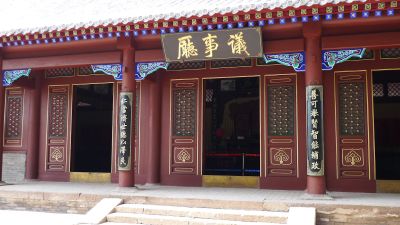
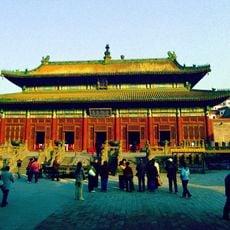
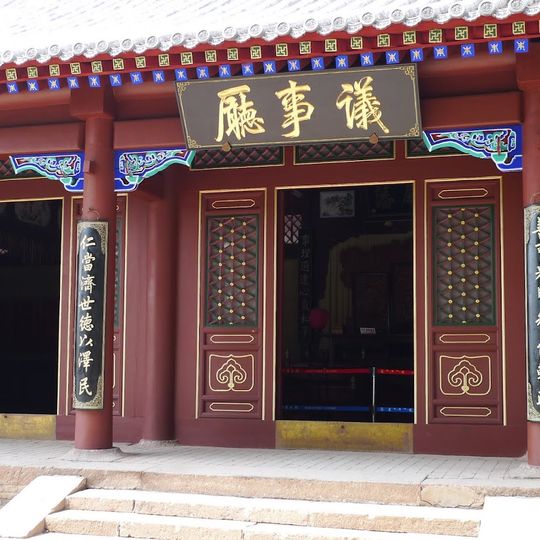
Ka La Qin Palace covers 40,000 square metres in Wangyefu village, Harqin Banner, 67 kilometres south of Chifeng. Its east-west symmetrical layout holds five courtyards, a garden and several Buddhist temples, built to the size and form that Qing dynasty rules set for a princely residence. The complex also contains the family temple, civil and military shrines and the ancestral hall.
The palace was first built in 1679 under the Kangxi Emperor as a residence for the hereditary Ka La Qin princes of the right wing of the Josotu League, initially on the scale of a commandery prince's mansion. In 1783, during the Qianlong reign, it was enlarged to the rank of a prince's palace. The twelfth and last prince, Gungsangnorbu, was born here in 1872. After 1945 the local government was stationed in the complex, and from 1948 to 1997 it housed a school.
The palace complex also holds Buddhist temples and a family shrine, and its name links it to the Kharchin (Kalaqin) princes, hereditary Mongolian nobles related to the Qing imperial house through marriage. The twelfth and last prince, Gungsangnorbu, was born here in 1872 and later became a reformer in Mongolia and China.
The palace stands in Wangyefu village, Harqin Banner, about 67 km south of Chifeng and 150 km northeast of Chengde. It opened as the Chinese Qing Dynasty Mongolian Prince Palace Museum in 2002 and was rated a 4A tourist attraction in 2008. The 40,000-square-metre grounds hold five courtyards, a garden and Buddhist temples, so allow time to cross the whole complex.
The bronze statue in the grounds honours Gungsangnorbu, the twelfth and last prince, who was born in the palace in 1872 and spent his childhood there. He became a politician and reformer in Mongolia and China. The mansion stayed in his family's hands until the 20th century.
The community of curious travelers
AroundUs brings together thousands of curated places, local tips, and hidden gems, enriched daily by 95,472 contributors worldwide.