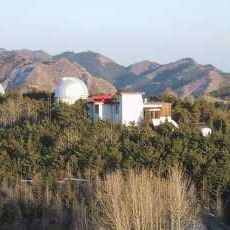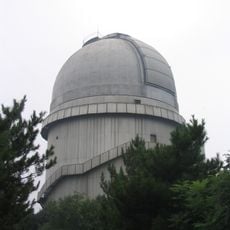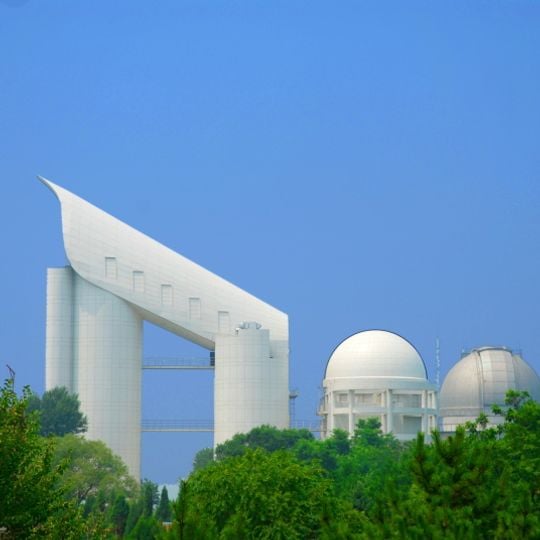
LAMOST, Optical telescope at Xinglong Station, China
LAMOST is an optical telescope at Xinglong Station designed to observe distant stars and galaxies by collecting and analyzing their light through a specialized mirror system. The instrument works by directing light to fiber optic cables that allow simultaneous study of thousands of celestial objects in a single observation session.
The project began in the early 2000s as a major initiative to advance Chinese astronomical research capabilities and knowledge of the cosmos. The telescope became operational and has since contributed significantly to the discovery and cataloging of millions of celestial objects.
Named after the Chinese astronomer Guo Shoujing, this telescope represents China's advancement in astronomical research and technological capabilities in the 21st century.
The facility operates at an elevation that provides clear night viewing with minimal light pollution, functioning best during stable weather conditions. Visitors should dress warmly for the mountain setting and be aware that active observation sessions may restrict access to certain areas.
The system employs segmented mirror technology where the main mirror is built from many small hexagonal pieces rather than a single large piece, making construction and transportation far easier. This innovative approach allows astronomers to build much larger telescopes than would otherwise be possible with solid mirrors.
The community of curious travelers
AroundUs brings together thousands of curated places, local tips, and hidden gems, enriched daily by 91,140 contributors worldwide.