Anyuan Temple, Buddhist temple in Chengde, China
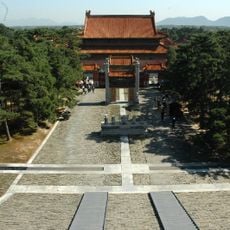
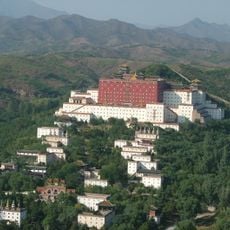
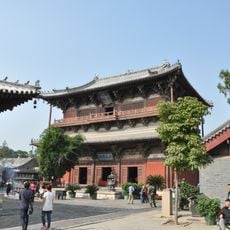
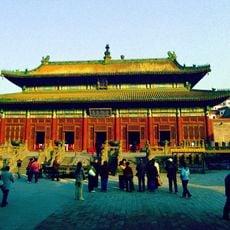
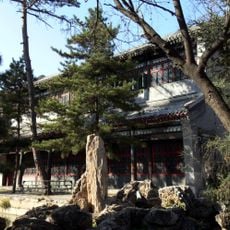
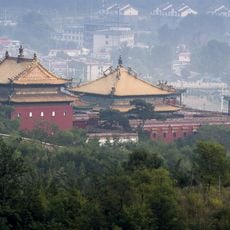
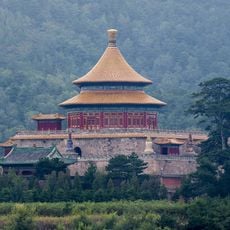
Anyuan Temple is a Gelug Tibetan Buddhist monastery on a hill east of the Wulie River in Chengde. Built in 1764, it imitates the Gulja Temple of Xinjiang. Its rectangular walled site measures 255 by 146 metres. The main Pudu Hall rises 27 metres with a black glazed tile roof, and a four-language stele stands before it.
Built in 1764 by the Qianlong Emperor, the temple replaced the destroyed Gulja Temple and housed the over 6,000 members of the Dashidawa clan resettled from Xinjiang. It was the second lama temple erected outside the Chengde summer resort after the Puning Temple. After 1949 only the Pudu Hall and gates survived; repairs in the 1980s and 2011 restored the complex.
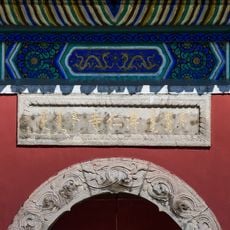
The name means "Pacifying the Far Regions," referring to the Qing court's aim of settling the Dzungar Mongols. The temple was built for the Dashidawa clan, whose over 6,000 members were resettled at Rehe after 1759. Each summer, Oirat Mongol leaders gathered here, and the multilingual stele before the Pudu Hall records the Dzungar rebellion in Manchu, Chinese, Mongolian and Tibetan.
The temple can be visited year-round and sees the most visitors on weekends and during local festivals. It is recommended to wear comfortable shoes, as exploring the various courtyards and levels requires considerable walking.
The Pudu Hall's black glazed roof tiles were chosen deliberately: in the five-colour scheme black stands for water, so water would overcome fire and spare the temple the fate of the Gulja Temple, burned by Amursana's retreating troops in 1756. The hall's ridge carries three small bell towers, the central one larger than the two flanking it.
The community of curious travelers
AroundUs brings together thousands of curated places, local tips, and hidden gems, enriched daily by 94,004 contributors worldwide.