Puren Temple, Buddhist temple in Chengde, China
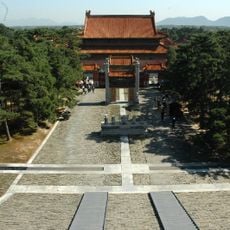
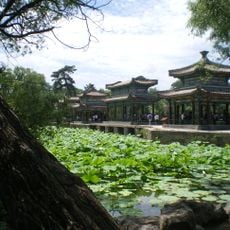
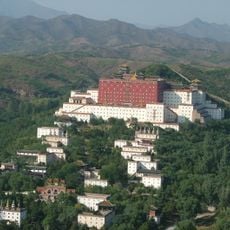
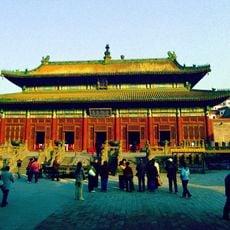
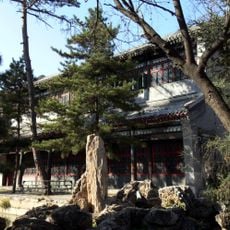
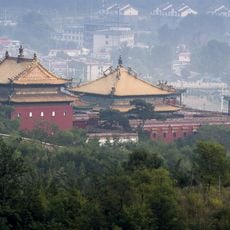
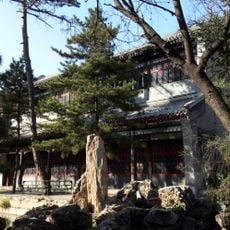
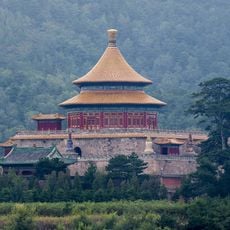
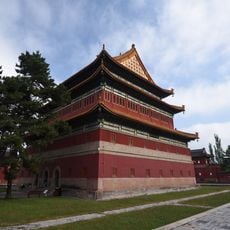
Puren Temple is a Buddhist complex situated on the eastern bank of the Wulie River in northern Chengde. The grounds contain multiple halls and pavilions arranged across the landscape.
Puren Temple was built in 1713, the 52nd year of the Kangxi reign, by Mongolian princes to celebrate the emperor's 60th birthday. Kangxi allowed two temples outside the Mountain Resort, and Puren, meaning "bestowing benevolence on distant lands", was the first of the Eight Outer Temples completed and the only Kangxi-era temple still standing in Chengde. It was managed by the Qing Lifan Yuan, the court's frontier affairs office.
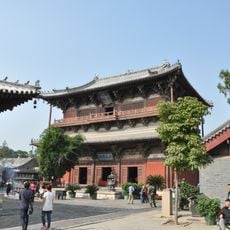
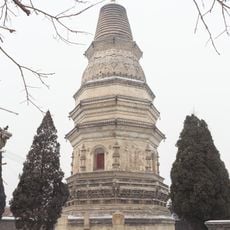
The complex blends Chinese temple design with Tibetan Buddhist elements, displaying Sanskrit inscriptions and decorative patterns that visitors can observe on the buildings today. This architectural fusion shows the spiritual openness that shaped the site's original purpose.
The temple has long remained closed to the public, so visits depend on openings announced by the Chengde authorities; check locally before travelling. The walled grounds measure 260 m north to south and 145 m east to west, with all main halls on the central axis, so a walk from the gate to Baoxiang Changxin Hall follows one straight line.
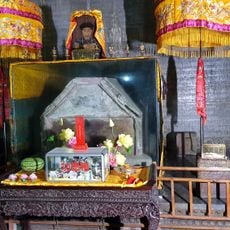
The temple stayed closed to the public long after its 2001 listing as a Major Historical and Cultural Site. In 1988, woodblock-printed mandala images and bronze vases were found inside the Baoxiang Changxin Hall. The village around it was relocated wholesale around 2010.
The community of curious travelers
AroundUs brings together thousands of curated places, local tips, and hidden gems, enriched daily by 93,607 contributors worldwide.