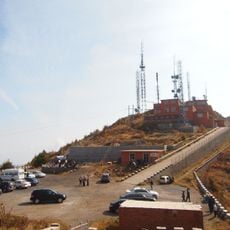
Xumi Fushou Temple, Buddhist temple in Chengde, China.
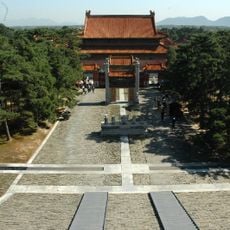
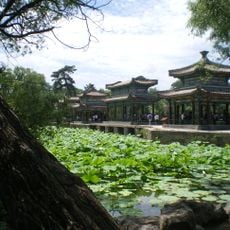
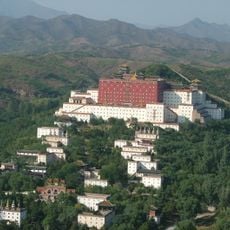
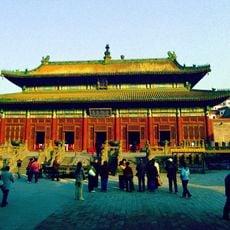
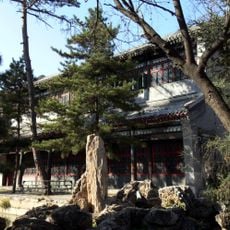
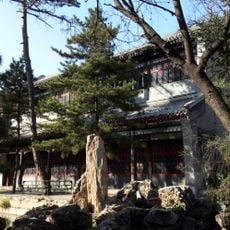
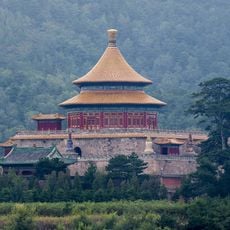
Xumi Fushou Temple is a temple complex in Chengde with multiple buildings, stone bridges, lion statues, and residential halls arranged across a large site. The various structures are carefully organized to form a unified whole.
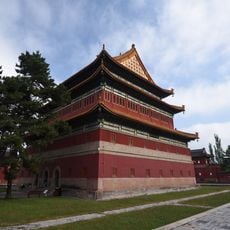
Qianlong ordered the temple built in 1780 for the sixth Panchen Lama's visit to congratulate him on his seventieth birthday. Modeled on Tashilhunpo Monastery in Shigatse, it placed the white terrace behind and the red terrace in front. The Panchen Lama offered forty gifts and a travel diary recording prayers for the emperor's longevity at every stop. Qianlong visited him here and had the Miaogaozhuangyan Hall used for a sermon translated by the Jangjia Hutuktu.
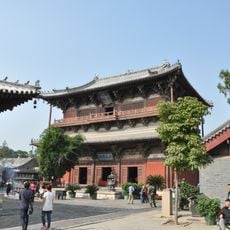
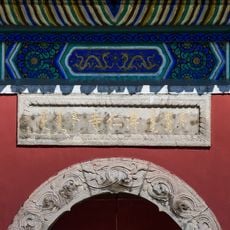
The temple buildings blend Chinese and Tibetan architectural traditions, visible in the gilded copper roofs and inscriptions in multiple languages on the structures. This fusion reflects the cultural exchange that took place in this region.
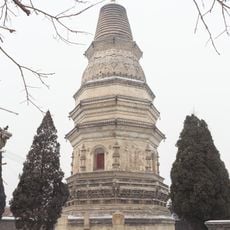
The temple lies on a south-facing slope in Shizigou, north of the Chengde Mountain Resort and east of Putuo Zongcheng Temple, covering 37,900 m². The main buildings run south to north along a central axis, from the gate and stele pavilion past the glazed-tile paifang to the Great Red Terrace and the seven-storey Glazed Tile Pagoda of Longevity at the highest point. Allow time to climb the slope and the terrace stairs.
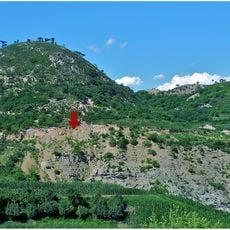
More than 40 fossilized dinosaur tracks have been reported since 1992 in the stone slabs used to renovate the Eight Outer Temples and the Chengde Mountain Resort from 1979 onward. At Xumi Fushou Temple they lie in front of the front door and behind the glazed-tile pailou.
The community of curious travelers
AroundUs brings together thousands of curated places, local tips, and hidden gems, enriched daily by 94,476 contributors worldwide.