Hongluo Temple, Buddhist temple in Huairou District, China
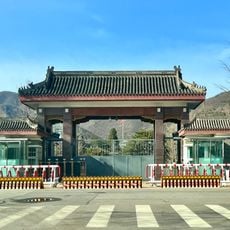
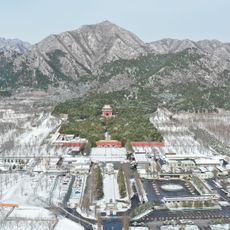
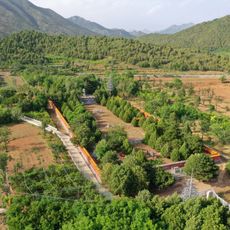
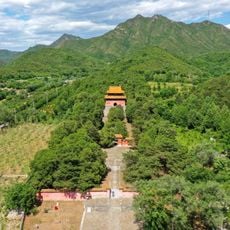
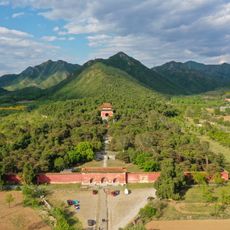
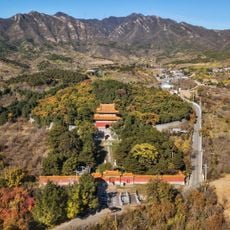
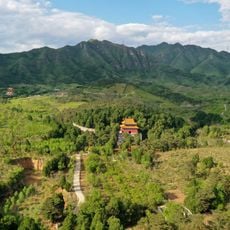
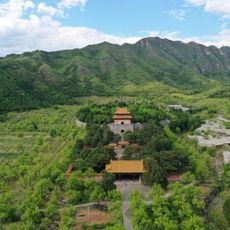
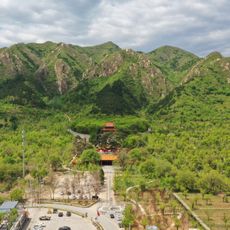
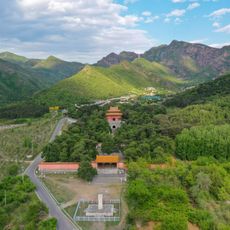
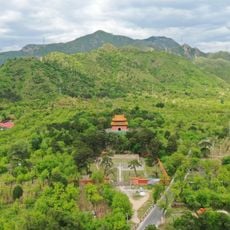
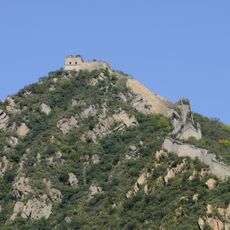
Hongluo Temple sits at the southern base of Hongluo Mountain and spreads across a sizable area with several main halls, pavilions, and staircases built into the hillside. The complex displays typical features of Chinese temple architecture, including elaborate roof tiles, painted woodwork, and buildings arranged along a central axis.
Founded in 338 CE during the Eastern Jin, the temple is credited in the Gaoseng zhuan to the Kuchean monk Fotucheng, who built 893 monasteries in the Later Zhao realm. It rose under the Tang as Daming Temple and was renamed Huguo Zifu Chan Temple in the Ming Zhengtong era. In 1694 the Kangxi Emperor visited, a throne was installed and the grounds expanded to 4 square kilometres with over 300 monks.
The name Hongluo, "Red Shells", comes from a legend that two red snails lived in the Pearl Spring west of the temple and glowed at sunset, visible for a hundred li. The temple is a centre of the Pure Land tradition: the patriarch Jixing Chewu founded a Pure Land practice centre here, and Yinguang studied on the site. From this came the saying "In the south, Putuo; in the north, Hongluo".
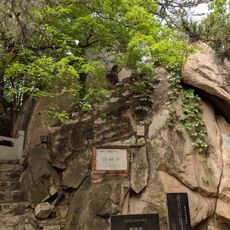
The temple is easiest to explore by walking the staircases and paths that lead up the mountainside, and the grounds are generally accessible. Visit outside of holiday weeks to avoid heavy crowds.
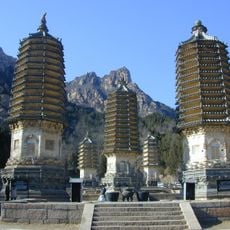
The temple's name comes from a legend about two red snails in the Pearl Spring west of the temple: at sunset they emitted a red glow visible for a hundred li, and the mountain and temple took their name from them. The snails were said to be buried in the grounds, marked by two pagodas.
The community of curious travelers
AroundUs brings together thousands of curated places, local tips, and hidden gems, enriched daily by 94,391 contributors worldwide.