Huairou Reservoir, body of water
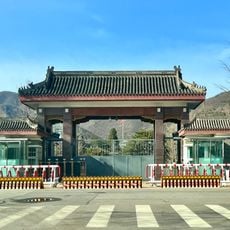
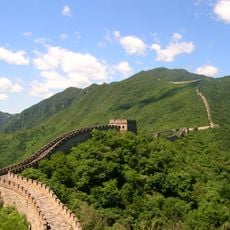
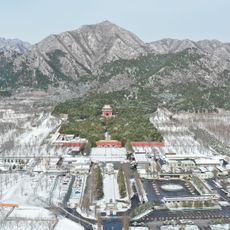
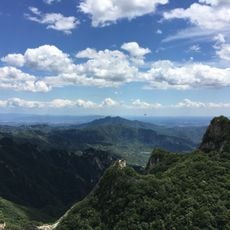
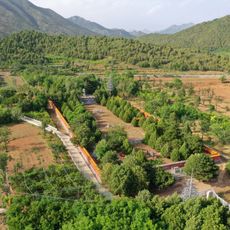
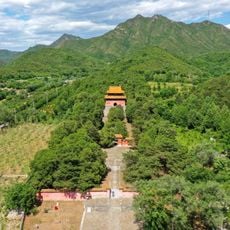
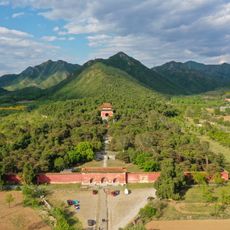
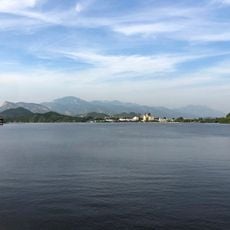
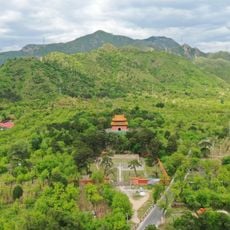
Huairou Reservoir is a large body of water located in Huairou District, north of Beijing, surrounded by green trees and open spaces. The water typically remains still, reflecting the sky, while birds and various animals use the natural surroundings.
Built between 18 March and 19 July 1958 in 120 days by a workforce of 60,000 from 14 districts of Hebei and Beijing, using a state-funded, locally supported model costing 9.77 million yuan. It flooded 8,772.8 mu and relocated 576 households (2,572 people) from eight villages. Premier Zhou Enlai visited twice, joined the labour, and wrote the reservoir's name on 26 June 1958; the inscription was later set in Fangshan white marble on the downstream slope. The spillways were enlarged in 1964 and again from 1988 to 1991, when the main dam was raised 2 m.
The reservoir is closed to the public as a first-grade drinking-water protection zone since 1985, so fishing and picnics no longer take place there. Its name appears in calligraphy by Zhou Enlai, who visited the site twice during construction and wrote "Huairou Reservoir" on 26 June 1958; the inscription is set in white marble from Fangshan on the downstream slope of the dam.
The reservoir has been closed to the public since 1985, when it was designated a first-grade drinking-water protection area, so there is no access to the shoreline or dam. A 5-metre-wide asphalt road circles the reservoir on its east, west and south sides. The Huairou Solar Observing Station stands on the site.
The reservoir has been closed to the public since 1985, when it was designated a first-grade drinking-water protection zone for Beijing. Its water has long stayed at Class II quality, and since 1984 it has fed the city's No. 9 Water Plant together with the Miyun Reservoir. The Huairou Solar Observing Station stands nearby.
The community of curious travelers
AroundUs brings together thousands of curated places, local tips, and hidden gems, enriched daily by 94,016 contributors worldwide.