Kongtongshan National Park, Sacred mountain and national park in Pingliang, China
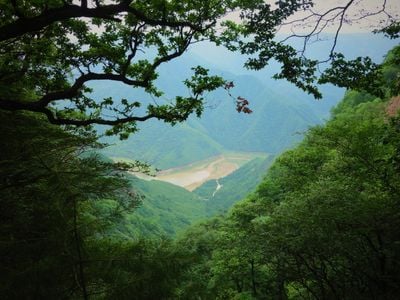
Kongtongshan is a mountain range in Gansu running north-south for about 100 km, with an average width of 15 km. Its main peak, Cuiping Peak, reaches 2,123 m, rising 683 m above the surrounding land. The slopes are over 90% forested and support more than 1,000 plant species. Most of the mountain's eighty-eight temples and shrines are grouped in the Five Terraces area.
According to legend, the Yellow Emperor climbed Kongtong Mountain to question the hermit Guangchengzi on statecraft and health, and the First Emperor of Qin and Emperor Wu of Han later followed. The name appears in the Erya, and the mountain is called the first mountain of Taoism. Before 1949 only a few temples remained, with about 180 monks and nuns; the Cultural Revolution closed the Taoist halls, and restoration began after the reforms.
Kongtongshan is called "the first mountain of Taoism under heaven" because legend says the Yellow Emperor came here to question the hermit Guangchengzi. It is also the birthplace of the Kongtong school, one of China's five major martial arts styles. Its temples and monasteries are grouped mainly in the Five Terraces area, among eight terraces, nine palaces and twelve courtyards.
The best time to visit is between July and September when weather conditions are favorable for walking. Sturdy footwear and plenty of water are recommended since sections of the trails involve steep terrain.
The name Kongtong appears in the Erya, a text from the Spring and Autumn period, in the line "north of the pole star is Kongtong"; Pingliang lies beneath that part of the sky. The same book calls Kongtong the title of a leader of twelve clans, among them the Xiongnu, Loulan and Yuezhi.
The community of curious travelers
AroundUs brings together thousands of curated places, local tips, and hidden gems, enriched daily by 93,865 contributors worldwide.