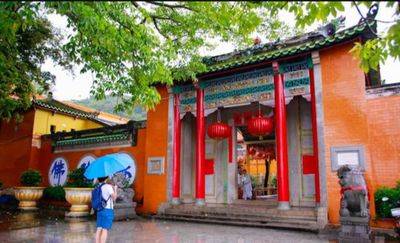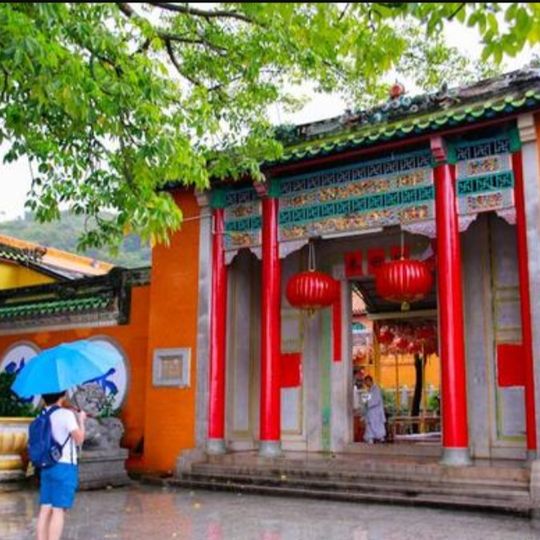
Lingshan Temple, Buddhist temple in Chaoyang District, China
Lingshan Temple is a Buddhist temple in Chaoyang District with multiple halls arranged for worship and spiritual practice. The buildings follow traditional Chinese architectural patterns with curved roofs and decorative elements throughout the complex.
Founded in 791 by the Chan master Chaozhou Dadian, the temple was honoured by Emperor Muzong in 822 with the name Lingshan Huguo Chan Temple. It was restored in 1012, renamed in 1029, refurbished in 1369, and devastated in 1521, leaving only one hall and the shanmen. Magistrate Yang Zhuo supervised reconstruction in 1633, and magistrate Peng Xiangsheng funded works completed in 1706.
The temple grounds hold the Ling Shan Eight Scenes, including the Shejing Pagoda and the Liuyi Pavilion, where Han Yu is said to have left his official robe when parting from Chan master Dadian in 819. The site is a National Key Buddhist Temple in Han Chinese Area, designated by the State Council in 1983.
The temple welcomes visitors throughout the year, with early mornings and late afternoons being the quietest times to explore. Comfortable footwear is recommended since the grounds have varying elevations and feature stone pathways to navigate.
The Thousand Buddha Pagoda is a seven-storey, 19-metre granite tower with an octagonal base and a square body. Over 1,000 niches, each holding a small Buddha statue, are carved into its stone. The temple also preserves the Shéjìng Pagoda and the Liúyī Pavilion, where Han Yu is said to have left his official robe.
The community of curious travelers
AroundUs brings together thousands of curated places, local tips, and hidden gems, enriched daily by 93,086 contributors worldwide.