Hůrka, Artillery fort and museum in Králíky, Czech Republic
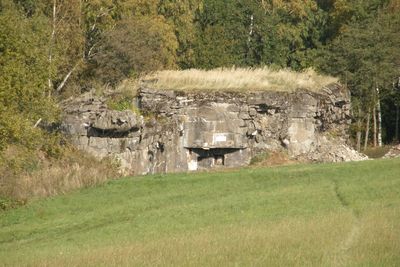
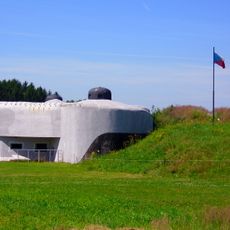
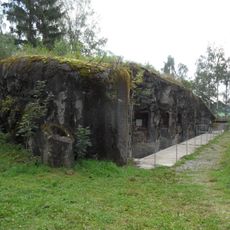
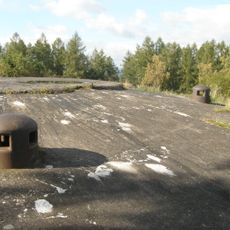
Hůrka is a Czechoslovak artillery fortress built in 1936–1938 into the Výšina hill on the northeastern edge of Králíky. Its five above-ground objects include the entrance block K-S 12a, the artillery turret K-S 12, the artillery blockhouse K-S 11, and infantry blockhouses K-S 10 and K-S 13, linked by underground galleries and vertical stair and lift shafts.
Surveying for the fort began in June 1935, and construction started on 5 August 1936 under builder Karel Skorkovský, lasting 24 months. Designed by Captain Leopold Krejčí, it was one of five completed Czechoslovak artillery forts. Three fatal accidents occurred during construction.
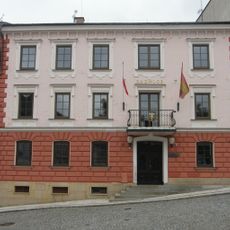
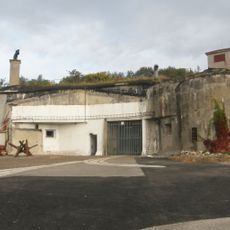
The fort is named after Hůrka hill, and its entrance object bears the name "U rybníčku" (By the Little Pond). Visitors enter through this entrance block, where a 600 mm narrow-gauge fortress railway once handled supplies; the loading hall and ramp were added after the war and the hall was demolished in spring 2012.
The museum entrance is in the entry object K-S 12a, where a post-war hall stood until it was demolished in spring 2012. The underground system under the artillery blockhouse K-S 11 is open on the standard museum tour, while the tower K-S 12, the blockhouse K-S 11 and the infantry blockhouses K-S 10 and K-S 13 can only be visited on special guided routes.
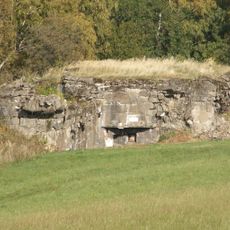
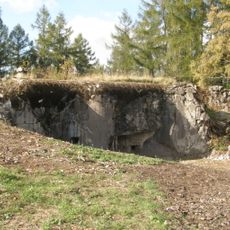
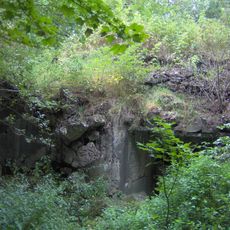
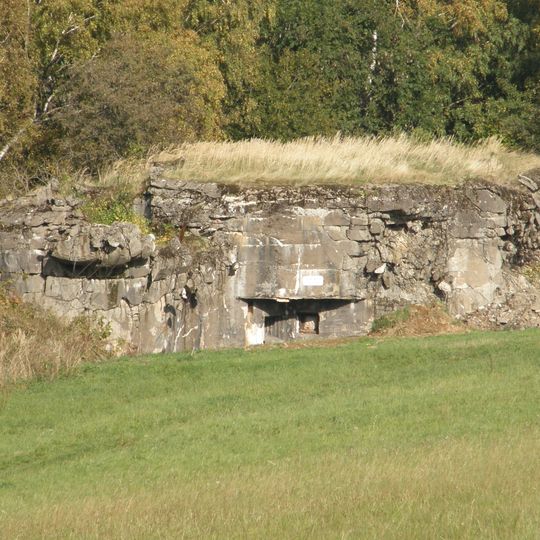
The heavy damage on infantry blockhouses K-S 10 and K-S 11 comes from German occupation-era firing trials with Röchling sub-calibre anti-concrete shells, engineer charges and combat gas. Both armoured bells were torn out in the 1950s, so the missing fittings are not war damage.
The community of curious travelers
AroundUs brings together thousands of curated places, local tips, and hidden gems, enriched daily by 94,631 contributors worldwide.