Dechen Cave, Show cave in Iserlohn, Germany
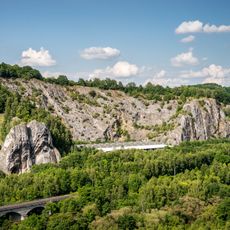
Dechen Cave is a karst cave in the Grüne district of Iserlohn, winding through Devonian limestone in broad curves. Its wide, mostly barrel-shaped passages are lined with stalactites, stalagmites, wall sinter cascades and sinter basins. Of its 902 metres, 400 metres are laid out for visitors; the floor beneath the sinter crust consists of thick clay deposits.
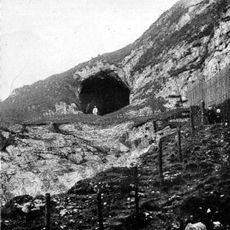
The cave was discovered in 1868 when railroad workers dropped a hammer into a rock crevice, revealing the underground limestone system. This chance discovery led to scientific exploration of the underground formation and its geological features.
The cave is named after Oberberghauptmann Heinrich von Dechen (1800–1889), honoured for his contributions to the geology of the Rhineland and Westphalia. Johann Carl Fuhlrott, the discoverer of the Neanderthal, visited the cave, searched for bones and drew its first plan. Concerts and music tours are held inside the cave.
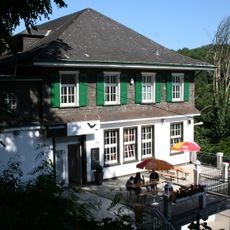
Guided tours last about 40 minutes; photography and filming are not allowed during regular tours. The cave has its own railway halt next to the visitors' entrance, served by RE 16 and RB 91, though the station is not fully barrier-free. Bus line 1 and the S1 express bus also connect the cave with Iserlohn, Letmathe, Hohenlimburg, Hemer and Menden.
The adjacent German Cave Museum displays the skeleton of a baby cave bear and the skull of a woolly rhinoceros, both discovered within the cave system. These fossils provide glimpses into the prehistoric animal life of the region.
The community of curious travelers
AroundUs brings together thousands of curated places, local tips, and hidden gems, enriched daily by 93,620 contributors worldwide.