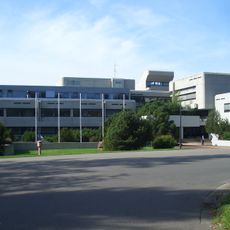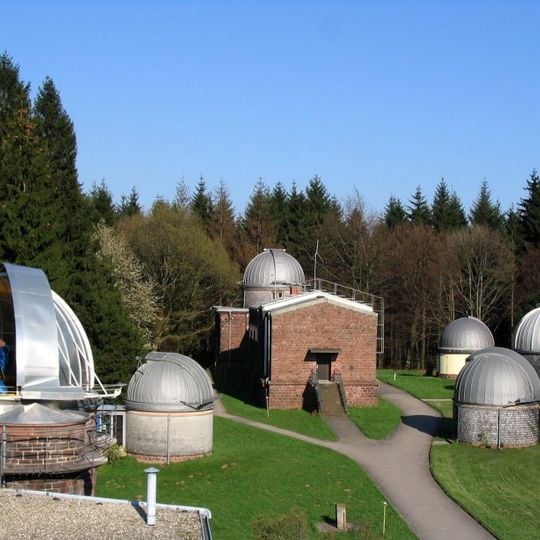
Heidelberg-Königstuhl State Observatory, Astronomical observatory on Königstuhl hill in Heidelberg, Germany
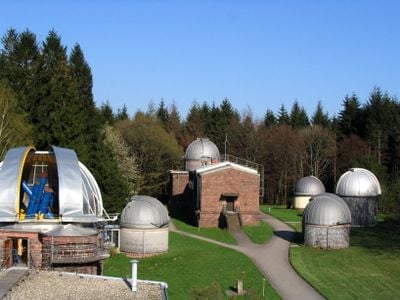
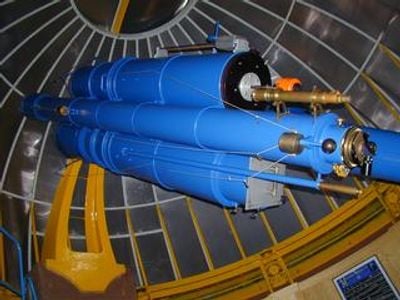
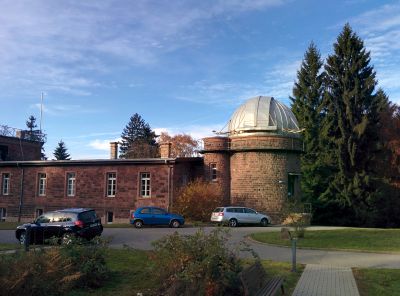
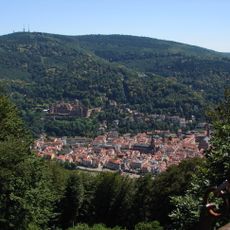
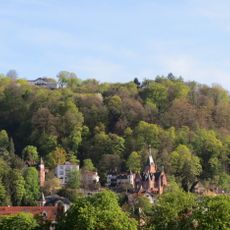
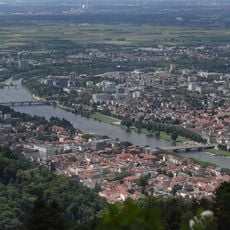
The Heidelberg-Königstuhl State Observatory, also known as the Landessternwarte Heidelberg-Königstuhl, is an astronomical observatory sitting at about 1,840 ft (560 m) on the Königstuhl hill south of Heidelberg's old town. It belongs to the University of Heidelberg and holds several historic telescopes inside buildings dating back to the late 19th century.
The observatory traces its origins to a site founded in Mannheim in 1774, but poor observing conditions led to its relocation to the Königstuhl hill in 1898. Once established there, it grew into a productive research site, drawing astronomers who would go on to make a large number of asteroid discoveries.
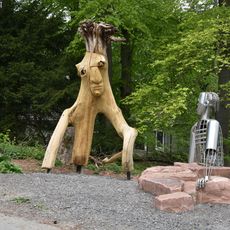
The observatory on Königstuhl hill has a walkable planet path on its grounds, where visitors can follow a scale model showing the planets of our solar system at their relative positions. Walking the path gives a concrete sense of just how spread out the planets actually are.
The observatory can be reached on foot via a trail from Heidelberg or by taking the rack railway that runs from the city center. Visitors who want to look through a telescope should check in advance for scheduled public evenings, as access to the site may be limited at other times.
The asteroid Achilles, found from this site in 1906, was the first known Trojan asteroid ever identified, meaning it travels in a stable point along Jupiter's orbit rather than its own separate path. That discovery gave its name to an entire category of space objects that share a planet's orbit.
The community of curious travelers
AroundUs brings together thousands of curated places, local tips, and hidden gems, enriched daily by 90,871 contributors worldwide.