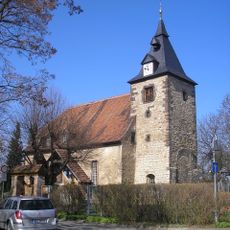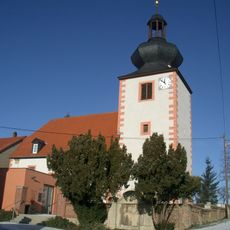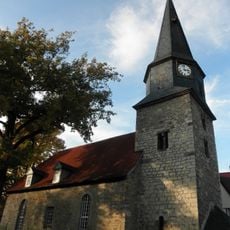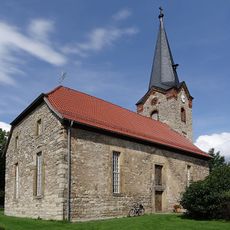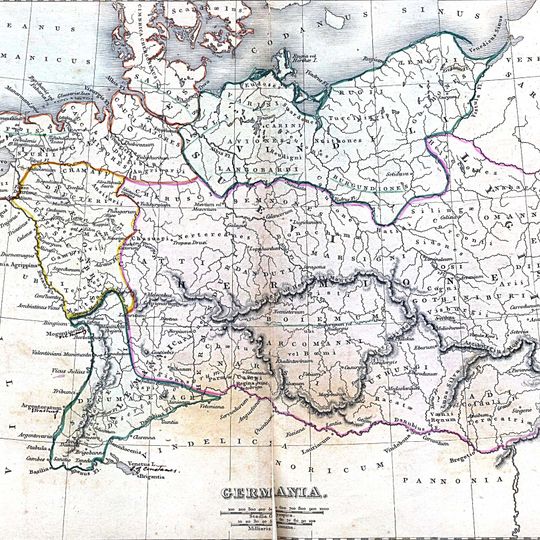
Germania, Historical region between Rhine and Vistula rivers, Central Europe
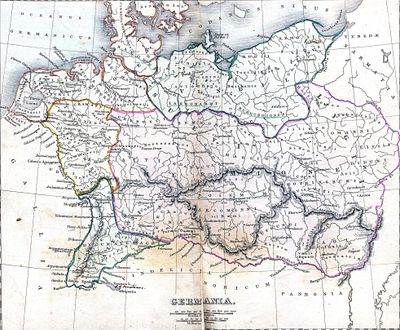
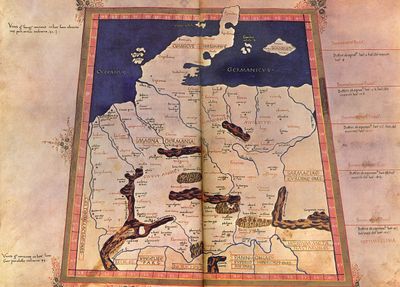
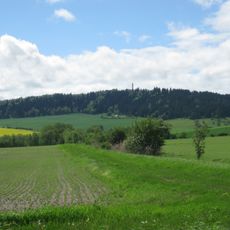
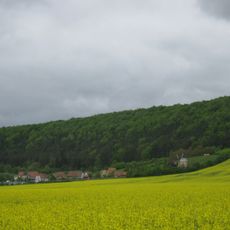
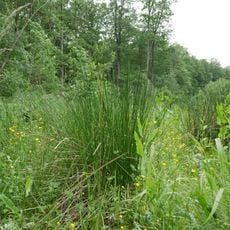
Germania refers to the territory stretching from the Rhine to the Vistula, covering woodlands, plains, and river valleys across Central Europe. This landscape consisted mainly of dense forests interrupted by clearings where settlements and pastures appeared along waterways.
Roman attempts to conquer lands east of the Rhine ended after the battle in Teutoburg Forest in the year 9. This turning point led Rome to fortify its borders along the Rhine and Danube instead of pursuing further expansion.
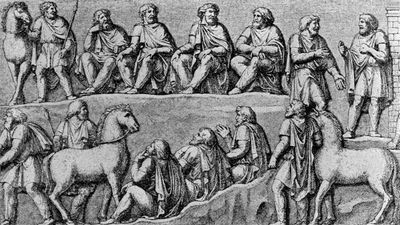
Germanic tribes gathered regularly for assemblies where free men discussed law and made collective decisions in open forums. These communities valued personal loyalty and kinship ties, organizing themselves into clans and warrior bands rather than centralized hierarchies.
This territory held natural resources such as amber, iron ore, and salt that enabled trade with neighboring regions. Trade routes followed rivers and connected settlements with the Roman world and other surrounding areas.
Unlike most European territories of that era, this land remained outside direct Roman administration and kept independent tribal structures. The boundary between Roman and Germanic worlds ran for centuries along natural barriers such as rivers and fortified lines.
The community of curious travelers
AroundUs brings together thousands of curated places, local tips, and hidden gems, enriched daily by 92,749 contributors worldwide.