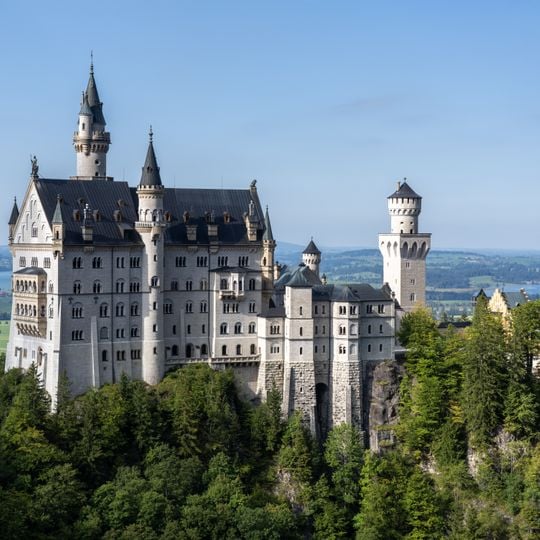
Neuschwanstein, 19th-century palace in Schwangau, Bavaria, Germany
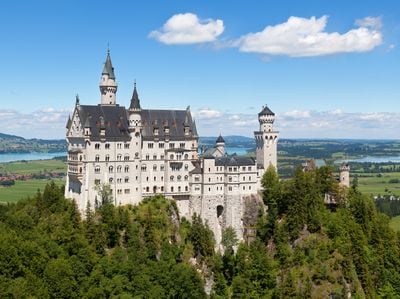
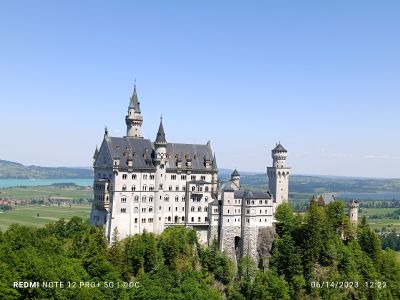
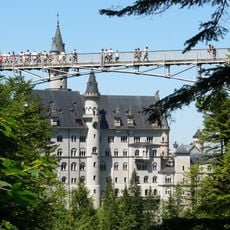
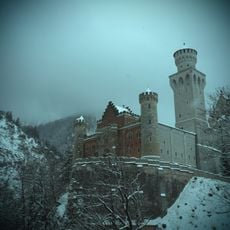
Neuschwanstein is a three-winged palace of pale stone with steep dark roofs, a central square tower with a pointed roof, and a round crenellated tower on the right. It stands on a rocky height above the Pöllat gorge, with rough grey stone at its base and rows of arched and rectangular windows above.
Ludwig II had the castle built from 1869 on the site of the ruined twin castles Vorder- and Hinterhohenschwangau, first documented as "Castrum Swangowe" in 1090. Eduard Riedel designed the three-winged Neo-Romanesque complex; the king died in 1886 before the keep and several interiors were finished. It was opened to paying visitors within weeks of his death.
Interior chambers feature painted scenes from Germanic mythology and Wagner's operatic works, embodying Bavaria's 19th-century medieval revival movement and representing the king's artistic vision.
Visitors must reserve timed entry tickets in advance, available online or at the ticket center in Hohenschwangau village below, with tours running from 9:00 to 18:00 during summer and 10:00 to 16:00 in winter.
Ludwig II lived in the palace for only 172 days before his death in 1886, and Richard Wagner, to whom it was dedicated, died in 1883 without ever seeing it. Six weeks after the king's death, Prince-Regent Luitpold ordered it opened to paying visitors.
The community of curious travelers
AroundUs brings together thousands of curated places, local tips, and hidden gems, enriched daily by 92,175 contributors worldwide.