Schloss Lembeck, Baroque moated castle in Dorsten, North Rhine-Westphalia, Germany
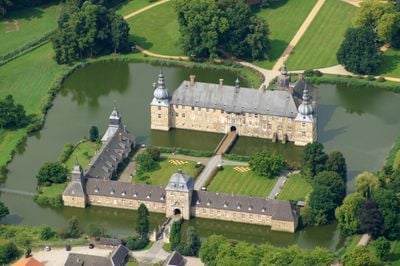
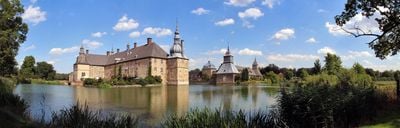
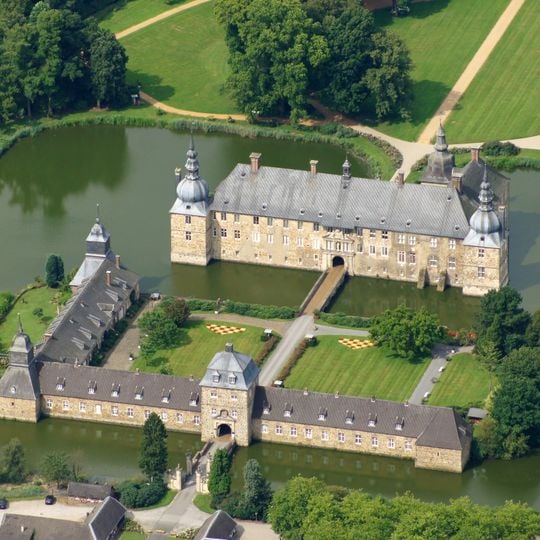
Schloss Lembeck is a Baroque castle in Dorsten, its buildings set on islands within a rectangular moat of 190 by 160 metres. A 500-metre east-west axis runs from a 200-metre avenue through a two-winged forecourt, 110 metres wide, to the three-storey manor house, 94 metres long, with two corner pavilion towers. A stone bridge crosses to the arched gatehouse, whose keystone is dated 1692.
The castle was first documented in 1177 under Adolf von Lembeck, initially serving as a noble residence. By 1390 it had transformed into an administrative center for the Prince-Bishop of Münster.
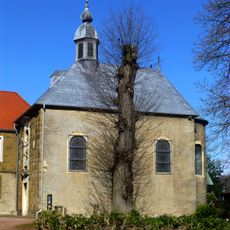
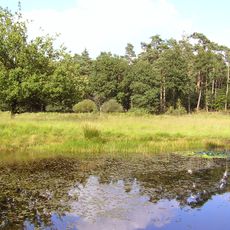
The name Lembeck comes from Low German: "beke" means stream and the first element is related to "clay", suggesting the castle once stood in marshland. The chapel in the neo-Gothic tower has been documented since 1737; weddings are now held there, and concerts take place in the ballroom.
The museum displays Flemish tapestries, Chinese porcelain, paintings and Rococo and Empire furniture; concerts are held in the ballroom and weddings in the chapel. The complex is entered from the east along a 200-metre avenue, then over two bridges to the gatehouse and a stone bridge to the main house. The 14-step sandstone stair leads to the 19th-century terrace and the entrance.
The name Lembeck comes from Low German words meaning flowing water and loam, reflecting the castle's location in former wetlands. This origin reveals how the builders deliberately chose and shaped this site based on its natural features.
The community of curious travelers
AroundUs brings together thousands of curated places, local tips, and hidden gems, enriched daily by 94,540 contributors worldwide.