Chemnitz, River tributary in Mittelsachsen, Germany
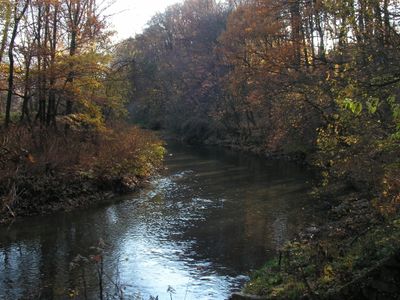
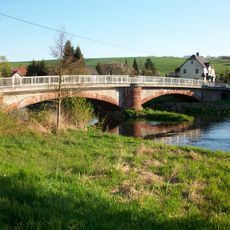
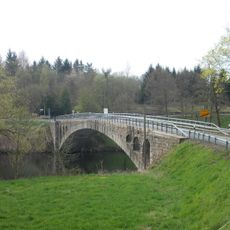
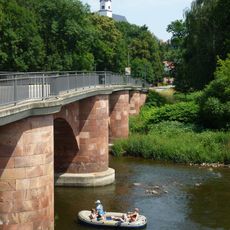
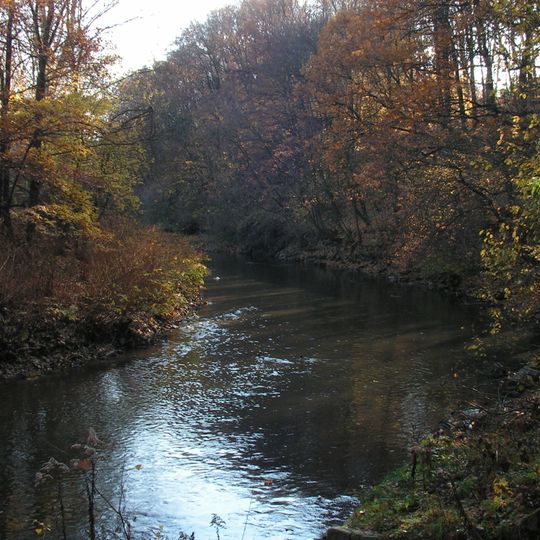
The Chemnitz is a river in Saxony that flows approximately 37 kilometers through the region, fed by the Würschnitz and Zwönitz rivers. It eventually drains into the Zwickauer Mulde, shaping the landscape of several communities along its course.
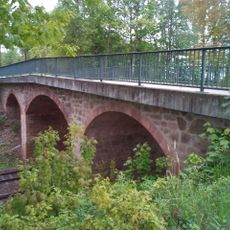
The river formed from the merger of two major tributaries and became an important waterway for settlements in the region over time. Historical events such as a bridge collapse in 1930 left marks on local memory.
The name Chemnitz comes from Slavic origins and means "stream of stones," referring to the pebbly riverbed that shapes the waterway's character. Visitors notice this distinctive feature in areas where the river flows through the urban landscape.
Several access points line the river where visitors can observe the waterway, particularly in urban areas. The best time to visit is outside flood seasons, when the water flows more calmly and the banks are easier to reach.
The river has both visible and underground tributaries within the urban area, forming a hidden water network that often goes unnoticed. This system shows how nature remains actively present beneath the modern city surface.
The community of curious travelers
AroundUs brings together thousands of curated places, local tips, and hidden gems, enriched daily by 92,749 contributors worldwide.