Bundesautobahn 95, federal motorway in Germany
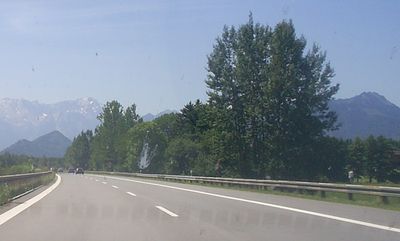
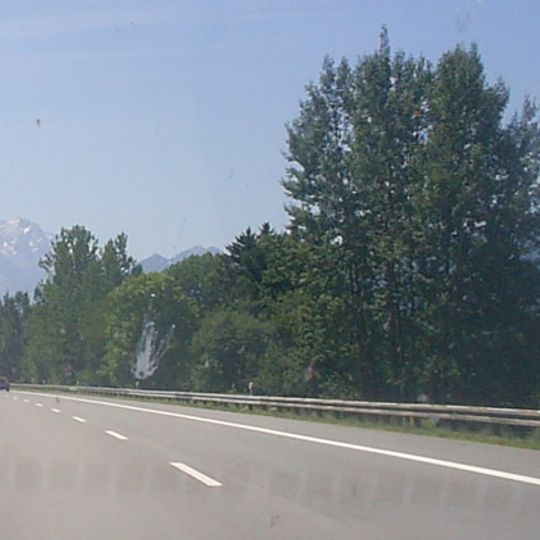
The Bundesautobahn 95 is a highway in southern Germany linking Munich to the Bavarian Alps and stretches roughly 67 kilometers. It runs from the Munich-Kreuzhof junction southward through urban areas and rural landscapes, typically with four lanes outside the city but expanding to six lanes within the Munich area.
The highway was built in stages from the mid-1960s through the early 1980s as a key transportation link for the growing Munich region. Over the decades, major bridges were constructed, including the Loisachbrücke near Ohlstadt in the early 1970s, which became one of Bavaria's significant engineering achievements.
The Bundesautobahn 95 represents a key link between Munich and the Alps that has shaped how locals and visitors experience the region. For many, the drive itself marks the transition from urban life to mountain adventure and has become part of the rhythm of leisure travel in Bavaria.
The route passes through varied landscapes and is designed for different traffic levels, with four lanes south of Munich but six lanes within the city to handle heavier traffic. Main rest stops like Höhenrain offer fuel, food, and electric car charging, while smaller parking areas are scattered along the route for quick breaks.
Despite being designed for fast travel, the A95 has gained a reputation as a route where drivers frequently push speeds to the limit or engage in high-speed racing. The resulting accidents in wet or icy conditions have prompted police to conduct regular speed checks and impose temporary speed limits during bad weather.
The community of curious travelers
AroundUs brings together thousands of curated places, local tips, and hidden gems, enriched daily by 60,000 contributors worldwide.