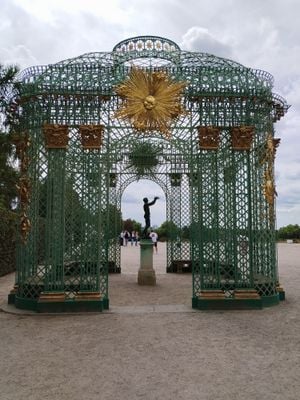
Sanssouci Palace, Rococo palace in Potsdam, Germany.
Sanssouci Palace is a Frederician Rococo summer residence on a terraced vineyard in Potsdam. The single-story building holds ten principal rooms with gilded surfaces and large windows offering views over the garden terraces and surrounding parkland.
Frederick the Great commissioned architect Georg Wenzeslaus von Knobelsdorff to design the residence, and construction took place from 1745 to 1747. The king personally chose the vineyard site and used the palace as a private retreat during the summer months.
Frederick the Great called the palace "mein Weinberghäuschen", my little vineyard house, and had 132 steps laid in six flights up the hill, one per terrace. A windmill already stood on the hill before the palace; when its noise disturbed the king he tried to buy it, and the miller's reply that Berlin's royal court of justice would protect him made Frederick drop the matter.
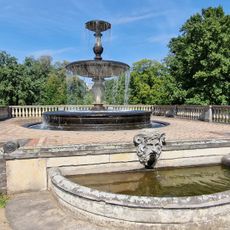
The palace sits at the top of the vineyard hill; the central stair of 132 steps climbs from the parterre fountain up through six terrace flights, with ramps on both sides of the hill as an alternative. Frederick had the palace built at ground level so he could step straight from the rooms onto the terrace. The building was intended for use only in summer, from the end of April to the beginning of October.
The mortal remains of Frederick the Great were reinterred on the uppermost vineyard terrace in 1991, fulfilling his final wish. Visitors often find small potatoes placed on the grave, a reference to his promotion of potato cultivation in Prussia.
The community of curious travelers
AroundUs brings together thousands of curated places, local tips, and hidden gems, enriched daily by 92,440 contributors worldwide.