Zwischenpumpwerk Lichtenberg, Pumping station in Lichtenberg, Berlin, Germany.
The Zwischenpumpwerk Lichtenberg is a historic pumping station in Berlin's Lichtenberg district that stores and distributes drinking water from the Friedrichshagen waterworks to eastern neighborhoods. The facility features underground brick tanks and has been equipped with modern automated protection systems.
Construction of this pumping station took place between 1889 and 1893 following the installation of a pipeline system from southeastern Berlin, designed by architects Richard Schultze and Henry Gill. It became part of the expanding water supply infrastructure needed to serve the growing eastern districts of the city.
The four machine houses, labelled A to D, were built 1889–1893 to plans by Richard Schultze and Henry Gill, who brought in Robert Koch, the hygiene specialist, because the aim was the cleanest possible drinking water. Each house had its own large clean-water pumps, boiler and coal area, and a sand wash; house D only entered service in 1899.
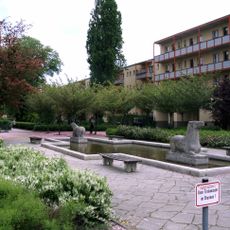
The site sits on the north side of Landsberger Allee at number 230, in the Lichtenberg district; the historic brick machine houses A to F stand along the street front, with the underground pumping hall of 1979–1983 in front of house C. The complex remains an operating water facility, so the grounds are not a public museum and interior access is not open to individual visitors.
During World War II, the site was heavily damaged by bombing because an anti-aircraft gun position stood in the nearby BVG stadium. Even in 1980, an American aerial bomb was found on the grounds and defused.
The community of curious travelers
AroundUs brings together thousands of curated places, local tips, and hidden gems, enriched daily by 93,241 contributors worldwide.