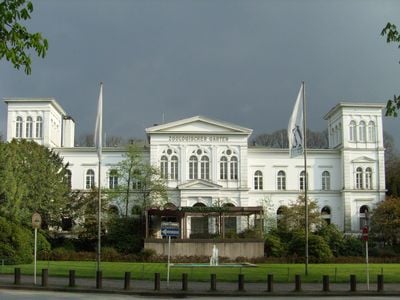
The Green Zoo Wuppertal, Urban zoo in Wuppertal, Germany
The Green Zoo Wuppertal is a 24-hectare zoo housing over 5,000 animals representing nearly 500 species. The collection includes apes, bears, big cats, elephants, birds, reptiles, and fish arranged throughout the grounds.
The zoo opened in 1881 with just 34 animals and developed gradually into today's facility. After Wuppertal took control in 1937, management expanded collections systematically based on local landscape conditions.
The zoo's name comes from its hillside park of old trees on the Boltenberg, and it gave its name to the nearby Zooviertel villa district. The 2006 anniversary brought the "Pinguinale", a city-wide campaign by the Zoo-Verein, which won the 2006 Wuppertal business prize for city marketing. A memorial stone for Sussy Dakaro, who died at the zoo in 1885, stands in the Sonnborn cemetery.
The zoo lies on the Boltenberg between Elberfeld and Vohwinkel, served by the Wuppertal Zoologischer Garten S-Bahn station (S8, S9) and the Schwebebahn nearby. Arriving by car via the A46 is possible but not advised, as parking spaces are very scarce. The grounds climb a hillside, so allow time for slopes.
The zoo's rocky, hilly terrain and Wuppertal's humid, rainy climate led it to specialize in animals of alpine tundra, temperate deciduous forest and tropical rainforest. The 2007 expansion pushed the grounds over the former Elberfeld–Cronenberg railway line, so the Sambatrasse cycle path now crosses the Tigertal bridge above the big-cat enclosures.
The community of curious travelers
AroundUs brings together thousands of curated places, local tips, and hidden gems, enriched daily by 93,286 contributors worldwide.