Pasinger Stadtpark, Urban park at Pasing district, Germany.
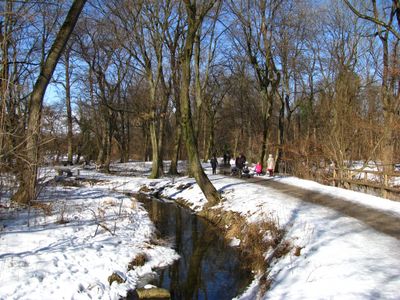
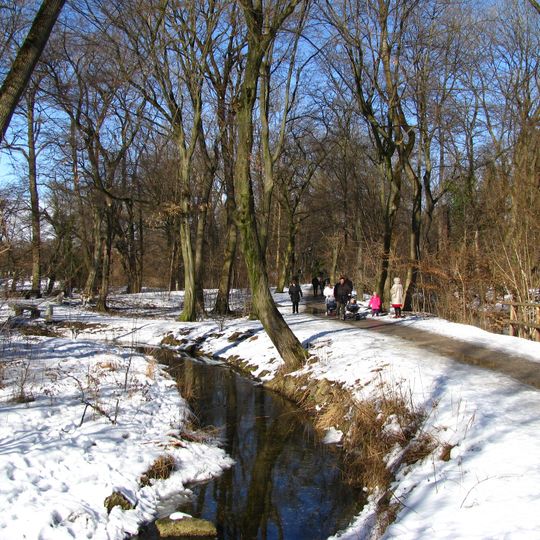
Pasinger Stadtpark is a green space of about 18 hectares spread across both sides of the Würm River, with meadows, trees, and a network of walking paths to explore. The park sits next to historic monastery buildings, with routes threading through the grounds where people seek out different spots depending on light and weather.
A king established the grounds as a park around his country house in 1815, which later became a castle. In the 1920s, a religious community made major changes by removing streets and transferring land to the city, turning it into the public space it is today.
The name reflects the district it sits in, and today visitors experience a mix of open meadows and shaded groves where locals walk, sit, and let children play along the water. The layout shows how the area shifted from royal grounds to public space where people from the neighborhood spend their everyday time.
The park is accessible from Hugo-Fey-Weg street in the Pasing-Obermenzing area and sits close to Pasing railway station for easy arrival. The paths work for various activities, but be aware that ground gets softer after rain, making sturdy shoes a good choice.
Many visitors overlook that a historic monastery building (the Church of Mariä Geburt) links the park to an attached cloister garden, creating one connected green network. This connection reveals how nature and religious spaces intertwine in this part of Munich.
The community of curious travelers
AroundUs brings together thousands of curated places, local tips, and hidden gems, enriched daily by 92,638 contributors worldwide.