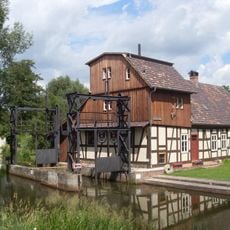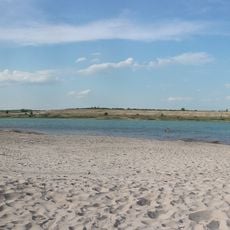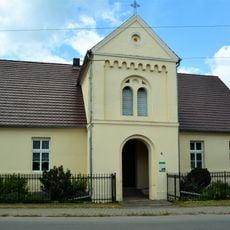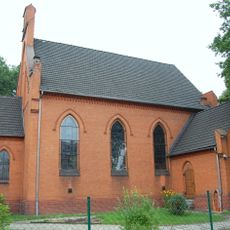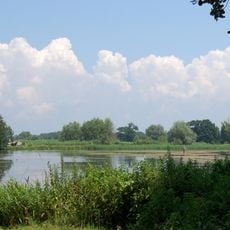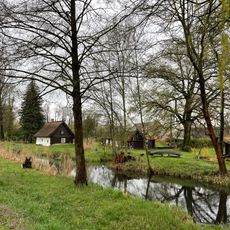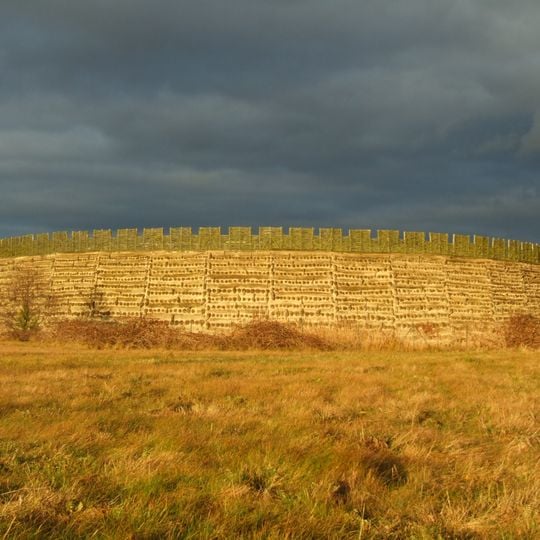
Slawenburg Raddusch, Archaeological castle and museum in Vetschau/Spreewald, Germany.
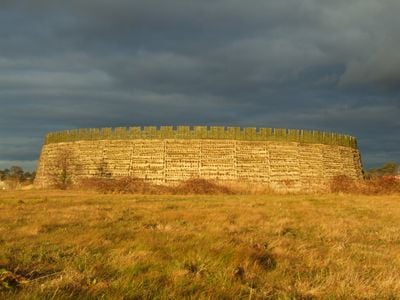
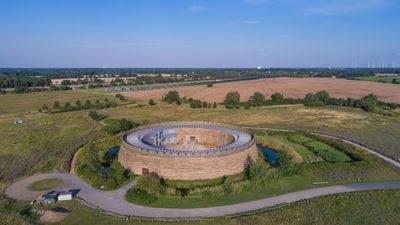
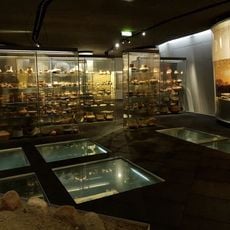
Slawenburg Raddusch is a reconstructed Slavic fortress with circular ramparts built from timber, earth, and clay materials. The site contains a museum displaying objects from different historical periods, showing how people lived and worked here long ago.
The original settlement started as a Slavic fortress in the 9th century, serving as a defensive stronghold for the local community. After centuries of decline, modern reconstruction work brought back the appearance of this medieval fortification.
The name comes from Slavic words meaning fortress, reflecting the settlement's ancient roots in this region. Visitors can observe how early inhabitants organized their daily life through the objects and structures they left behind.
The location sits on the outskirts of Vetschau and is easily accessible by car or bicycle, with adequate parking available on site. Walking paths guide visitors through the grounds and museum, allowing a thorough exploration in about two to three hours.
The museum displays the Götze von Raddusch, an oak plank with a head-like carved end and a hole in the chest area, dated by dendrochronology to 926. It was found damaged by axe blows and fire in the construction pit of the youngest well, about 12 m deep, the deepest of its kind in the West Slavic area.
The community of curious travelers
AroundUs brings together thousands of curated places, local tips, and hidden gems, enriched daily by 93,750 contributors worldwide.