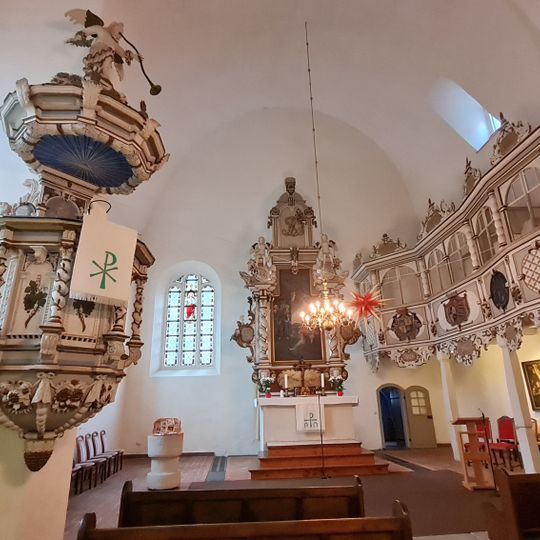
Wendish-German double church, Double church in Vetschau/Spreewald, Germany.
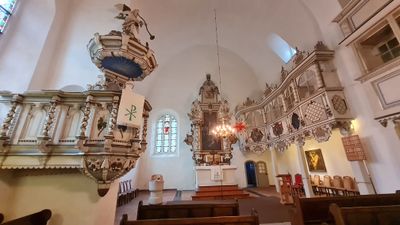
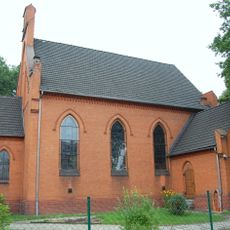
The Wendish-German double church is a building with two separate naves that share a common tower and vestry, one serving each congregation. The two sections display different architectural styles because they were built in different periods to accommodate two different communities.
The first church on the site probably dates from the late 13th century, built of field stones and bog iron during the Christianisation of the Wends; it became Protestant in 1540 under the lords von Schlieben. Fires in 1619 and 1642 left only the tower base, and around 1650 a plain brick church rose on the old foundations. The German nave was added alongside it in 1690–1693 and consecrated on 30 January 1694; the two congregations were united in 1910, and the last Wendish service was held in 1932.
The church grew from the coexistence of Wendish and German congregations, each with their own separate worship space for centuries. This physical division within the building reflects how two distinct communities shared the same town but maintained separate religious lives.
The complex stands in the historic centre of Vetschau at Kirchstraße/Kirchplatz and is strictly oriented east. The Wendish church is entered from the southern long side, while the German nave's portal sits in the middle of the north wall. The two naves lie wall to wall, joined by the vestry at the east gable, and the tower belongs to the Wendish church alone.
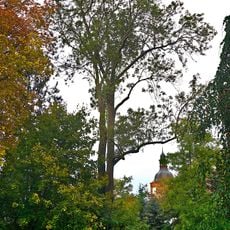
The tower is topped by an upright Star of Bethlehem over a reclining half moon, placed there to mark the defeat of the advancing Ottoman Empire. The octagonal brick-faced timber section was added between 1704 and 1709 on the surviving square base of the medieval tower. The bells were repaired or recast in 1715.
The community of curious travelers
AroundUs brings together thousands of curated places, local tips, and hidden gems, enriched daily by 94,132 contributors worldwide.