Schloss Sacrow, Baroque château in Potsdam, Germany.
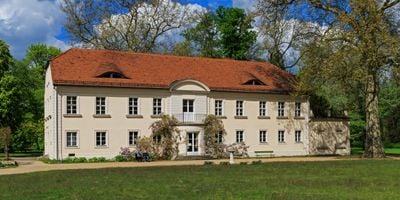
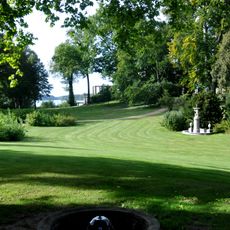
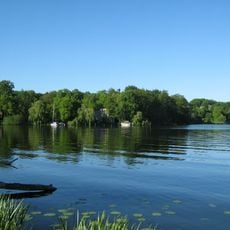
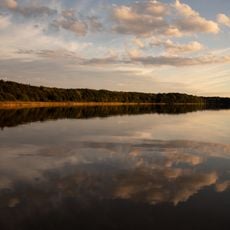
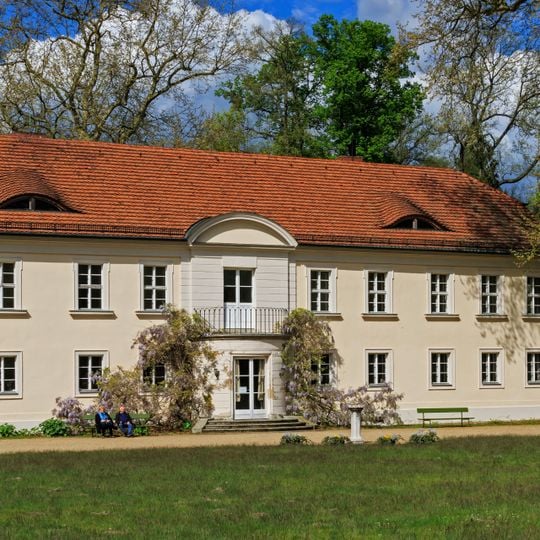
Schloss Sacrow is a Baroque palace on the Havel River's banks in Potsdam, featuring symmetrical architecture and a white facade with restrained ornamental details. The structure sits on slightly elevated ground overlooking the water and is surrounded by historic gardens and grounds.
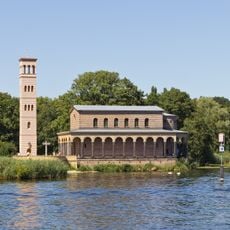
The Swedish lieutenant general Johann Ludwig von Hordt acquired the Sacrow estate in 1764 and built the manor house in 1773 on the site of an earlier building. In 1840 Friedrich Wilhelm IV bought the estate for 60,000 talers and commissioned Ludwig Persius to extend the house and build the Heilandskirche. From 1945 it served as a children's home, later housing the National People's Army and customs authorities.
The house became known as a Schloss only after Friedrich Wilhelm IV bought it in 1840, though the king never lived there. Its bel étage served as the official residence of Albert Heym, first pastor of the nearby Heilandskirche. In 2003 the association Ars Sacrow used it as a "Museum for a Summer".
The palace is managed by the Stiftung Preussische Schlösser und Gärten, and after roof repairs and heating installation the interior work was halted pending a viable use concept. Since 2003 the Verein Ars Sacrow has supported temporary use as a "Museum for a Summer". Check current opening arrangements with the foundation before travelling, as regular access is not assured.
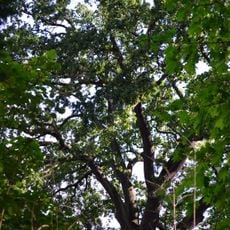
The "thousand-year-old oak" in the park is listed as a natural monument. The palace itself only became known as a Schloss after Friedrich Wilhelm IV bought the estate in 1840, although the king never lived there. The greenhouse that once adjoined the south gable was demolished in the DDR period.
The community of curious travelers
AroundUs brings together thousands of curated places, local tips, and hidden gems, enriched daily by 93,853 contributors worldwide.