Castle Suresnes, Baroque château in Schwabing, Munich, Germany
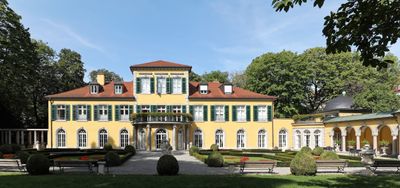
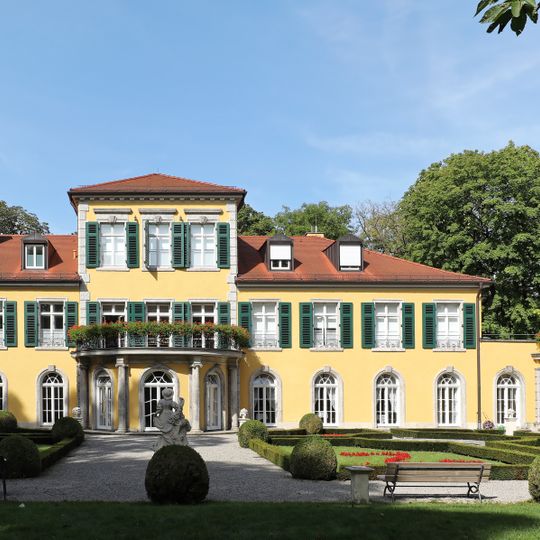
Schloss Suresnes, also called Werneckschlößl, is a two-story building of about 10 by 15 metres with a nine-axis front and a three-axis, three-story central section. On the garden side a single-story rondell projects from the central section and serves as a terrace on the first floor. The yellow facade with green shutters and a red tiled roof faces a gravel courtyard; behind the house lies a French garden of roughly 20 by 40 metres within a park of about one hectare.
Schloss Suresnes was built between 1715 and 1718, probably by Johann Baptist Gunetzrhainer, for cabinet secretary Franz von Wilhelm, modelled on the Château de Suresnes near Paris where he had stayed with Elector Max Emanuel in exile. From 1756 owners changed frequently. After neglect, Friedrich Wilhelm von Jordan bought it in 1823; Carl August von Steinheil moved in 1855, and Elisabet Ney lived and worked there in 1869–1870. In 1919 Ernst Toller was arrested there after being denounced.
The name recalls the Château de Suresnes near Paris, where cabinet secretary Franz von Wilhelm had spent months in exile with Elector Max Emanuel before building this palace in 1715–1718. Since 1967 the Catholic Academy in Bavaria has used it as a conference house; Archbishop Reinhard Marx lived here until the episcopal palace reopened in 2012.
Schloss Suresnes stands at Werneckstraße 24 in Schwabing, in a park of about one hectare; the street is named after Reinhard von Werneck, director of the English Garden from 1798 to 1803. On the garden side lies a French garden of roughly 20 by 40 metres. The building serves as a conference house for the Catholic Academy in Bavaria, so the interior is not open to casual visitors; the address and grounds are best checked before setting out.
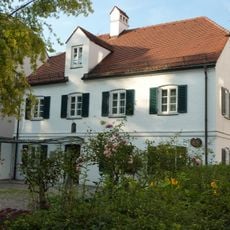
The street name Werneckstraße recalls Reinhard von Werneck, director of the English Garden from 1798 to 1803; the garden lies about 250 metres away. On the garden side a French garden of roughly 20 by 40 metres was laid out. The painter Hans Reichel hid the revolutionary Ernst Toller in his flat here; Toller was arrested in the building early on 4 June 1919.
The community of curious travelers
AroundUs brings together thousands of curated places, local tips, and hidden gems, enriched daily by 94,262 contributors worldwide.