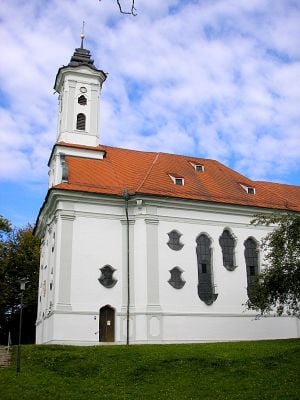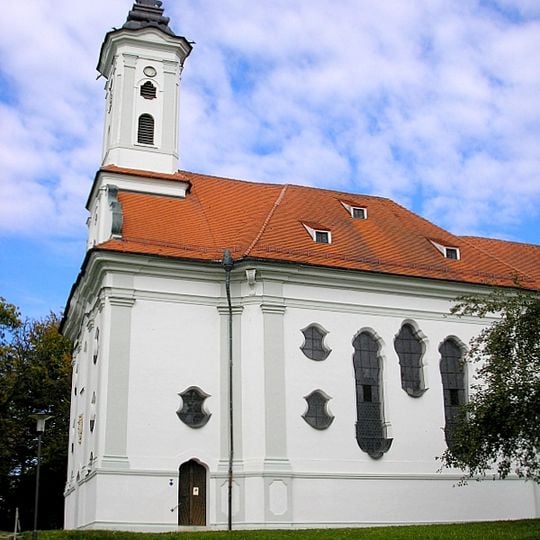
St. Thekla, Rococo votive church in Welden, Germany
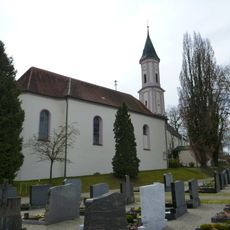
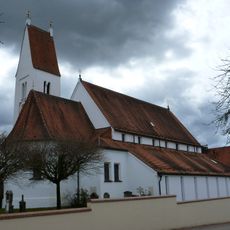
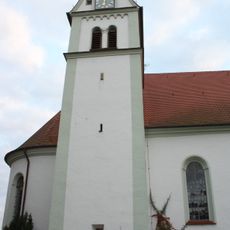
St. Thekla is a Rococo votive church built from 1756 to 1758 by Johann Adam Dossenberger, standing on a former castle hill above the Laugnatal valley in Welden. Its long white body, 33.5 metres from west to east, has gently curving side walls, flat pilasters and a high base band. The square west tower rises from the roof and is capped by an original copper dome; two putti above the west portal hold the Fugger coat of arms with a count's crown.
Count Joseph Maria Fugger von Wellenburg funded the votive church, built from 1756 to designs by Johann Adam Dossenberger of Wollishausen; the foundation stone was laid on 25 July 1756 and the church was consecrated on 19 September 1758. Dossenberger died in 1759. In 1894 Carl Fürst Fugger von Babenhausen gave the building to the market town of Welden, and since 1929 it has served the Discalced Carmelite nuns as their convent church.
The church is dedicated to Saint Thekla, an early Christian martyr whose name reflects the religious heritage of the community. Visitors experience regular worship services and local celebrations that shape Catholic life in the region.
The building sits centrally in Welden and is easily reached on foot, with parking available nearby. Visitors should check local opening hours and enter respectfully, as active worship services take place.
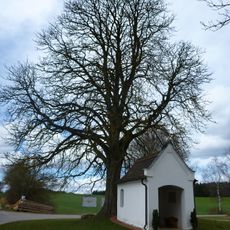
The church stands on the site of a medieval castle; in October 1755 workers began demolishing its bergfried, though the stones were apparently not reused for the new building. The donor, Count Joseph Maria Fugger von Wellenburg, had the area renamed "Neuleblang" and first erected a wooden chapel there as a model for the stone church.
The community of curious travelers
AroundUs brings together thousands of curated places, local tips, and hidden gems, enriched daily by 95,042 contributors worldwide.