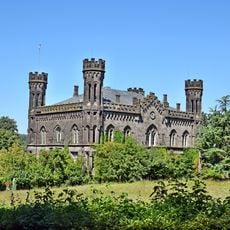
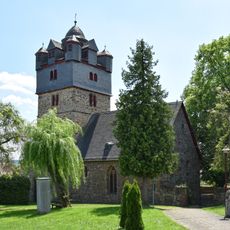
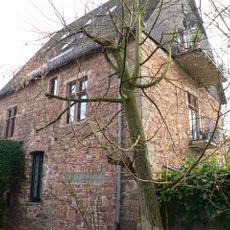
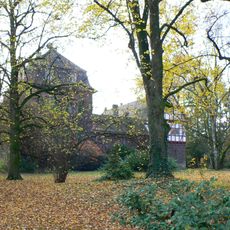
Gronauer Schloß, Medieval castle ruins in Krofdorf-Gleiberg, Germany.
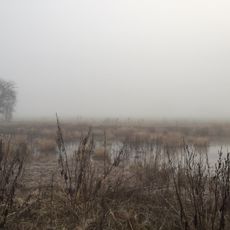
Gronauer Schloß is a castle ruin positioned on a rocky promontory above the Salzböde River. The remains display intact walls, defensive trenches, and multiple building foundations that illustrate the former size of the fortress.
Archaeological digs between 1936 and 1950 linked the site to a Carolingian road fortress guarding a ford and old highway crossing the Salzböde valley, with origins possibly around 720 under Charles Martel. It lost its role after Burg Gleiberg was built, and 2015–2016 excavations found a hall dated by C14 to the first half of the 10th century, possibly built by the Conradines.
The name Gronauer Schloss does not come from a family: the sources tie the site to the Salzböde valley near Salzböden, and the ruin is also called Gronauer Altes Schloss. The nearby Battingsfeld, a cleared island south of the walls, is still farmed today, so the site is a mix of ruined fortification and working agricultural land.
The site is open year-round and features informational signs explaining the medieval fortress layout. Visitors should expect uneven ground and steep sections, so appropriate footwear is advisable.
Excavations in 2015 uncovered a previously unknown hall building with plaster remains still visible. These findings reveal continuous settlement during the early medieval period.
The community of curious travelers
AroundUs brings together thousands of curated places, local tips, and hidden gems, enriched daily by 94,528 contributors worldwide.