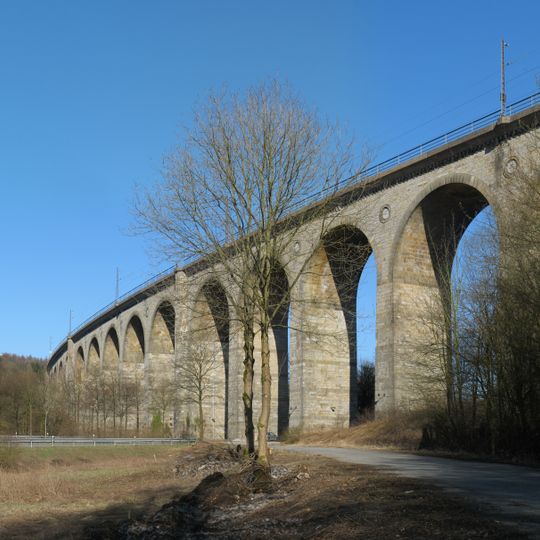
Altenbeken Viaduct, Railway viaduct in Altenbeken, Germany
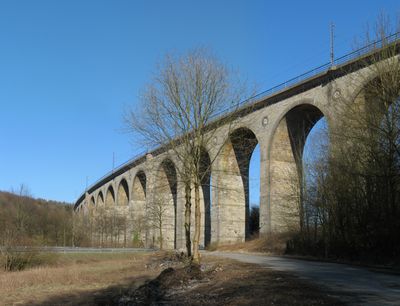
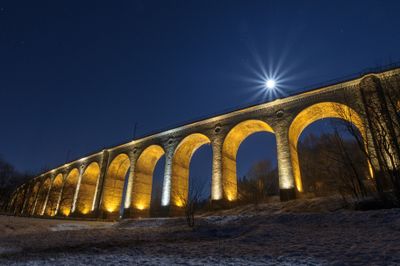
The Altenbeken Viaduct is a double-track limestone railway bridge, 482 m long and up to 35 m high, crossing the Beke valley west of Altenbeken on 24 arches of 15 m span. Its light grey and tan masonry piers carry a flat parapet with the tracks and overhead masts; round medallions sit on the spandrels and rounded openings above the piers near the deck.
King Frederick William IV opened the viaduct on July 21, 1853, and later joked about its high construction costs. During World War II, Allied bombing damaged it, but restoration was finished in October 1950.
The structure is so important to Altenbeken that its silhouette appears on the town's coat of arms. It shapes how residents see themselves and their connection to the place's past.
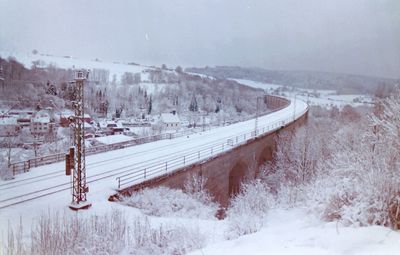
The viaduct is still in use as an active railway bridge on the Hamm-Warburg line, carrying trains between Paderborn and Altenbeken. The best views come from below in the Beke valley or from the surrounding walking paths.
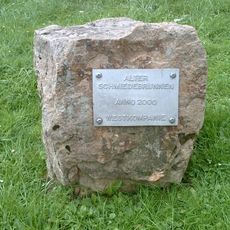
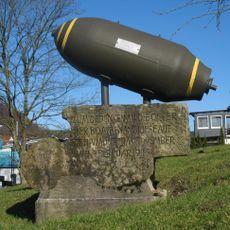
The keystones removed during the 1950 reconstruction could not be reinstated; after standing for years as a monument on Adenauerstraße, they were built into the viewing platform beside the viaduct in July 2009. A 1:87 model of the bridge, 5.52 m long and weighing 25 kg, was presented in 2019 as Germany's longest scale-model railway bridge.
The community of curious travelers
AroundUs brings together thousands of curated places, local tips, and hidden gems, enriched daily by 94,053 contributors worldwide.