Altenwaldeck, Medieval castle ruins in Irschenberg, Germany.
Altenwaldeck is a castle ruin situated on elevated terrain near Irschenberg, featuring surviving stone walls and structural remains from different construction phases. The site shows the layout of a fortified residence with recognizable defensive and living quarters.
Altenwaldeck was probably the ancestral seat of the Lords of Waldeck, who became immediate imperial vassals in the 15th century. The castle, originally called Waldeck, appears under its current name by the 13th century. In 1497 it passed by inheritance to the Seyboltsdorf family and was temporarily called Seyboltsburg. By 1603 it was in bourgeois ownership and, according to tradition, used as a quarry for the church in Au bei Bad Aibling.
The castle gave its name to the lords of Waldeck, who held several seats besides Altenwaldeck, among them Parsberg, Hohenwaldeck, Miesbach, Wallenburg and Höllenstein above Brannenburg. In 1497 inheritance brought the site to the Seyboltsdorf family, after whom it was for a time called Seyboltsburg. In 1603 it passed into bourgeois hands and, by tradition, was quarried for the church of Au bei Bad Aibling.
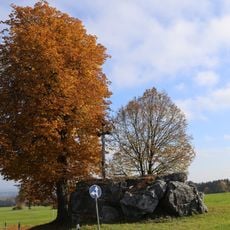
The castle site lies on a spur of the Auer Berg at about 600 m, east below Niklasreuth and west above Au bei Bad Aibling. It is reached by a hiking trail; only the foundation walls of the main castle and the rampart-and-ditch system remain visible. Sturdy footwear helps on the wooded slope.
The castle was originally called Waldeck and appears under the name Altenwaldeck by the 13th century. In 1497 it passed by inheritance to the Seyboltsdorf family and was temporarily known as Seyboltsburg. Tradition holds that after 1603, when it came into bourgeois hands, it was quarried for stone used to build the church at Au bei Bad Aibling.
The community of curious travelers
AroundUs brings together thousands of curated places, local tips, and hidden gems, enriched daily by 92,954 contributors worldwide.