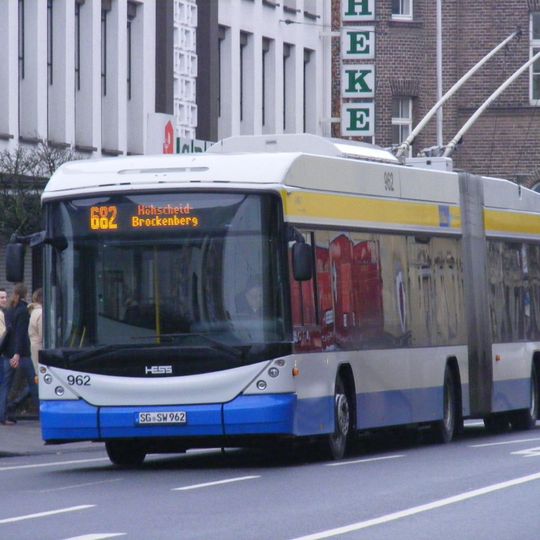
Trolleybuses in Solingen, Oberleitungsbussystem in Deutschland
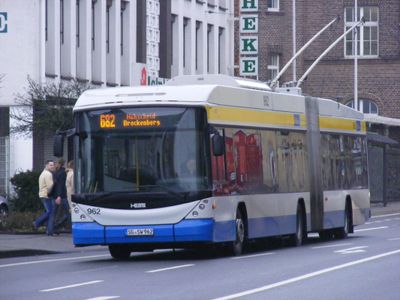
The trolleybus system in Solingen is a public transportation network that uses electric vehicles powered by overhead wires running at 600 volts. Seven main routes radiate from the city center at Graf-Wilhelm-Platz, connecting residential areas, shopping districts, and parks while some routes extend to neighboring Wuppertal and the train station in Ohligs.
The system began operations on June 19, 1952, replacing older tram lines that had served the city. It expanded through new routes and periodic upgrades over the decades, most recently adding battery-powered trolleybuses to improve flexibility and reduce reliance on overhead wires.
Locals call the trolleybuses "Stangentaxi", a name reflecting their connection to the overhead wires that power them. They have become a familiar part of daily life and are deeply woven into how residents experience moving through their city.
Most routes run every ten minutes during peak hours and connect with trains and other buses at main stations, making it easy to switch transportation modes. Vehicles are accessible with low-floor designs, and stops are clearly marked with shelters available at many locations to protect passengers from weather.
The only surviving trolleybus turntable still in existence is located in nearby Burg, a rare relic from when buses needed mechanical help to turn around. This small historic feature draws interest from transport enthusiasts worldwide and shows how the system once operated in its early years.
The community of curious travelers
AroundUs brings together thousands of curated places, local tips, and hidden gems, enriched daily by 90,850 contributors worldwide.