Jungfern Cave, Archaeological cave in Litzendorf, Germany
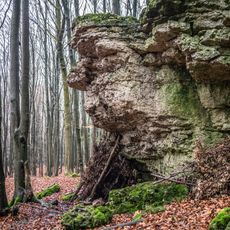
Jungfern Cave is a natural karst cave near Tiefenellern in the Hofbauernholz forest, open to the west. Its single irregular chamber is nine metres wide, three metres high and seven metres long, reached through a portal 3.5 metres wide and 1.25 metres high, with a steeply descending shaft.
The cave was discovered in 1951 by treasure hunter Georg Engert. From 1951 to 1954 Otto Kunkel, formerly a museum director in Stettin, led extensive excavations for the Bavarian State Office for Monument Protection. The digs uncovered Linear Pottery vessels, bone sticks and the remains of at least 40 people, radiocarbon dated to 6,150 ± 65 years ago. The site was used by four Neolithic and nearly all later cultures.
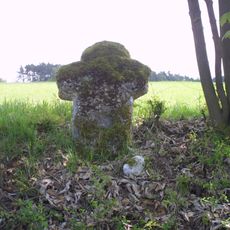
The name refers to the many female skeletons found in the cave and to a local legend of three maidens killed there. The legend may preserve oral memory of Neolithic rituals for over 6,000 years. A field cross, long known as the "Black Cross", was rededicated in the 1980s as a memorial to the cave's victims.
The cave sits in the forest between Tiefenellern, Herzogenreuth, and Laibarös, accessible via marked forest trails. Wear sturdy shoes and watch for damp ground near the entrance.
The bone sticks from the cave were interpreted as Neolithic eating sticks, not ceremonial tools. The same excavations found skull and skeleton remains of at least 40 people, mostly female, with a radiocarbon age of 6,150 ± 65 years.
The community of curious travelers
AroundUs brings together thousands of curated places, local tips, and hidden gems, enriched daily by 93,241 contributors worldwide.