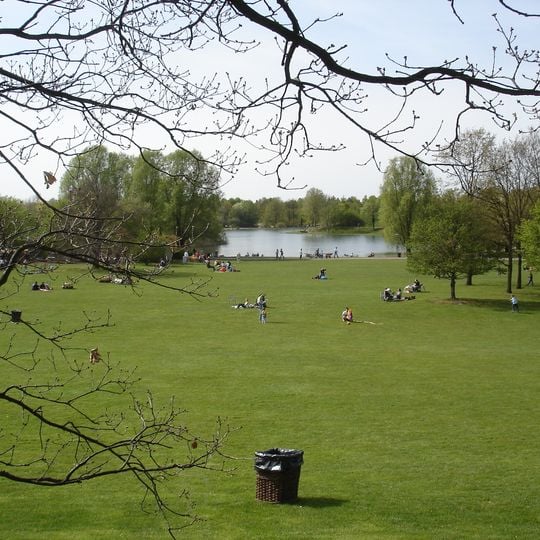
Britzer Garten, Landscape garden in Neukölln and Tempelhof-Schöneberg districts, Germany
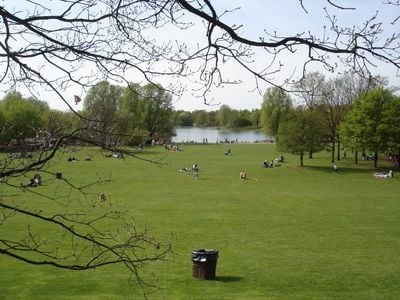
Britzer Garten is a landscape park in the Berlin districts of Neukölln and Tempelhof-Schöneberg that stretches over 90 hectares and includes lakes, meadows, themed gardens, and a geological exhibition. The site divides into different sections that represent different natural environments and connects through paths and a small train.
The park was laid out in the mid-1980s on farmland between existing allotment colonies and nurseries for the Bundesgartenschau 1985, and it opened as Britzer Garten on 8 July 1989. It was meant to give the residents of southern West Berlin a nearby recreation area. Exhibition halls from the show were converted into sports halls, and in summer 1989 the Neukölln district administration had parts of the garden replanted.
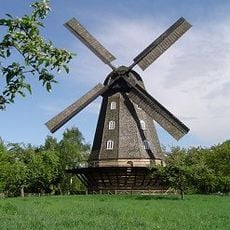
The Kalenderplatz takes its name from the sundial installed there, visible from far away thanks to its size. The Britzer Mühle grinds grain on selected days and draws visitors who want to watch traditional craft methods.
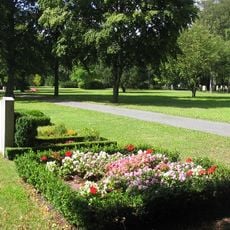
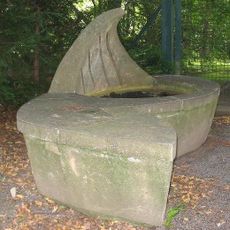
The main entrance is at Buckower Damm, beside the Neukölln park cemetery and near the Britzer Mühle; the forecourt there holds Rolf Szymanski's fountain sculpture Fette Henne. Further gates are at Sangerhauser Weg, Tauernallee, Mohriner Allee, Massiner Weg and the Blütenachse. Parking is at Mohriner Allee, Buckower Damm and Sangerhauser Weg; the first two are served by BVG buses, while Tauernallee and Sangerhauser Weg lie further from the Quarzweg stop. Dogs, bicycles, scooters and inline skates are not allowed, and opening hours vary by season.
The park's 99-metre sundial at the Kalenderplatz is described as the largest in Europe, planned by Jürgen Dirk Zilling, Jasper Halfmann and Klaus Zillich. A narrow-gauge railway, the Britzer Museumsbahn, runs through the grounds, and some of its engines and cars are remakes of historical models.
The community of curious travelers
AroundUs brings together thousands of curated places, local tips, and hidden gems, enriched daily by 93,224 contributors worldwide.