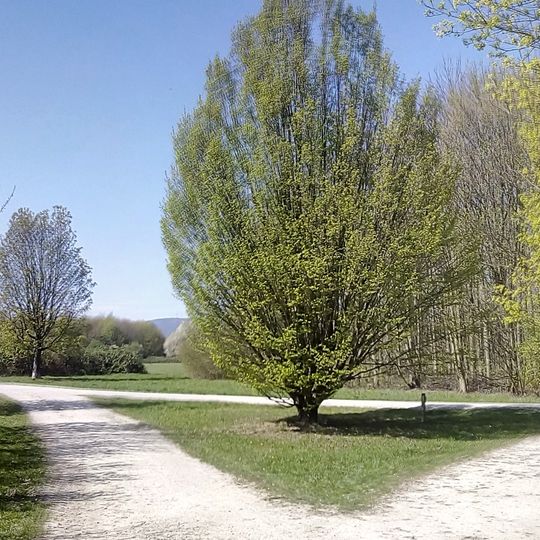
Arboretum Main-Taunus, Arboretum in Sulzbach and Schwalbach am Taunus, Germany
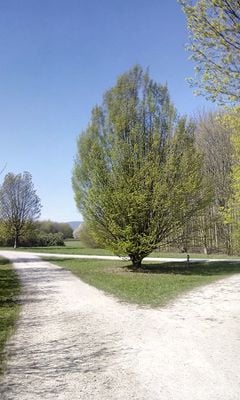
Arboretum Main-Taunus covers about 76 hectares and holds more than 600 species of trees and shrubs organized into 36 small forest communities, each representing a woodland region of the world. Between these groups lie meadows with fruit trees, flowering meadows, a rock trail and a trail for native trees. A wetland is completely enclosed by plants for protection.
The site operated as a Luftwaffe airfield from 1937 to 1945 and remained under American control before being transformed into an arboretum in 1981. This conversion of former military land into an educational forest marked a significant shift in how the space would serve the region.
Four forest sections represent different regions of the Northern Hemisphere, each with its own plant communities and tree species. Walking through them shows how forests look and feel different depending on their origin and climate.
The 76-hectare site is open and freely accessible, with marked routes where dogs, cycling and horse riding are permitted. A Sulzbach farmer works 11 hectares of farmland and 15 hectares of meadow within the park, and a wetland biotope is fenced off by dense planting and should be left alone.
The Chilean araucaria, called the "hedgehog" among trees for its spiky leaves, grows here in three specimens. They are the only trees in the park whose native range lies in the Southern Hemisphere. The arboretum also holds the world's most massive tree species, the North American giant sequoia, and the longest-lived, the bristlecone pine, though both are still young here.
The community of curious travelers
AroundUs brings together thousands of curated places, local tips, and hidden gems, enriched daily by 94,028 contributors worldwide.