Mannheim Palace, Cultural heritage monument in Mannheim, Germany
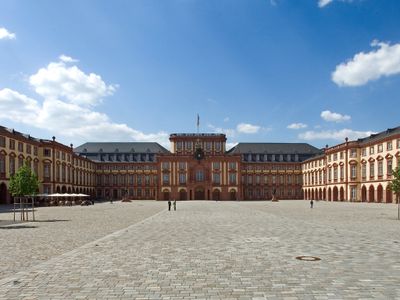
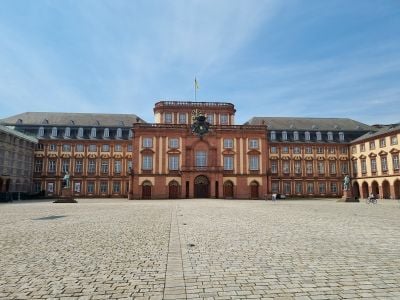
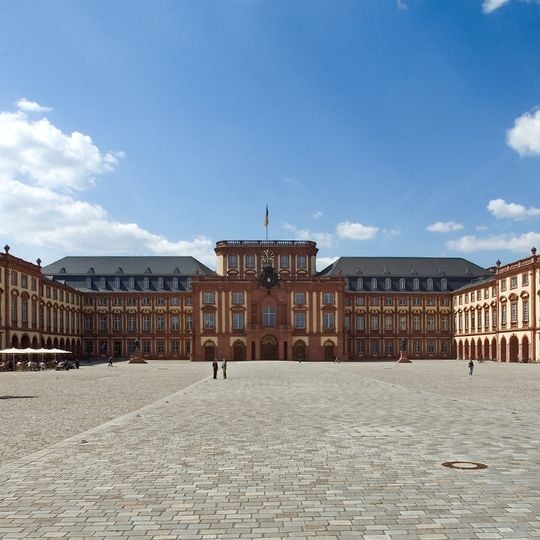
Mannheim Palace is a Baroque palace in Mannheim, Germany and one of the largest palaces of this architectural style in Europe. The façades display rich ornamentation and columns, while the interior divides into wings with halls, galleries, and smaller rooms.
Karl Philipp moved his court from Heidelberg to Mannheim in 1720 and laid the foundation stone of the new palace on 2 July 1720, on the site of the old Friedrichsburg. Jean Clemens Froimon designed the facades and made the side wings three storeys high. The court transferred into the residence in 1731, and building was completed around 1760. In 1778 Karl Theodor inherited Bavaria and moved his court to Munich.
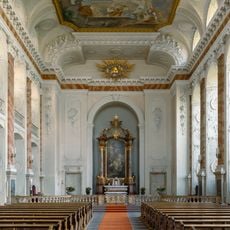
The palace church in the north wing still holds services, and the Amtsgericht, Mannheim's lower district court, occupies part of the same wing. Students gather in the Schneckenhof courtyard for university parties, while the wartime bunker beneath the Ehrenhof now opens occasionally as a space for modern and urban art, for instance during the Long Night of Museums.
Visitors should wear sturdy shoes since exploring the many rooms and wings requires walking long distances. Some spaces are accessible only by stairs, and certain areas may be restricted during academic terms.
Below the Court of Honor lies a World War II bunker built to shelter up to 1,500 people. After the war it served as a hotel for up to 65 guests, and today it opens occasionally as an exhibition space for modern and urban art, for instance during the Long Night of Museums.
The community of curious travelers
AroundUs brings together thousands of curated places, local tips, and hidden gems, enriched daily by 92,878 contributors worldwide.