Duke's Chest Castle, Gothic castle in Ingolstadt, Germany.
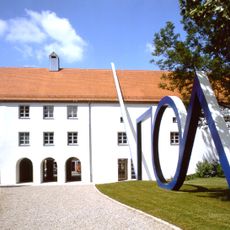
Duke's Chest Castle, also called Altes Schloss, is a Gothic secular building begun around 1255 in Ingolstadt. It rises eight storeys, built of rubble and brick, with stepped gables divided by pilasters on the end walls and a small oriel on the west side marking the former castle chapel. A round town-wall tower from the 13th century adjoins the east side.
Duke's Chest Castle was built around 1255 on the orders of Louis the Strict as a palas (residential building) of the Ingolstadt residence, making it the oldest surviving non-ecclesiastical building in the city. It was originally part of a larger complex of outbuildings around a courtyard. It served as the ducal residence until the New Castle was completed in the 15th century, and was probably converted into a granary only at the end of the 17th century.
The building's name, Herzogskasten ("duke's chest"), recalls its later use as a ducal granary, unlike the smaller namesake buildings in Abensberg and Kelheim. Since 1981 it has housed the Marieluise-Fleißer-Bücherei, the city library named after the Ingolstadt writer Marieluise Fleißer, and the Stadttheater runs a studio here.
The building stands in Ingolstadt's old town, near the first rectangular city wall that bordered the Schutter to the south. Since 1981 it has housed the Marieluise-Fleißer-Bücherei, the city library, open to the public since its 1974 renovation. The Stadttheater Ingolstadt also runs a studio inside. Visitors enter through the library, whose 1978–1980 conversion by architects Branca, Brand and Falkner added concrete coffered ceilings and wooden galleries.
The fortress was built not merely as a military stronghold but also served as a residence for the ducal family and their court. This dual purpose made it a center of power and culture in the region.
The community of curious travelers
AroundUs brings together thousands of curated places, local tips, and hidden gems, enriched daily by 93,421 contributors worldwide.