Messel pit, Paleontological site in Darmstadt-Dieburg, Germany
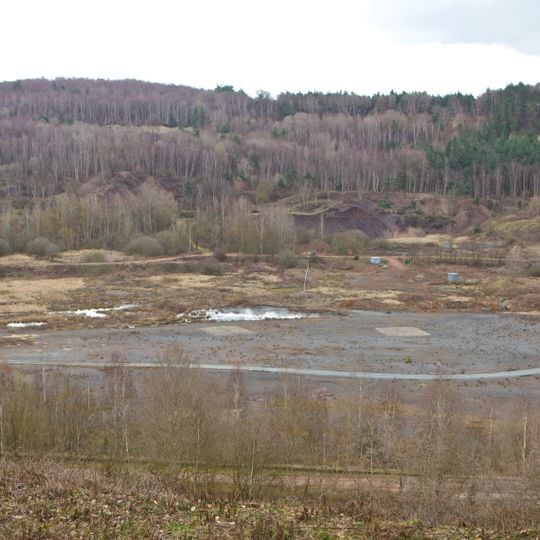
The Messel Pit is a disused bituminous shale quarry near the village of Messel, about 35 km southeast of Frankfurt. Its floor lies roughly 60 m below the surrounding land and covers about 0.7 km², with reddish-brown and grey rock walls rising on the sides. The oil-shale bed, formed in a lake about 47 million years ago, extends 13 m down onto older sandstone.
Brown coal was mined from 1859, and oil shale from the 1880s; an alligator skeleton was found as early as 1876. Mining ended in 1971, and after plans for a landfill were stopped, Hesse bought the site in 1991. Senckenberg researchers have excavated regularly since 1975.
The site preserves evidence of life from a time when Earth's creatures were changing and developing into new forms. Visitors can observe how completely these ancient animals were preserved and how different they are from animals alive today.
The site can be visited with guided tours where experts explain the fossils and rock layers. The nearby Messel Museum displays additional finds and helps visitors better understand what they see at the location.
Many fossils here are so finely preserved that details like fur, feathers, and even internal organs of the animals remain visible. This is exceptionally rare and makes the finds scientifically extraordinary.
The community of curious travelers
AroundUs brings together thousands of curated places, local tips, and hidden gems, enriched daily by 94,046 contributors worldwide.