See the monuments around you in AROpen chests in the app
Around Us is built for your phone — point your camera at the streets and discover the monuments and places around you in augmented reality.Around Us is built for your phone — chests unlock when you walk, explore and capture nearby places.
Hesse preserves an extensive collection of historic structures spanning nearly two millennia. The Roman fort of Saalburg near Bad Homburg documents 2nd century frontier fortifications along the Limes. Medieval monasteries such as Arnsburg near Lich and Seligenstadt demonstrate Carolingian and Romanesque construction, while the abbey ruins at Bad Hersfeld reveal the architectural scale of Benedictine establishments. The Abbey of Lorsch holds UNESCO World Heritage status and presents through its gatehouse one of the most important examples of early medieval architecture north of the Alps.
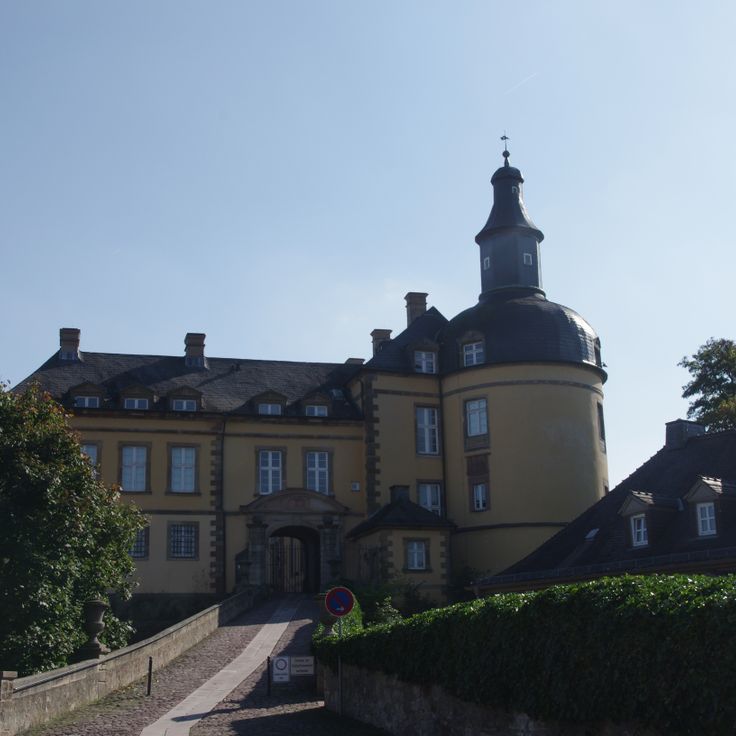
The region connects these religious and military structures with castles and palaces from various periods. Münzenberg Castle and the ruins at Ulrichstein document Hohenstaufen fortification techniques, while Braunfels Palace and Friedrichstein Palace in Bad Wildungen illustrate the evolution from defensive stronghold to residence. The Grimm Brothers House in Steinau an der Straße links literary heritage with regional history. Geological formations such as the Rock Sea in the Odenwald and the Crystal Cave at Kubach complement the human built monuments with natural history features.
Hesse preserves an extensive collection of historic structures spanning nearly two millennia. The Roman fort of Saalburg near Bad Homburg documents 2nd century frontier fortifications along the Limes. Medieval monasteries such as Arnsburg near Lich and Seligenstadt demonstrate Carolingian and Romanesque construction, while the abbey ruins at Bad Hersfeld reveal the architectural scale of Benedictine establishments. The Abbey of Lorsch holds UNESCO World Heritage status and presents through its gatehouse one of the most important examples of early medieval architecture north of the Alps.
The region connects these religious and military structures with castles and palaces from various periods. Münzenberg Castle and the ruins at Ulrichstein document Hohenstaufen fortification techniques, while Braunfels Palace and Friedrichstein Palace in Bad Wildungen illustrate the evolution from defensive stronghold to residence. The Grimm Brothers House in Steinau an der Straße links literary heritage with regional history. Geological formations such as the Rock Sea in the Odenwald and the Crystal Cave at Kubach complement the human built monuments with natural history features.
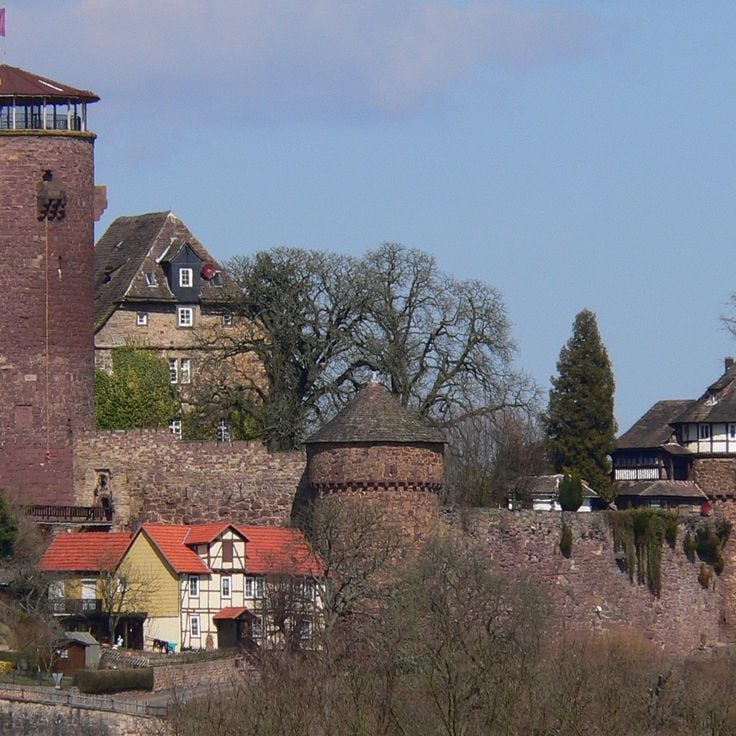
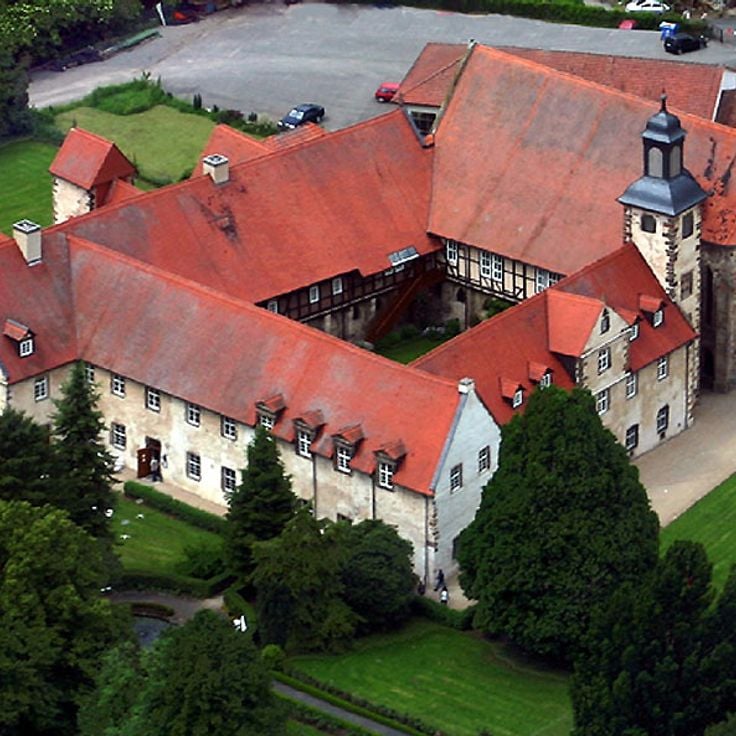
This medieval fortress from the 1200s ranks among the historic structures of Hesse that document periods from Roman times to the Grimm era. Trendelburg now houses a hotel with 36 rooms and a restaurant, while preserving the original defensive architecture from the Middle Ages that provides insight into regional building history.
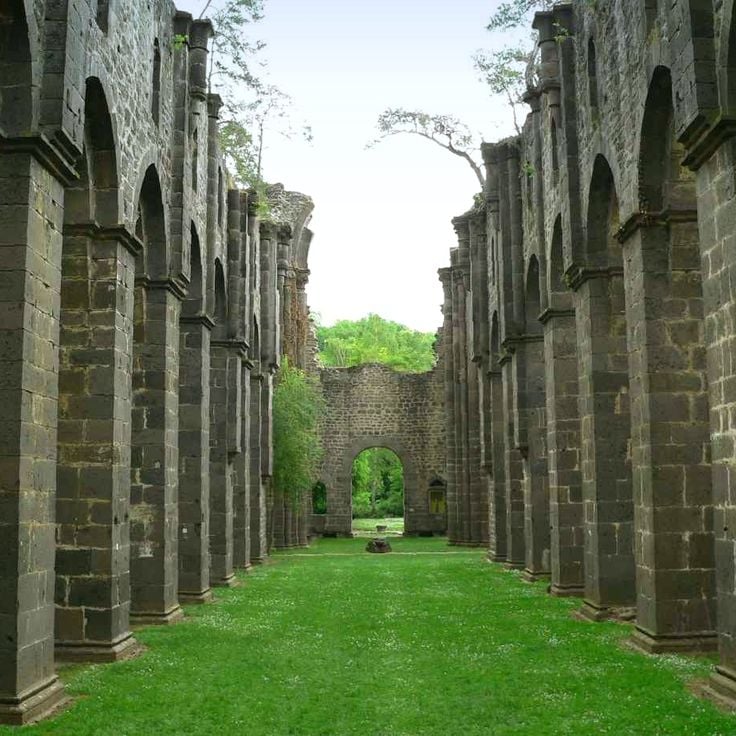
Arnsburg Abbey presents the remains of a Cistercian monastery from the 12th century in this collection of historic sites in Hesse. Visitors find preserved cloisters and foundation walls that provide insight into medieval monastic architecture. The ruins document Romanesque construction style and the Cistercian way of life.
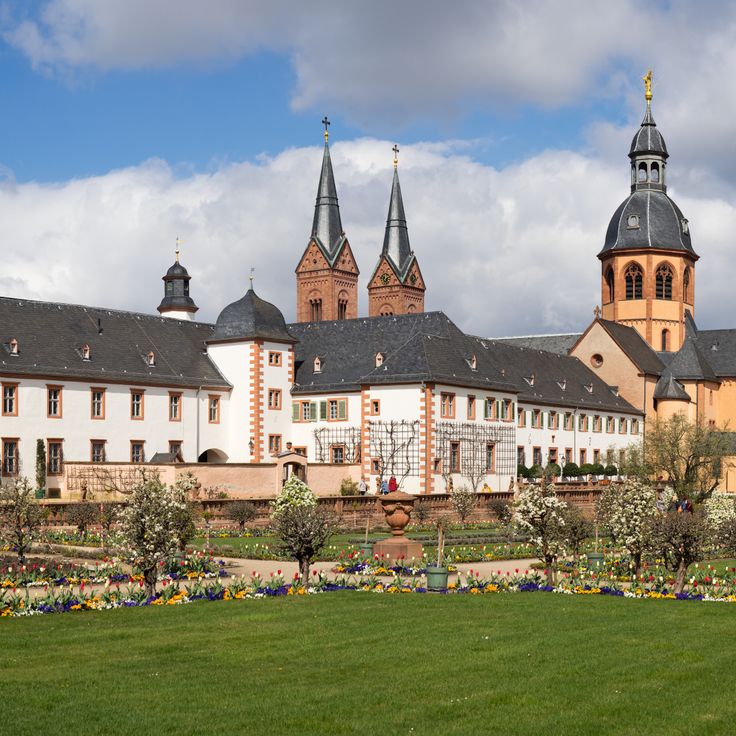
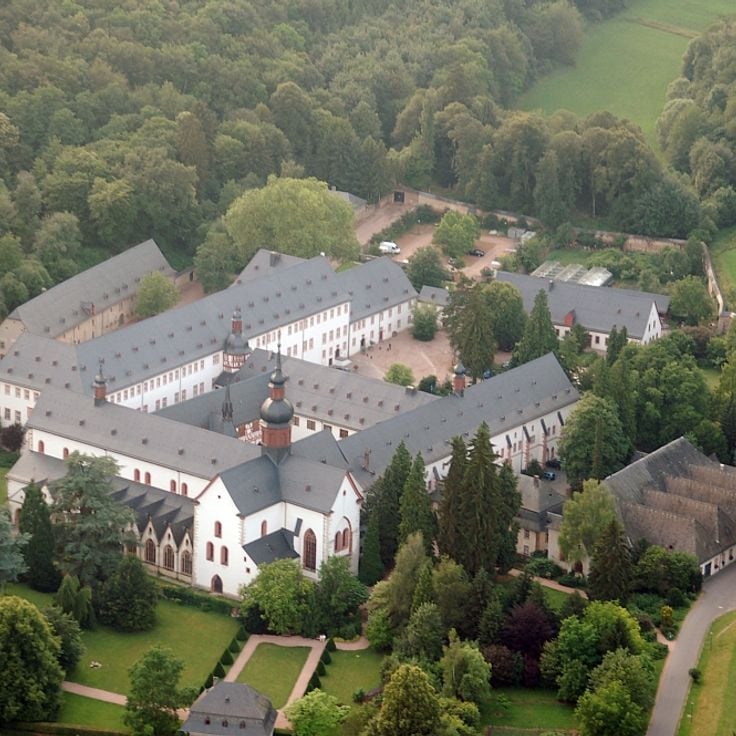
This Benedictine abbey was founded in 828 and ranks among the important monastic complexes in Hesse. The Romanesque basilica demonstrates early medieval architecture from the Carolingian era. The monastery garden maintains the tradition of cultivating medicinal plants. The complex provides insight into monastic life across twelve centuries. The collegiate church and convent building remain largely intact.
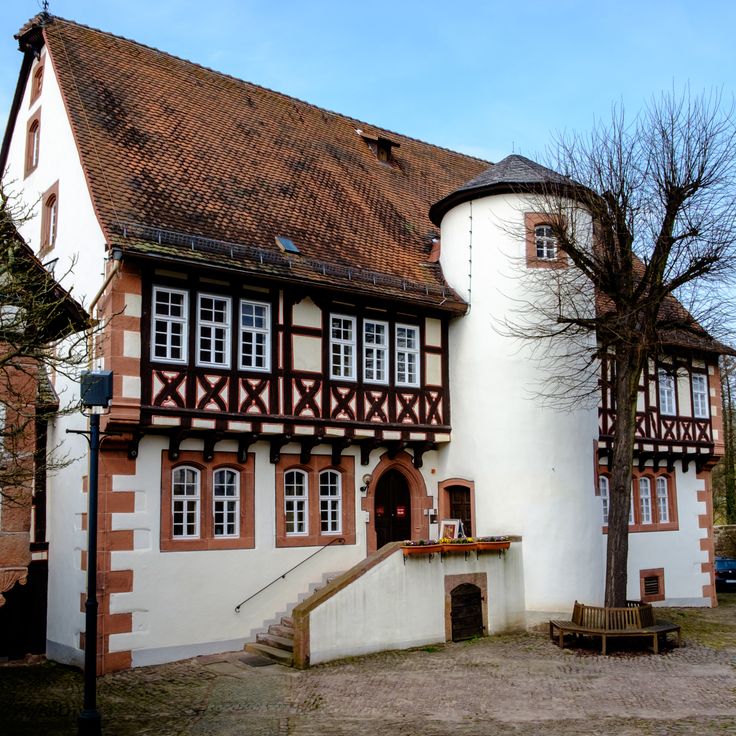
This former residence of the Grimm family displays a collection of handwritten texts, documents and personal items from the brothers' lives, who spent their formative childhood years here. The exhibition connects the biographical roots of the linguists with the historical development of their literary work and adds an important station for exploring German fairy tale tradition to the cultural heritage of Hesse.
The Abbey of Lorsch adds to the historic sites in Hesse as a Carolingian monastery from the 8th century with a preserved Romanesque entrance hall and foundations of the former abbey church that document the transition from early medieval to Romanesque construction.
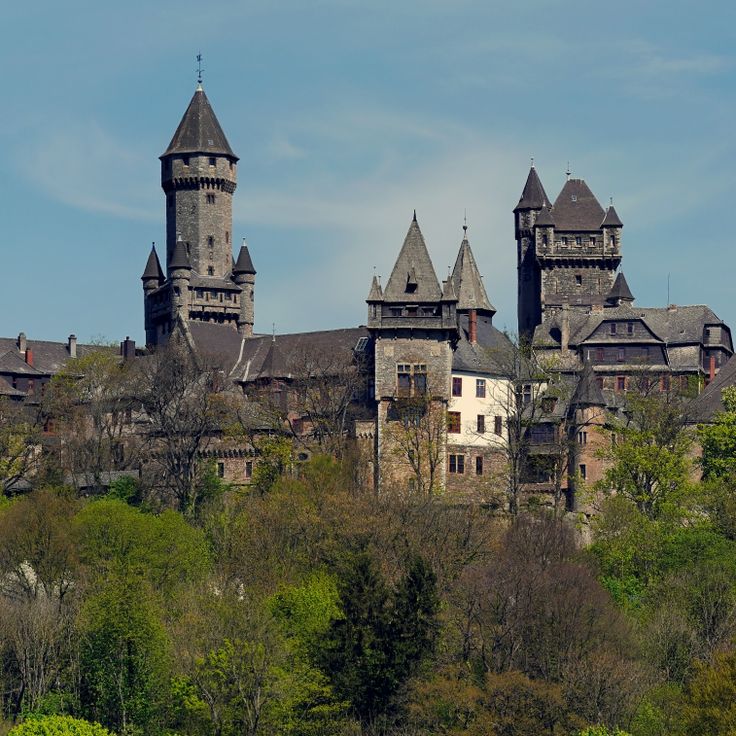
Braunfels Palace combines medieval fortifications with 19th-century additions. The towers and defensive walls of this structure date from the 13th century, while the neo-Gothic elements were implemented under Count Ferdinand. The weapons collection displays European armor and arms from the 15th to 17th centuries. As part of the historic sites in Hesse, this palace documents the architectural evolution from a defensive stronghold to an aristocratic residence.
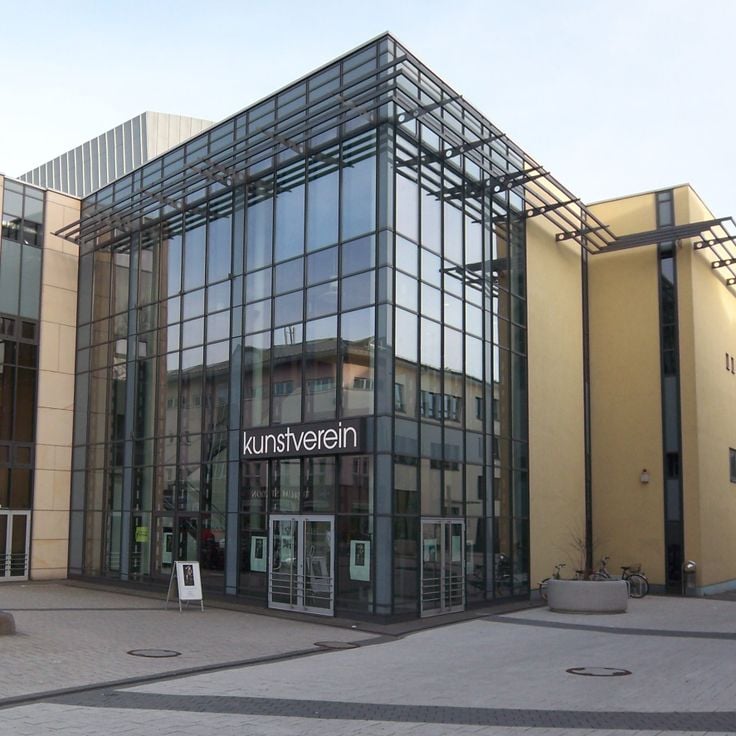
The Marburg Art House presents rotating collections of contemporary and classical art from Hesse within a timber-frame building that merges architectural heritage with regional artistic production, contributing to the cultural diversity of the region and offering exhibitions that reflect both historical and modern creative traditions.
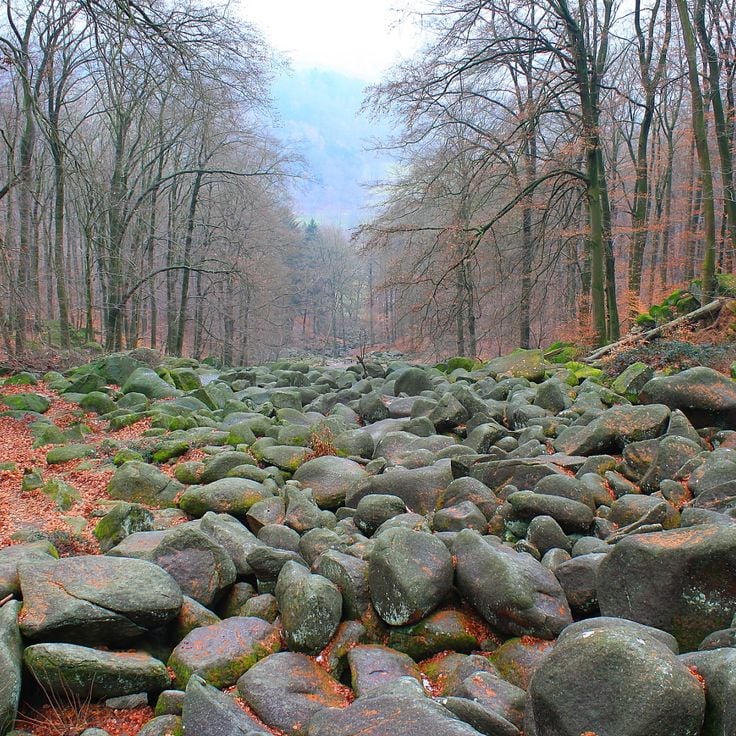
This stone field consists of granite blocks deposited during the last Ice Age, now covering an area of around 790,000 square feet (320,000 square meters). The formation adds a geological component to Hesse's historical heritage, demonstrating the natural processes that shaped the region during the Quaternary period. The granite blocks lie scattered across forested slopes in the Odenwald, documenting the effects of glacial weathering on the landscape.
This castle was built between 1170 and 1180 as an imperial residence and served as the administrative center of the Hohenstaufen dynasty. The complex stands on an island in the Kinzig River and represents one of the important Romanesque secular structures in Hesse that illustrates the medieval system of rule.
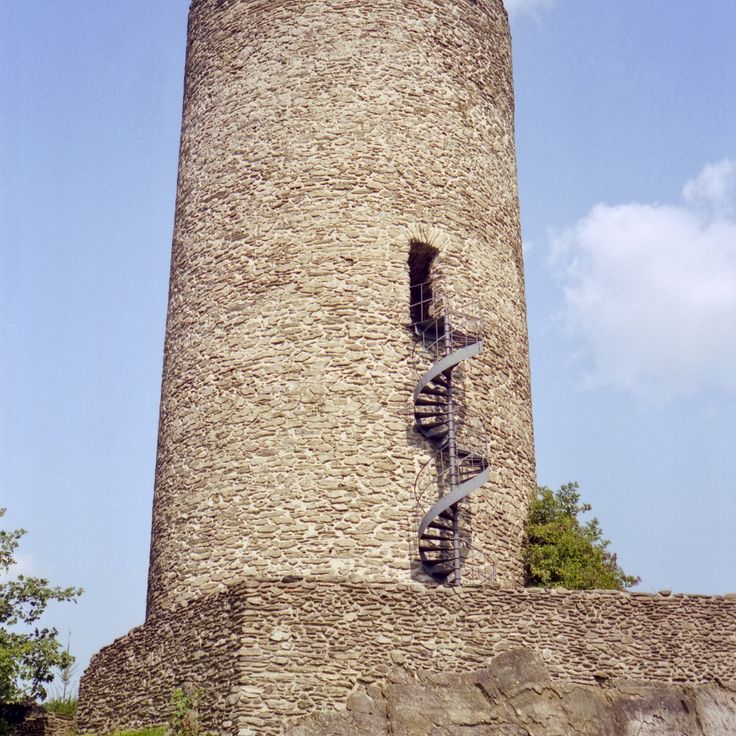
This fortress was built in the 13th century on a 2,014-foot (614-meter) basalt cone and has dominated the Vogelsberg landscape since then. The castle belongs to the historic sites in Hesse that document various periods of German history. Parts of the ring wall and keep remain, providing insight into medieval defensive architecture.
This fossil site in Messel belongs to the UNESCO World Heritage and documents early mammalian development from 47 million years ago during the Eocene period through exceptionally preserved fossils that provide insights into life after the extinction of dinosaurs and expand Hesse's geological heritage with a significant paleontological dimension.
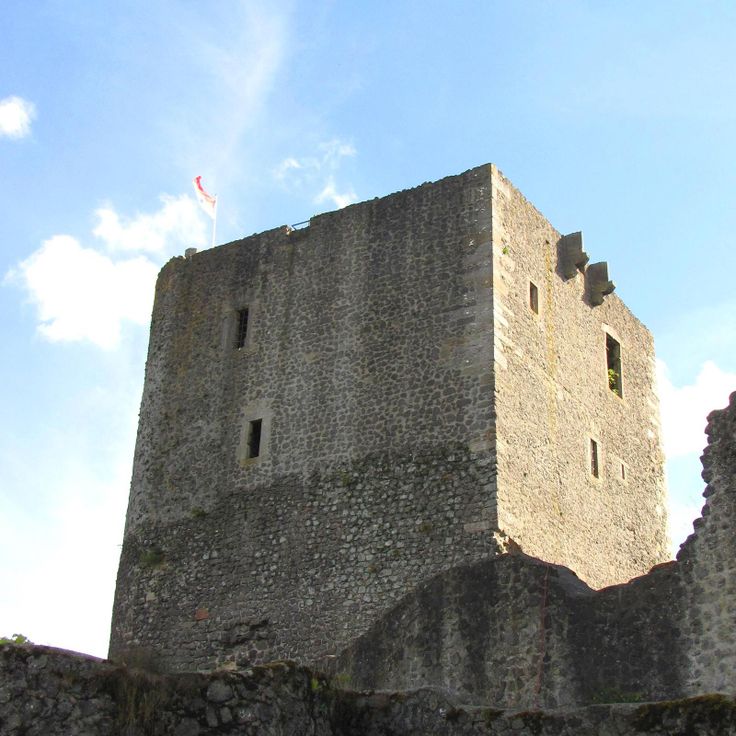
This castle complex was built in the 13th century and represents one of the historic sites in Hesse. The 66-foot (20-meter) high keep features a viewing platform overlooking the Taunus mountains. The fortress architecture documents medieval defensive structures of the region and complements the historic buildings between Roman fortifications and monastic establishments.
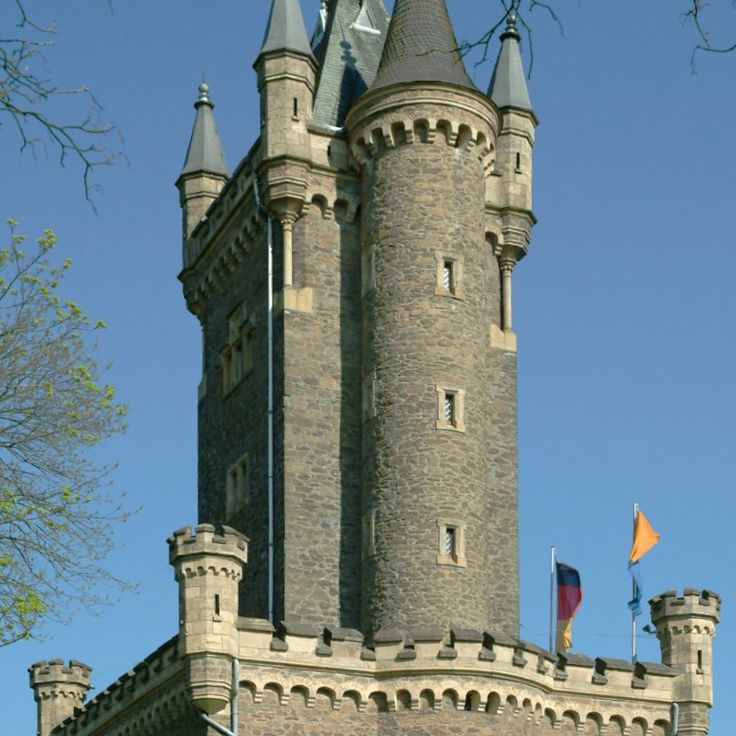
This 19th century stone observation tower rises on Schlossberg hill and houses a museum dedicated to the history of the House of Nassau. The Wilhelmsturm marks a site that documents the historical importance of Hesse as a center of Nassau rule and establishes the connection between medieval noble tradition and the comprehensive architectural evidence found across the region.
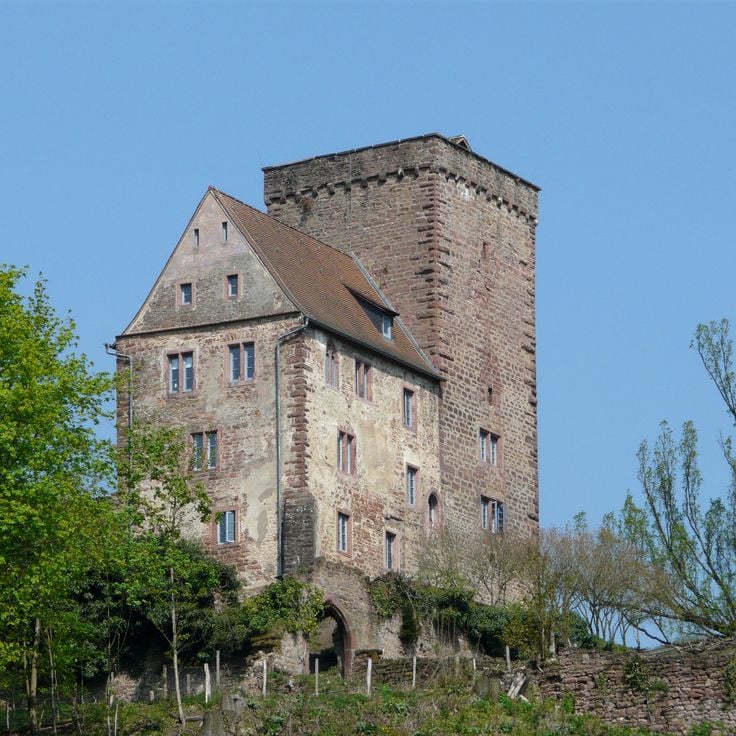
This group of four 13th-century castles sits on hills above the Neckar Valley and demonstrates the strategic importance of medieval defensive architecture in Hesse. The structures known as Vorderburg, Mittelburg, Hinterburg and Schwalbennest document feudal power structures of the period. One of the castles remains inhabited today, showing the continued use of such historic buildings across centuries.
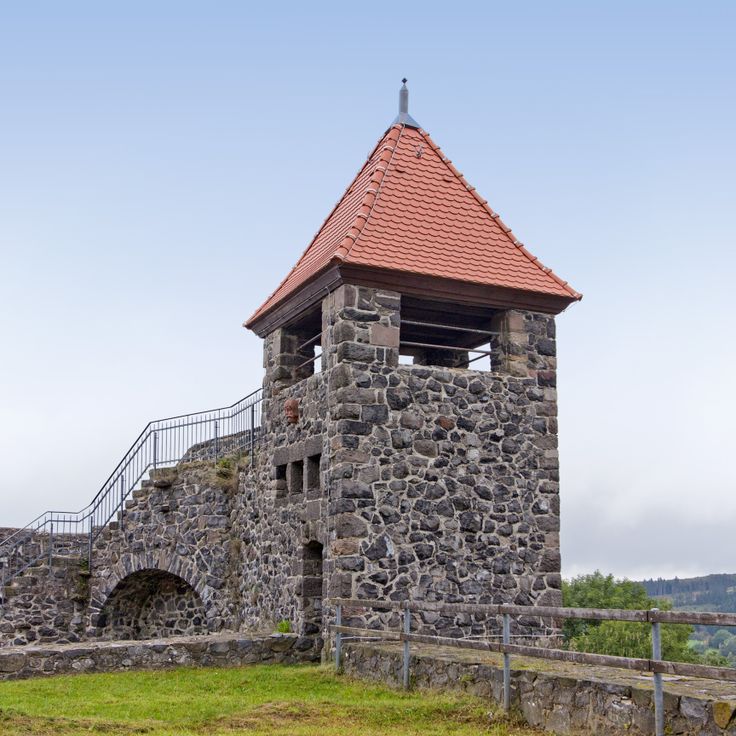
Weidelsburg Castle stands on a prominent basalt cone above Wolfhagen and represents medieval fortification architecture in Hesse from the 14th century. The remaining wall sections and round towers of these ruins document the strategic importance of the complex during the rule of the Landgraves of Hesse.
Kloster Haydau is a 13th-century monastic complex combining Gothic church architecture with a cloister and historical administrative buildings. This site documents the religious and administrative development of medieval monastic orders within Hesse's notable structures and complements the region's architectural heritage spanning Roman military installations and later castle construction.
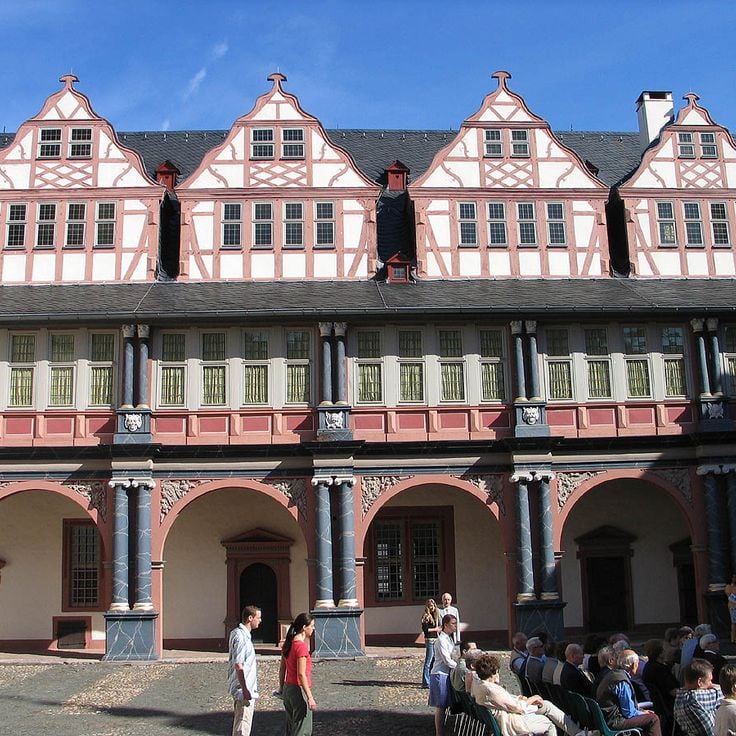
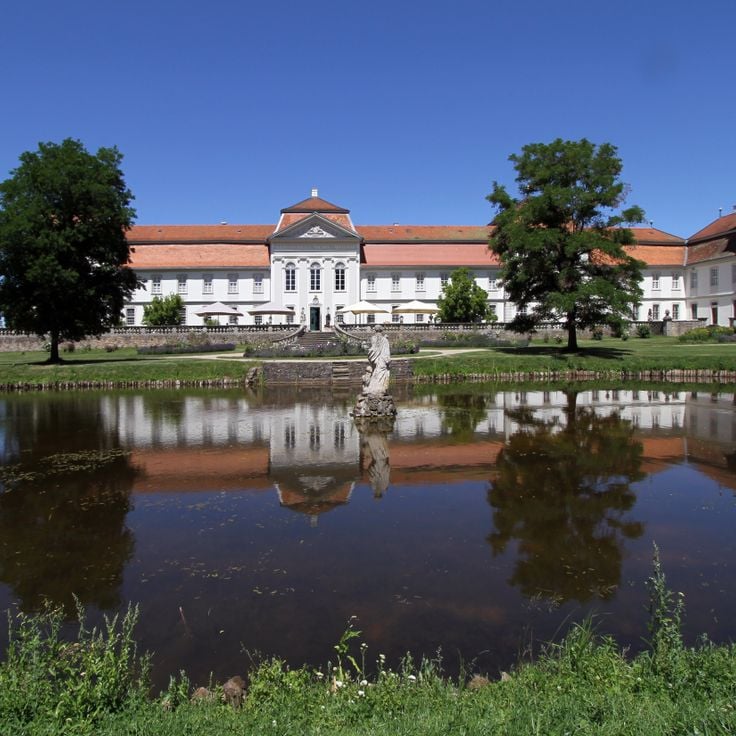
This Renaissance palace from the 16th century houses regional artifacts and period furniture in decorated rooms with painted ceilings, documenting the residential history of the Counts of Waldeck within the historic sites of Hesse that span architectural evidence from the Roman Saalburg through structures of the Grimm era.
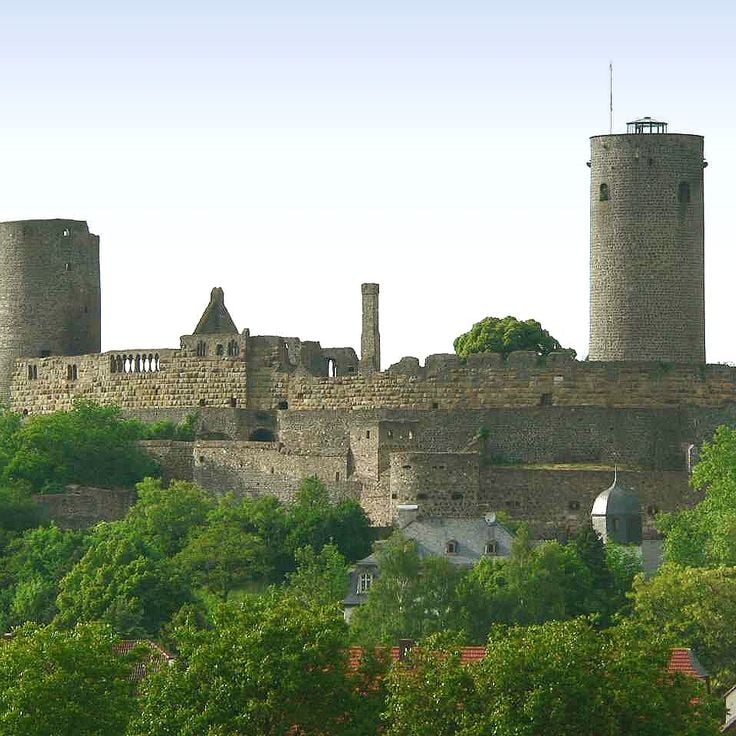
This fortress from the 12th century stands on a hill above Münzenberg and documents the defensive construction of the Hohenstaufen era in Hesse. The castle displays two round towers, massive walls and a battlement walkway that have represented the military architecture of the period since the 1150s. The structure complements the historical sites of the region from the Roman Saalburg to the medieval fortifications.
This park stretches along the Nidda River in northern Frankfurt and offers bicycle paths, playgrounds and seating areas. The green space connects recreation zones with the urban landscape and complements the historic sites of Hesse through a modern public area for residents and visitors.
This royal residence from the 16th century combines living quarters, formal gardens and a chapel overlooking the Lahn valley, documenting the development of princely court culture in Hesse across several centuries.
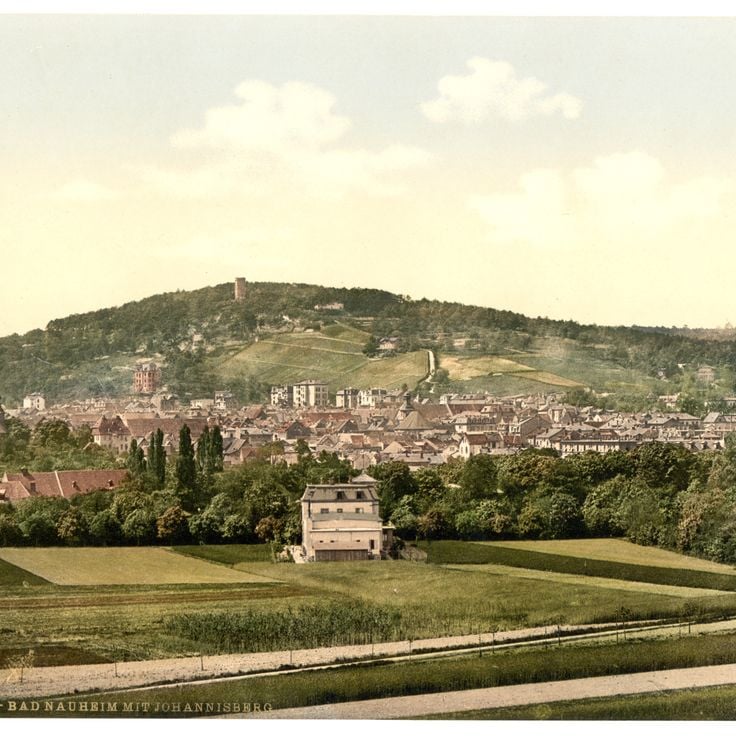
This hill is one of the notable historic viewpoints in Bad Nauheim, rising to an altitude of 770 feet (235 meters) and providing a circular view over the town and its architecture, which form part of the diverse collection of historical structures in Hesse, including Roman fortifications, medieval monasteries and castles from various periods of the region.
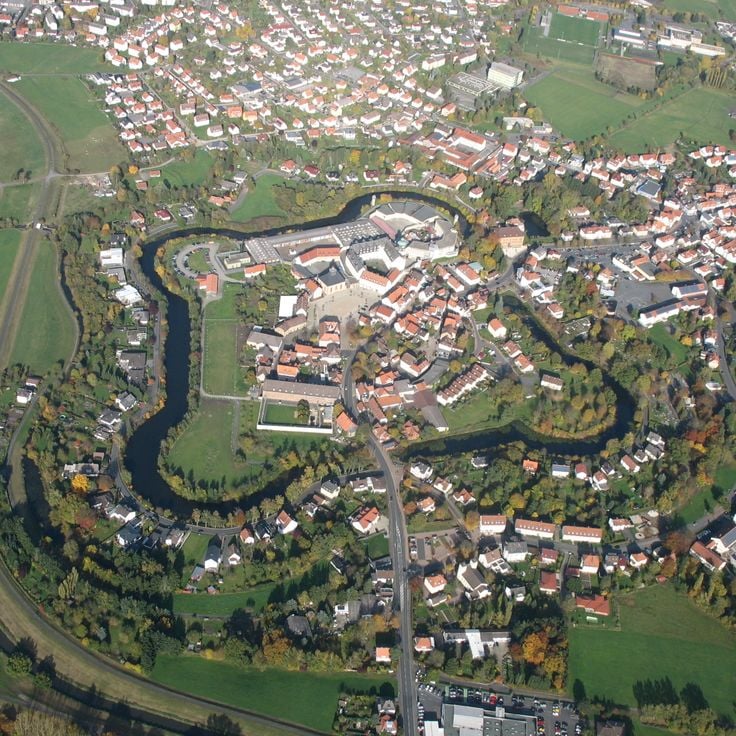
This fortress in Schwalmstadt ranks among the notable military installations in Hesse's history and dates from the 16th century. The defensive structures include a water moat and substantial stone walls characteristic of Renaissance military architecture, demonstrating the engineering methods used during this period.
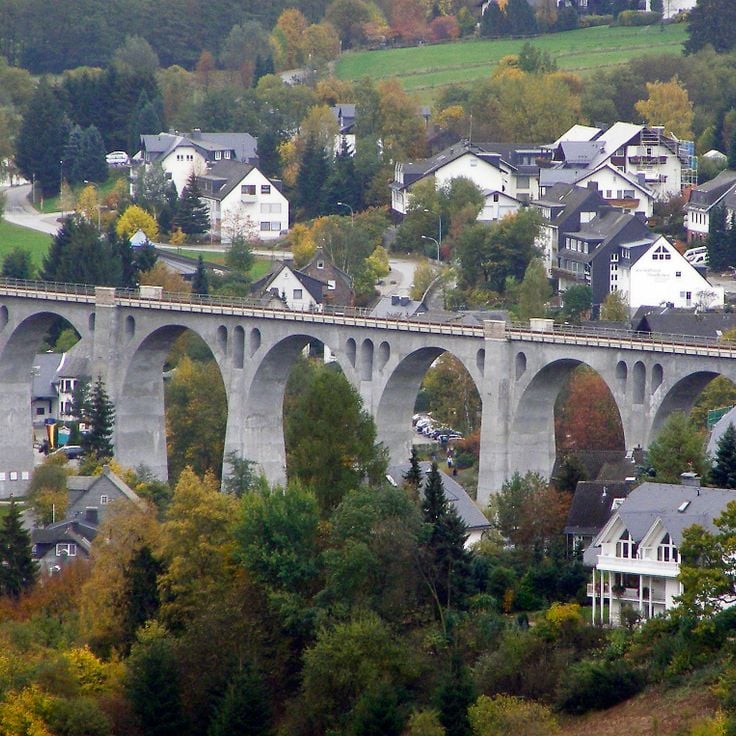
This railway viaduct extends 962 feet (294 meters) and connects through its 16 red sandstone arches to the historic infrastructure of Hesse. The 1917 construction demonstrates late imperial engineering achievements and complements the collection of historical structures from Roman fortifications to medieval castle complexes. The Willingen viaduct documents the development of transportation networks in the Upland region during World War I.
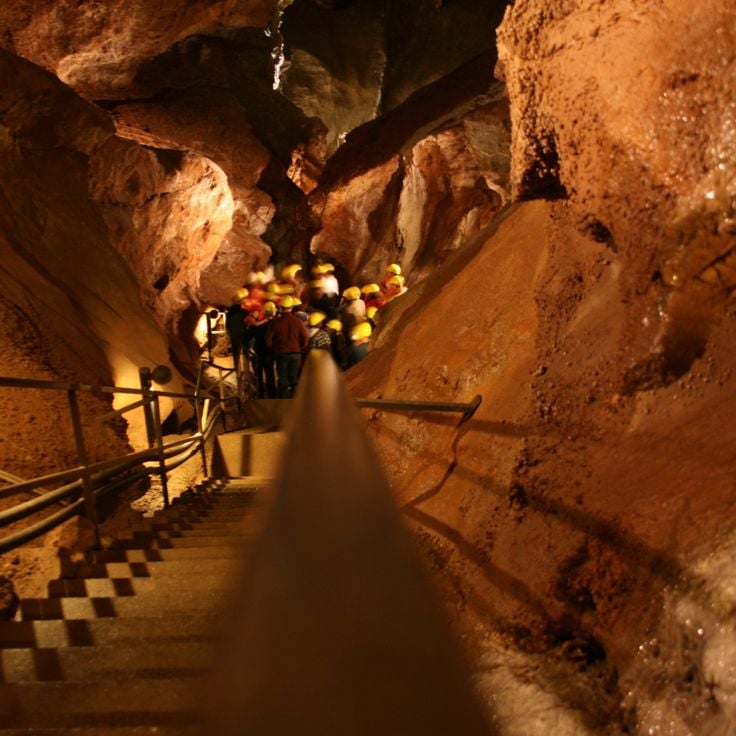
This cave displays calcite crystals on its walls, formed by mineral-rich water over geological time. The underground formation was discovered in 1974 during quarry work near Kubach. Guided tours allow visitors to observe the crystal structures and learn about the geological processes that created them, adding a natural dimension to the historical heritage of Hesse alongside structures from the Roman and medieval periods.
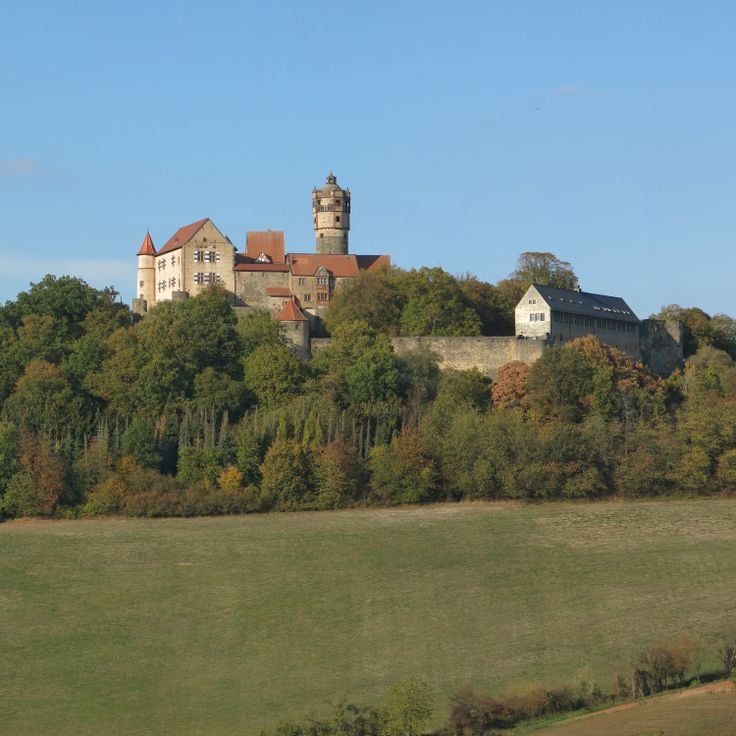
This medieval fortress retains its original defense structures and presents exhibitions about life in the Middle Ages with hands-on demonstrations. Ronneburg Castle fits into the historical framework of Hesse, where fortifications and monasteries document several centuries of European history.
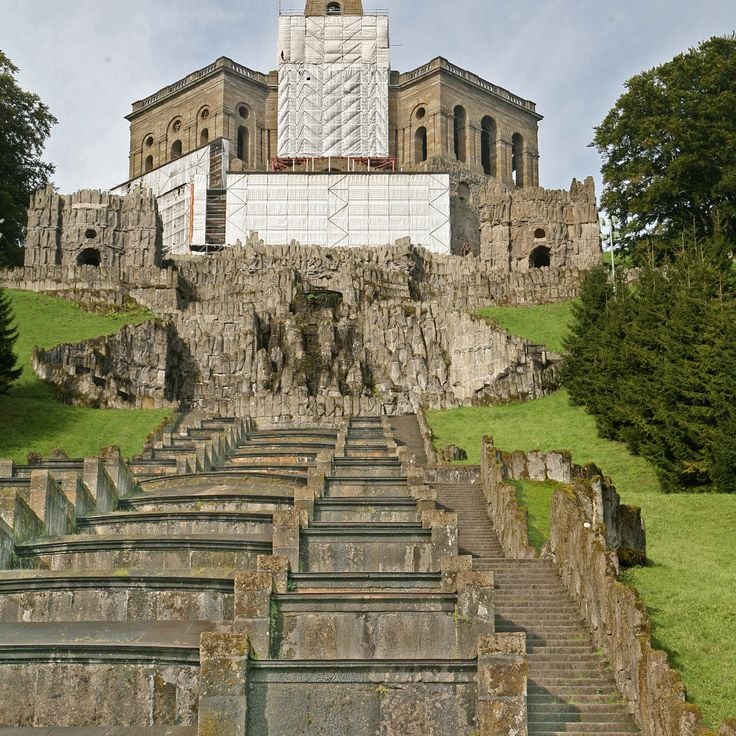
This monument in Kassel rises as an 8.25-foot (2.5-meter) copper statue atop a pyramid structure, marking the starting point for extended water cascades that flow through a geometrically designed garden and demonstrate 18th-century absolutist landscape design within the state's collection of historic sites spanning Roman to Romantic periods.
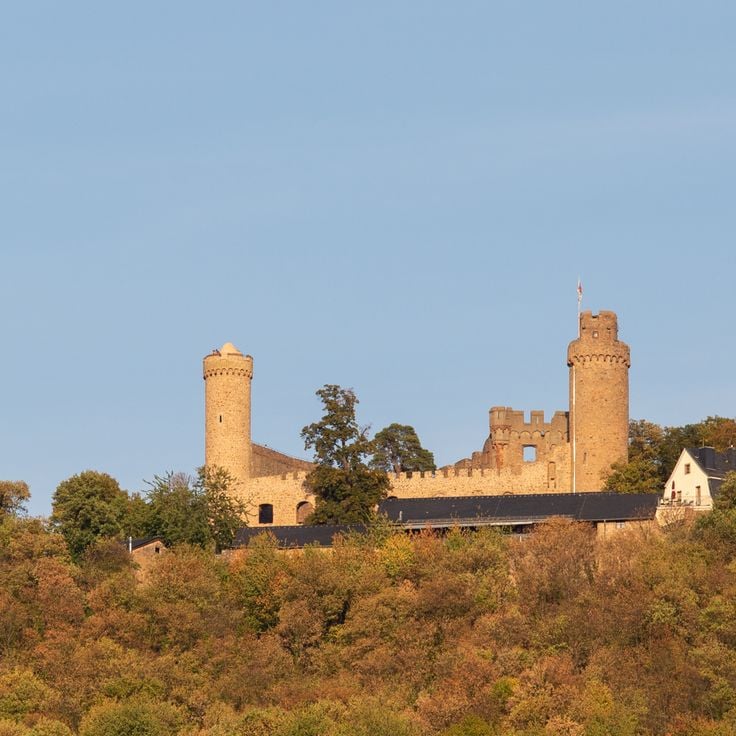
This medieval fortress dates from the 13th century and stands on a mountaintop above Bensheim. The ruins provide views across the northern Odenwald and the Rhine Valley. Its architecture displays typical features of Hohenstaufen defensive structures with a keep, residential buildings and ring walls. As part of Hesse's historic sites, Auerbach Castle complements the medieval strongholds of Trendelburg and Friedrichstein.
This baroque palace displays furniture, paintings and porcelain from the period of Hessian princes, complementing the historic structures of Hesse with princely domestic culture from the 18th century that documents the aristocratic dimension of regional history alongside military installations like Saalburg and monastic buildings such as Arnsburg.
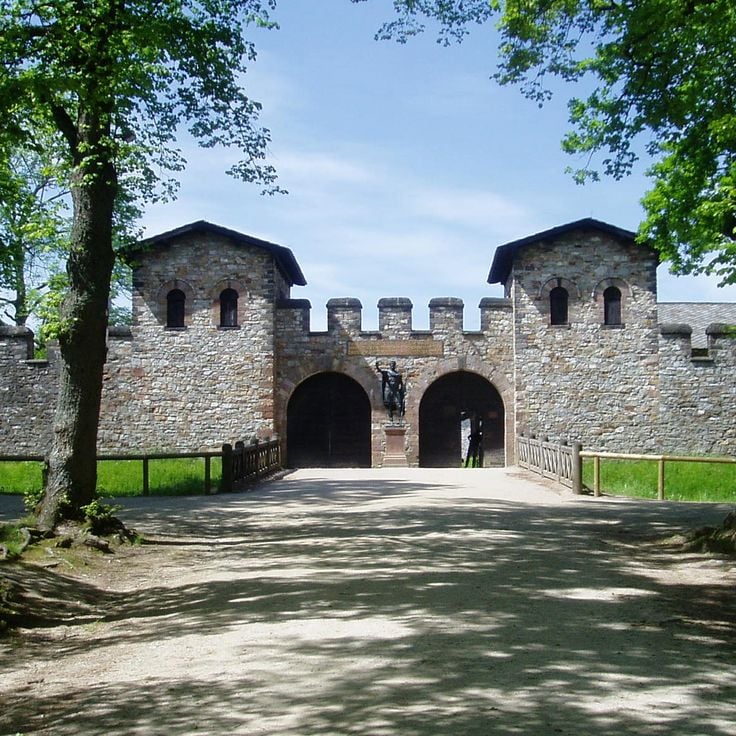
This military camp preserves reconstructed Roman buildings with furnishings and artifacts from the 2nd century and serves as an example of defensive architecture along the Limes, complementing Hesse's historical structures from multiple periods.
This former Cistercian monastery combines Romanesque and Gothic architecture from the 12th century and now houses a museum on monastic history and winemaking. The complex documents the religious and economic development of the region through its preserved cloisters, working spaces and cellars.
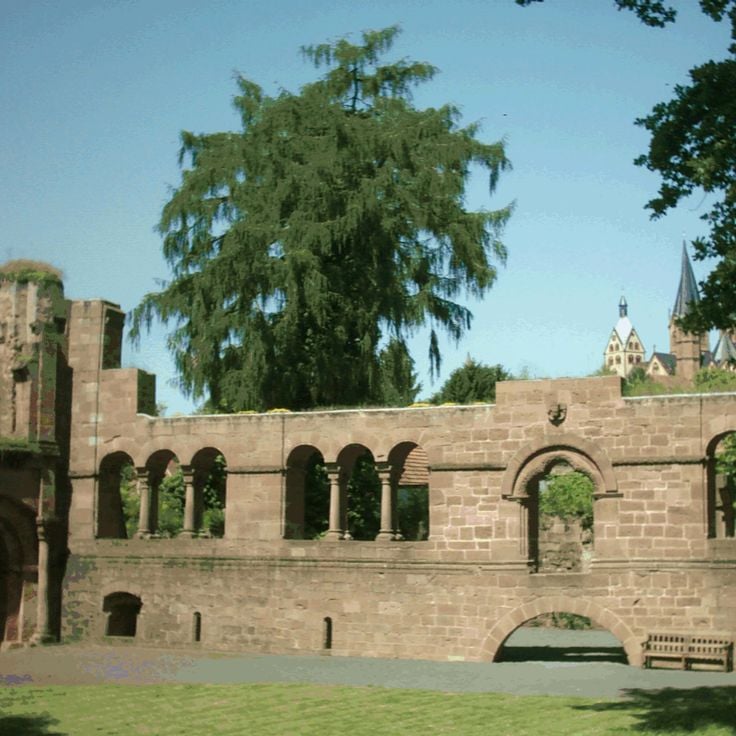
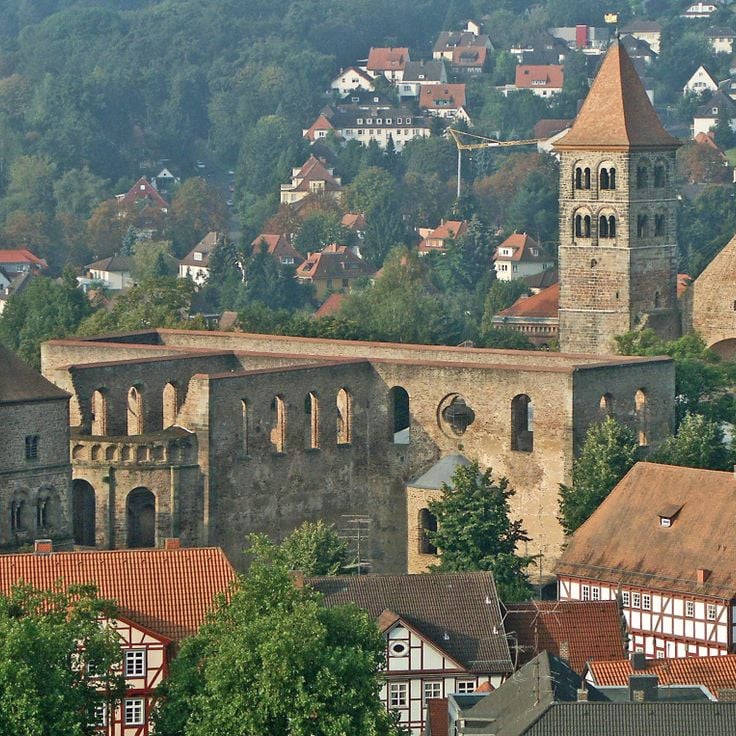
The Stiftsruine Bad Hersfeld documents Romanesque church architecture from the 12th century. This structure ranks among the important historical buildings in Hesse and now serves as a venue for theater performances and other cultural events. The preserved walls reveal the original dimensions of the former collegiate church and provide a setting for contemporary artistic presentations within a historical context.
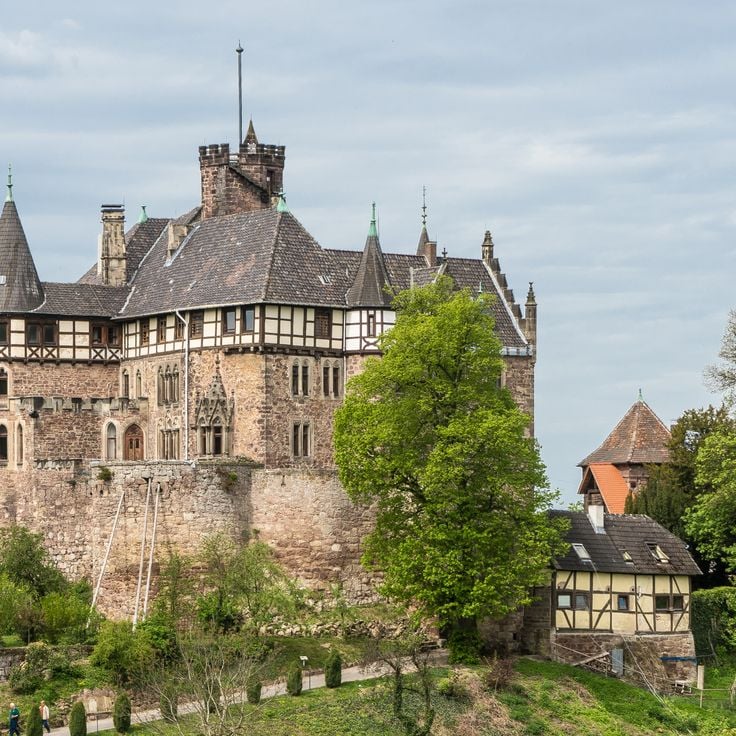
This 14th-century fortress in Witzenhausen preserves medieval residential quarters and presents a collection of historic weapons and armor that document the fortification practices of the period. Castle Berlepsch contributes to the historical sites of Hesse through its architecture and displays from the imperial knighthood era.
This medieval fortress from the 1200s ranks among the historic structures of Hesse that document periods from Roman times to the Grimm era. Trendelburg now houses a hotel with 36 rooms and a restaurant, while preserving the original defensive architecture from the Middle Ages that provides insight into regional building history.
Arnsburg Abbey presents the remains of a Cistercian monastery from the 12th century in this collection of historic sites in Hesse. Visitors find preserved cloisters and foundation walls that provide insight into medieval monastic architecture. The ruins document Romanesque construction style and the Cistercian way of life.
This Benedictine abbey was founded in 828 and ranks among the important monastic complexes in Hesse. The Romanesque basilica demonstrates early medieval architecture from the Carolingian era. The monastery garden maintains the tradition of cultivating medicinal plants. The complex provides insight into monastic life across twelve centuries. The collegiate church and convent building remain largely intact.
This former residence of the Grimm family displays a collection of handwritten texts, documents and personal items from the brothers' lives, who spent their formative childhood years here. The exhibition connects the biographical roots of the linguists with the historical development of their literary work and adds an important station for exploring German fairy tale tradition to the cultural heritage of Hesse.
The Abbey of Lorsch adds to the historic sites in Hesse as a Carolingian monastery from the 8th century with a preserved Romanesque entrance hall and foundations of the former abbey church that document the transition from early medieval to Romanesque construction.
Braunfels Palace combines medieval fortifications with 19th-century additions. The towers and defensive walls of this structure date from the 13th century, while the neo-Gothic elements were implemented under Count Ferdinand. The weapons collection displays European armor and arms from the 15th to 17th centuries. As part of the historic sites in Hesse, this palace documents the architectural evolution from a defensive stronghold to an aristocratic residence.
The Marburg Art House presents rotating collections of contemporary and classical art from Hesse within a timber-frame building that merges architectural heritage with regional artistic production, contributing to the cultural diversity of the region and offering exhibitions that reflect both historical and modern creative traditions.
This stone field consists of granite blocks deposited during the last Ice Age, now covering an area of around 790,000 square feet (320,000 square meters). The formation adds a geological component to Hesse's historical heritage, demonstrating the natural processes that shaped the region during the Quaternary period. The granite blocks lie scattered across forested slopes in the Odenwald, documenting the effects of glacial weathering on the landscape.
This castle was built between 1170 and 1180 as an imperial residence and served as the administrative center of the Hohenstaufen dynasty. The complex stands on an island in the Kinzig River and represents one of the important Romanesque secular structures in Hesse that illustrates the medieval system of rule.
This fortress was built in the 13th century on a 2,014-foot (614-meter) basalt cone and has dominated the Vogelsberg landscape since then. The castle belongs to the historic sites in Hesse that document various periods of German history. Parts of the ring wall and keep remain, providing insight into medieval defensive architecture.
This fossil site in Messel belongs to the UNESCO World Heritage and documents early mammalian development from 47 million years ago during the Eocene period through exceptionally preserved fossils that provide insights into life after the extinction of dinosaurs and expand Hesse's geological heritage with a significant paleontological dimension.
This castle complex was built in the 13th century and represents one of the historic sites in Hesse. The 66-foot (20-meter) high keep features a viewing platform overlooking the Taunus mountains. The fortress architecture documents medieval defensive structures of the region and complements the historic buildings between Roman fortifications and monastic establishments.
This 19th century stone observation tower rises on Schlossberg hill and houses a museum dedicated to the history of the House of Nassau. The Wilhelmsturm marks a site that documents the historical importance of Hesse as a center of Nassau rule and establishes the connection between medieval noble tradition and the comprehensive architectural evidence found across the region.
This group of four 13th-century castles sits on hills above the Neckar Valley and demonstrates the strategic importance of medieval defensive architecture in Hesse. The structures known as Vorderburg, Mittelburg, Hinterburg and Schwalbennest document feudal power structures of the period. One of the castles remains inhabited today, showing the continued use of such historic buildings across centuries.
Weidelsburg Castle stands on a prominent basalt cone above Wolfhagen and represents medieval fortification architecture in Hesse from the 14th century. The remaining wall sections and round towers of these ruins document the strategic importance of the complex during the rule of the Landgraves of Hesse.
Kloster Haydau is a 13th-century monastic complex combining Gothic church architecture with a cloister and historical administrative buildings. This site documents the religious and administrative development of medieval monastic orders within Hesse's notable structures and complements the region's architectural heritage spanning Roman military installations and later castle construction.
This Renaissance palace from the 16th century houses regional artifacts and period furniture in decorated rooms with painted ceilings, documenting the residential history of the Counts of Waldeck within the historic sites of Hesse that span architectural evidence from the Roman Saalburg through structures of the Grimm era.
This fortress from the 12th century stands on a hill above Münzenberg and documents the defensive construction of the Hohenstaufen era in Hesse. The castle displays two round towers, massive walls and a battlement walkway that have represented the military architecture of the period since the 1150s. The structure complements the historical sites of the region from the Roman Saalburg to the medieval fortifications.
This park stretches along the Nidda River in northern Frankfurt and offers bicycle paths, playgrounds and seating areas. The green space connects recreation zones with the urban landscape and complements the historic sites of Hesse through a modern public area for residents and visitors.
This royal residence from the 16th century combines living quarters, formal gardens and a chapel overlooking the Lahn valley, documenting the development of princely court culture in Hesse across several centuries.
This hill is one of the notable historic viewpoints in Bad Nauheim, rising to an altitude of 770 feet (235 meters) and providing a circular view over the town and its architecture, which form part of the diverse collection of historical structures in Hesse, including Roman fortifications, medieval monasteries and castles from various periods of the region.
This fortress in Schwalmstadt ranks among the notable military installations in Hesse's history and dates from the 16th century. The defensive structures include a water moat and substantial stone walls characteristic of Renaissance military architecture, demonstrating the engineering methods used during this period.
This railway viaduct extends 962 feet (294 meters) and connects through its 16 red sandstone arches to the historic infrastructure of Hesse. The 1917 construction demonstrates late imperial engineering achievements and complements the collection of historical structures from Roman fortifications to medieval castle complexes. The Willingen viaduct documents the development of transportation networks in the Upland region during World War I.
This cave displays calcite crystals on its walls, formed by mineral-rich water over geological time. The underground formation was discovered in 1974 during quarry work near Kubach. Guided tours allow visitors to observe the crystal structures and learn about the geological processes that created them, adding a natural dimension to the historical heritage of Hesse alongside structures from the Roman and medieval periods.
This medieval fortress retains its original defense structures and presents exhibitions about life in the Middle Ages with hands-on demonstrations. Ronneburg Castle fits into the historical framework of Hesse, where fortifications and monasteries document several centuries of European history.
This monument in Kassel rises as an 8.25-foot (2.5-meter) copper statue atop a pyramid structure, marking the starting point for extended water cascades that flow through a geometrically designed garden and demonstrate 18th-century absolutist landscape design within the state's collection of historic sites spanning Roman to Romantic periods.
This medieval fortress dates from the 13th century and stands on a mountaintop above Bensheim. The ruins provide views across the northern Odenwald and the Rhine Valley. Its architecture displays typical features of Hohenstaufen defensive structures with a keep, residential buildings and ring walls. As part of Hesse's historic sites, Auerbach Castle complements the medieval strongholds of Trendelburg and Friedrichstein.
This baroque palace displays furniture, paintings and porcelain from the period of Hessian princes, complementing the historic structures of Hesse with princely domestic culture from the 18th century that documents the aristocratic dimension of regional history alongside military installations like Saalburg and monastic buildings such as Arnsburg.
This military camp preserves reconstructed Roman buildings with furnishings and artifacts from the 2nd century and serves as an example of defensive architecture along the Limes, complementing Hesse's historical structures from multiple periods.
This former Cistercian monastery combines Romanesque and Gothic architecture from the 12th century and now houses a museum on monastic history and winemaking. The complex documents the religious and economic development of the region through its preserved cloisters, working spaces and cellars.
The Stiftsruine Bad Hersfeld documents Romanesque church architecture from the 12th century. This structure ranks among the important historical buildings in Hesse and now serves as a venue for theater performances and other cultural events. The preserved walls reveal the original dimensions of the former collegiate church and provide a setting for contemporary artistic presentations within a historical context.
This 14th-century fortress in Witzenhausen preserves medieval residential quarters and presents a collection of historic weapons and armor that document the fortification practices of the period. Castle Berlepsch contributes to the historical sites of Hesse through its architecture and displays from the imperial knighthood era.
This medieval fortress from the 1200s ranks among the historic structures of Hesse that document periods from Roman times to the Grimm era. Trendelburg now houses a hotel with 36 rooms and a restaurant, while preserving the original defensive architecture from the Middle Ages that provides insight into regional building history.
Arnsburg Abbey presents the remains of a Cistercian monastery from the 12th century in this collection of historic sites in Hesse. Visitors find preserved cloisters and foundation walls that provide insight into medieval monastic architecture. The ruins document Romanesque construction style and the Cistercian way of life.
This Benedictine abbey was founded in 828 and ranks among the important monastic complexes in Hesse. The Romanesque basilica demonstrates early medieval architecture from the Carolingian era. The monastery garden maintains the tradition of cultivating medicinal plants. The complex provides insight into monastic life across twelve centuries. The collegiate church and convent building remain largely intact.
This former residence of the Grimm family displays a collection of handwritten texts, documents and personal items from the brothers' lives, who spent their formative childhood years here. The exhibition connects the biographical roots of the linguists with the historical development of their literary work and adds an important station for exploring German fairy tale tradition to the cultural heritage of Hesse.
The Abbey of Lorsch adds to the historic sites in Hesse as a Carolingian monastery from the 8th century with a preserved Romanesque entrance hall and foundations of the former abbey church that document the transition from early medieval to Romanesque construction.
Braunfels Palace combines medieval fortifications with 19th-century additions. The towers and defensive walls of this structure date from the 13th century, while the neo-Gothic elements were implemented under Count Ferdinand. The weapons collection displays European armor and arms from the 15th to 17th centuries. As part of the historic sites in Hesse, this palace documents the architectural evolution from a defensive stronghold to an aristocratic residence.
The Marburg Art House presents rotating collections of contemporary and classical art from Hesse within a timber-frame building that merges architectural heritage with regional artistic production, contributing to the cultural diversity of the region and offering exhibitions that reflect both historical and modern creative traditions.
This stone field consists of granite blocks deposited during the last Ice Age, now covering an area of around 790,000 square feet (320,000 square meters). The formation adds a geological component to Hesse's historical heritage, demonstrating the natural processes that shaped the region during the Quaternary period. The granite blocks lie scattered across forested slopes in the Odenwald, documenting the effects of glacial weathering on the landscape.
This castle was built between 1170 and 1180 as an imperial residence and served as the administrative center of the Hohenstaufen dynasty. The complex stands on an island in the Kinzig River and represents one of the important Romanesque secular structures in Hesse that illustrates the medieval system of rule.
This fortress was built in the 13th century on a 2,014-foot (614-meter) basalt cone and has dominated the Vogelsberg landscape since then. The castle belongs to the historic sites in Hesse that document various periods of German history. Parts of the ring wall and keep remain, providing insight into medieval defensive architecture.
This fossil site in Messel belongs to the UNESCO World Heritage and documents early mammalian development from 47 million years ago during the Eocene period through exceptionally preserved fossils that provide insights into life after the extinction of dinosaurs and expand Hesse's geological heritage with a significant paleontological dimension.
This castle complex was built in the 13th century and represents one of the historic sites in Hesse. The 66-foot (20-meter) high keep features a viewing platform overlooking the Taunus mountains. The fortress architecture documents medieval defensive structures of the region and complements the historic buildings between Roman fortifications and monastic establishments.
This 19th century stone observation tower rises on Schlossberg hill and houses a museum dedicated to the history of the House of Nassau. The Wilhelmsturm marks a site that documents the historical importance of Hesse as a center of Nassau rule and establishes the connection between medieval noble tradition and the comprehensive architectural evidence found across the region.
This group of four 13th-century castles sits on hills above the Neckar Valley and demonstrates the strategic importance of medieval defensive architecture in Hesse. The structures known as Vorderburg, Mittelburg, Hinterburg and Schwalbennest document feudal power structures of the period. One of the castles remains inhabited today, showing the continued use of such historic buildings across centuries.
Weidelsburg Castle stands on a prominent basalt cone above Wolfhagen and represents medieval fortification architecture in Hesse from the 14th century. The remaining wall sections and round towers of these ruins document the strategic importance of the complex during the rule of the Landgraves of Hesse.
Kloster Haydau is a 13th-century monastic complex combining Gothic church architecture with a cloister and historical administrative buildings. This site documents the religious and administrative development of medieval monastic orders within Hesse's notable structures and complements the region's architectural heritage spanning Roman military installations and later castle construction.
This Renaissance palace from the 16th century houses regional artifacts and period furniture in decorated rooms with painted ceilings, documenting the residential history of the Counts of Waldeck within the historic sites of Hesse that span architectural evidence from the Roman Saalburg through structures of the Grimm era.
This fortress from the 12th century stands on a hill above Münzenberg and documents the defensive construction of the Hohenstaufen era in Hesse. The castle displays two round towers, massive walls and a battlement walkway that have represented the military architecture of the period since the 1150s. The structure complements the historical sites of the region from the Roman Saalburg to the medieval fortifications.
This park stretches along the Nidda River in northern Frankfurt and offers bicycle paths, playgrounds and seating areas. The green space connects recreation zones with the urban landscape and complements the historic sites of Hesse through a modern public area for residents and visitors.
This royal residence from the 16th century combines living quarters, formal gardens and a chapel overlooking the Lahn valley, documenting the development of princely court culture in Hesse across several centuries.
This hill is one of the notable historic viewpoints in Bad Nauheim, rising to an altitude of 770 feet (235 meters) and providing a circular view over the town and its architecture, which form part of the diverse collection of historical structures in Hesse, including Roman fortifications, medieval monasteries and castles from various periods of the region.
This fortress in Schwalmstadt ranks among the notable military installations in Hesse's history and dates from the 16th century. The defensive structures include a water moat and substantial stone walls characteristic of Renaissance military architecture, demonstrating the engineering methods used during this period.
This railway viaduct extends 962 feet (294 meters) and connects through its 16 red sandstone arches to the historic infrastructure of Hesse. The 1917 construction demonstrates late imperial engineering achievements and complements the collection of historical structures from Roman fortifications to medieval castle complexes. The Willingen viaduct documents the development of transportation networks in the Upland region during World War I.
This cave displays calcite crystals on its walls, formed by mineral-rich water over geological time. The underground formation was discovered in 1974 during quarry work near Kubach. Guided tours allow visitors to observe the crystal structures and learn about the geological processes that created them, adding a natural dimension to the historical heritage of Hesse alongside structures from the Roman and medieval periods.
This medieval fortress retains its original defense structures and presents exhibitions about life in the Middle Ages with hands-on demonstrations. Ronneburg Castle fits into the historical framework of Hesse, where fortifications and monasteries document several centuries of European history.
This monument in Kassel rises as an 8.25-foot (2.5-meter) copper statue atop a pyramid structure, marking the starting point for extended water cascades that flow through a geometrically designed garden and demonstrate 18th-century absolutist landscape design within the state's collection of historic sites spanning Roman to Romantic periods.
This medieval fortress dates from the 13th century and stands on a mountaintop above Bensheim. The ruins provide views across the northern Odenwald and the Rhine Valley. Its architecture displays typical features of Hohenstaufen defensive structures with a keep, residential buildings and ring walls. As part of Hesse's historic sites, Auerbach Castle complements the medieval strongholds of Trendelburg and Friedrichstein.
This baroque palace displays furniture, paintings and porcelain from the period of Hessian princes, complementing the historic structures of Hesse with princely domestic culture from the 18th century that documents the aristocratic dimension of regional history alongside military installations like Saalburg and monastic buildings such as Arnsburg.
This military camp preserves reconstructed Roman buildings with furnishings and artifacts from the 2nd century and serves as an example of defensive architecture along the Limes, complementing Hesse's historical structures from multiple periods.
This former Cistercian monastery combines Romanesque and Gothic architecture from the 12th century and now houses a museum on monastic history and winemaking. The complex documents the religious and economic development of the region through its preserved cloisters, working spaces and cellars.
The Stiftsruine Bad Hersfeld documents Romanesque church architecture from the 12th century. This structure ranks among the important historical buildings in Hesse and now serves as a venue for theater performances and other cultural events. The preserved walls reveal the original dimensions of the former collegiate church and provide a setting for contemporary artistic presentations within a historical context.
This 14th-century fortress in Witzenhausen preserves medieval residential quarters and presents a collection of historic weapons and armor that document the fortification practices of the period. Castle Berlepsch contributes to the historical sites of Hesse through its architecture and displays from the imperial knighthood era.