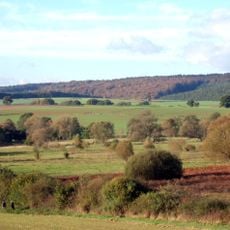
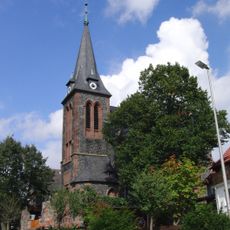
Ziegenhain Fortress, Medieval water fortress in Schwalmstadt, Germany.
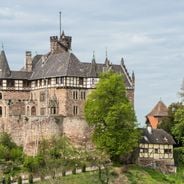
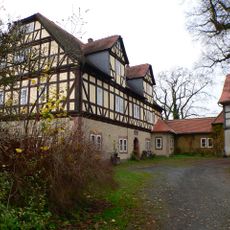
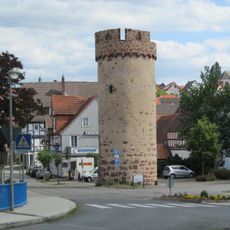
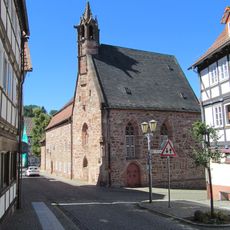
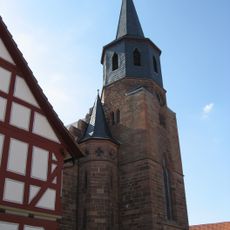
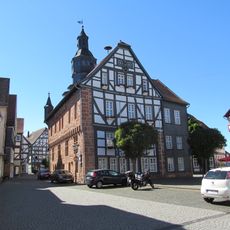
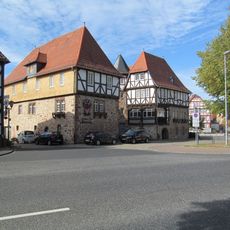
Ziegenhain Fortress is a medieval fortification in Schwalmstadt with defensive walls and a moat encircling the perimeter. The site contains multiple structures arranged around a central area, built and modified over several centuries to improve its defensive capabilities.
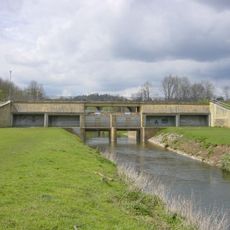
Around 950 a bergfried stood here; in 1144 Count Gottfried von Reichenbach-Wegebach built a new castle as his residence and his line took the name Counts of Ziegenhain. After Johann II died in 1450 the county passed to Landgrave Ludwig I of Hesse, who converted the castle into a hunting lodge in 1470. From 1537 to 1546 Landgrave Philipp the Magnanimous had the medieval castle and town rebuilt as a water fortress to plans by Hans Jakob von Ettlingen and Balthasar von Germersheim, with a six-metre earth rampart, four corner rondels and a 65-metre-wide glacis that could be flooded from the Schwalm. Heinz von Lüder became its first commander in 1537.
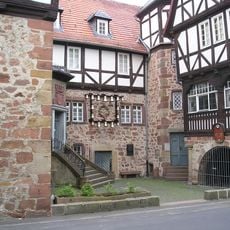
The Museum der Schwalm has occupied the Steinernes Haus since 1938; Werner II von Falkenberg built this stone house in 1363 as his castle seat. Its collections document the rural life of the Schwalm region, and the building itself is part of what visitors come to see.
Parts of the fortress grounds are open to visitors, though some areas are restricted due to modern use of the site. Before planning your visit, check locally for which sections are currently accessible and any visiting times.
The saying "as strong as Ziegenhain" arose because the fortress was never taken in the Thirty Years' War and withstood every siege. In 1640 the imperial general Johann Rudolf von Breda was shot nearby at the Riebelsdorfer Berg by Velten Muhly, captain of the Ziegenhain citizen militia; his sword, the Bredaschwert, is kept in the town hall.
The community of curious travelers
AroundUs brings together thousands of curated places, local tips, and hidden gems, enriched daily by 93,830 contributors worldwide.