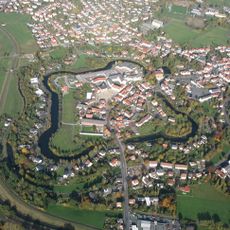
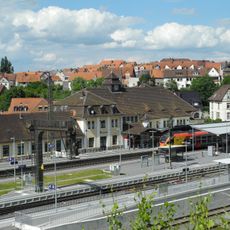
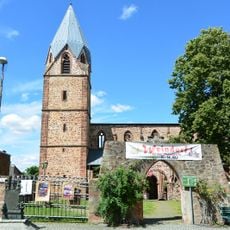
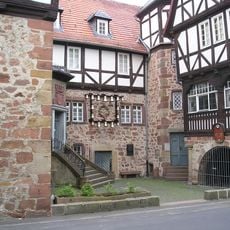
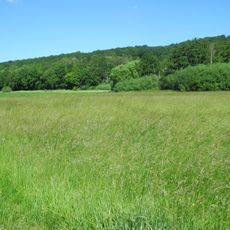
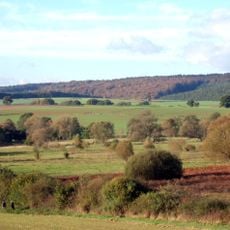
Hochwasserrückhaltebecken Treysa-Ziegenhain, Flood detention basin in Schwalm-Eder-Kreis, Germany.
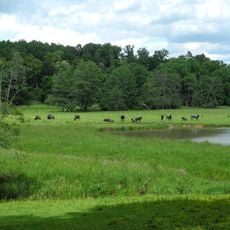
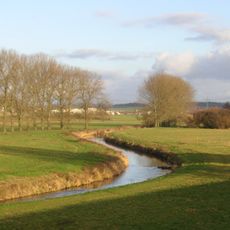
The Treysa-Ziegenhain detention basin is a flood retention basin on the Schwalm river in the Schwalm-Eder district of northern Hesse. Its roughly 10 km of earth-fill dams, including a 1,780 m main dam, enclose two polders connected by the canalised Schwalm. A reinforced-concrete outlet structure and a siphon spillway regulate the water.
The Schwalm repeatedly flooded, notably on 5 December 1960, when a discharge of 157 m³/s was measured at Uttershausen. In response, the Wasserverband Schwalm was founded on 6 December 1962, and construction of the basin's dams began in 1967, finishing in 1972. During the highest flood since their completion, from 24/25 January 1995, the dams held.
The basin demonstrates how communities in the region protect and manage water as a shared resource. For residents, it becomes part of daily life when offering flood safety after heavy rainfall.
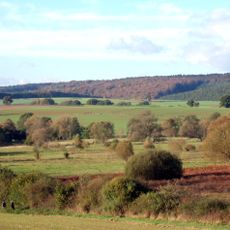
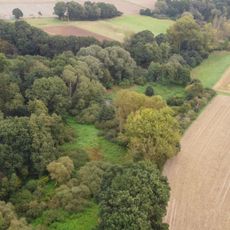
The basin is accessible from walking trails that lead through the landscape and offer viewing points. Visitors should know that water levels vary greatly depending on weather, and the banks look different depending on the season.
The main dam, 1,780 metres long, contains a steel-reinforced concrete outlet structure, and the flood relief works on the principle of a siphon: two shafts with large rectangular inlets on each side draw water off once it rises above the overflow edge inside them. A control building stands just south-southwest of the outlet.
The community of curious travelers
AroundUs brings together thousands of curated places, local tips, and hidden gems, enriched daily by 94,089 contributors worldwide.